By Owen Quinn author of the Time Warriors and Zombie Blues
Once again we look at the supporting characters that have helped define the Doctor. This week, Billie Piper as Rose Tyler…
When the series returned revamped for the 21st century, Russell T Davies insisted that the role of Rose Tyler was an equal role to that of the Doctor. It was to be the Doctor and Rose, end of.
And nobody can deny that there was a great amount of surprise and concern that former pop star Billie Piper had been selected to play the role. Hopes were not high but I have to say Billie hit the ground running. Rose was just a normal girl working in a shop, collecting the lottery syndicate money and having lunch with her boyfriend.
But then someone entered her life with a single word – ‘run!’ – and over the next two years that’s exactly what happened.
Rose came across as nasty and selfish at times eg when her boyfriend Mickey joined them on the Tardis. To be honest, the whole concept of Rose being in love with the Doctor and him being in love with her never really worked for me. It felt like Doctor Who in name only in that respect. And it failed in that aspect in stories like the Girl in the Fireplace which showed exactly why the Doctor never fell in love. It also rattled as the Doctor gave up everything including Rose for Madame Pompadour without a second thought. Much was made of it via her mother, the fantastic Jackie Tyler who was initially hostile to the Doctor but warmed to him in his tenth incarnation. But she knew how dangerous the life he promised her daughter was, even when Rose couldn’t see it. But Rose listened to no-one and when she asked the Doctor to bring her back to see her father, she becomes the woman who sat by his side and held his hand as he died after being hit by a car. Leading up to this, she ignores the Doctor’s orders and saves her father from being killed, resulting in the world being wiped out by the Reapers, huge bat like creatures that literally ate history away to try to heal the damage created by Rose. Her scenes with her father were some of the most powerful ever, especially as he sacrifices himself to secure his daughter’s future.
But with Rose it was a chance to reintroduce new viewers and remind old ones just how magical travelling with the Doctor was.
In the Unquiet Dead, the very action of stepping into freshly fallen snow in Victorian Cardiff is almost like watching it happen for the first time. In World War three the Doctor is not prepared to stop the Slitheen in case he loses Rose and his emotional blackmail to get her to come back to the Tardis is like a jealous boyfriend as he believes Mickey just might win her back. But it is also important as she is the first person to help break down his emotional barriers having been so isolated following the Time War. And the line “Rose, I’m coming to get you!” has gone down in Who history as the definitive moment the Doctor allows himself to declare his feelings for any person. Not even a Dalek invasion force will stop him from saving the girl he loves, something the Daleks have already figured out.
But it is with the tenth Doctor that Rose seems more real and this younger version of the Time Lord makes her even more determined to have him so to speak. When trapped on an asteroid on the edge of a black hole in the Impossible Planet, they face the real possibility of spending their lives in this time zone together as partners, even discussing mortgages.
Her feelings are never more obvious than when she came face to face with Sarah Jane Smith. Discovering that not only did she travel with the Doctor but had feelings for him, Rose is openly hostile towards her which didn’t really endear her to me to be honest. Don’t diss the Smith. But as they trade insults and try to outdo each other with their adventures (Sarah wins by the way with the Loch Ness Monster) they realize the Doctor may have changed his face but it’s the same man both of them fell for. It is Sarah that encourages Rose to keep travelling as it’s worth getting your heart broken. It is also the point where Rose realizes that she is literally the latest in a long line but also that this time may be different.
The love triangle that was her, the Doctor and Mickey was faced head on with her former boyfriend’s addition to the crew. When they land in a parallel universe where Rose’s dad is still alive and Mickey gets a second chance to save his grandmother, they finally part in a tear jerker of a scene where Mickey decides to stay, having accepted he has lost Rose to the Doctor forever. It doesn’t matter he will be trapped on this Earth forever as it is the only way to purge Rose from his life forever. And this is the moment that Rose and Mickey’s relationship solidifies from that of lovers to deep friends that would die for each other and Rose finally realizes what she has done and how much Mickey really means to her.
But like everything else, it is Mickey that returns to our Earth from the other side to save Rose from Torchwood and the mysterious sphere that is cracking open the dimensions again. Of course, it holds the Daleks and the battle for control of Earth is joined when the Cybermen invade from the other universe. Rose ends up reunited with her family in the other universe but ripped from the Doctor in the series’ most heart-breaking scenes when the Doctor doesn’t get to tell her he loves her when power gives out.
But when that girl really wants something she goes for it and her surprise cameo at the end shocked everyone. Throughout the entire season Rose was glimpsed trying to contact the Doctor but it wasn’t until the story Turn Left that we learned why and that she needed Donna Noble to sacrifice herself to achieve it. This was quite a shocking development as this Rose was much harder and determined to do whatever it took to find the Doctor. She used Donna’s dying breath to get a message to the Doctor as reality itself was in danger from what we ultimately learn is Davros and a new Dalek threat. And it is a tribute to Mickey that it is he who brings Jackie with him to get Rose back. And having done that, he finally leaves to return to our Earth to begin a new life. Rose however gets her heart’s desire when an aborted regeneration causes the creation of a second Doctor. This one has only one heart and can never regenerate so they can live their lives together like any normal couple. She is convinced when he is about to tell her what the answer to her question was the day they got separated. She finally gets to hear him say he loves her. In a deleted scene, the Doctor gives them a piece of Tardis with which to grow their own so the other universe will have a Doctor and Rose defending it.
Overall it was a love story that was powerfully emotional and gave the series some of its best stories and memorable scenes but to be honest, I wouldn’t want to see it repeated. But it made perfect sense as it is the story of the Doctor rediscovering something to care about after losing everything and everyone he loved in the Time War. And it is the story of a girl discovering a new way of life and all its possibilities through the eyes of an alien that had lost faith in everything. And whether you agree with it or not, it gave us two years of compelling and unforgettable viewing and cemented the Doctor back into television landscape forever. No mean feat.
By Owen Quinn author of the Time Warriors and Zombie Blues
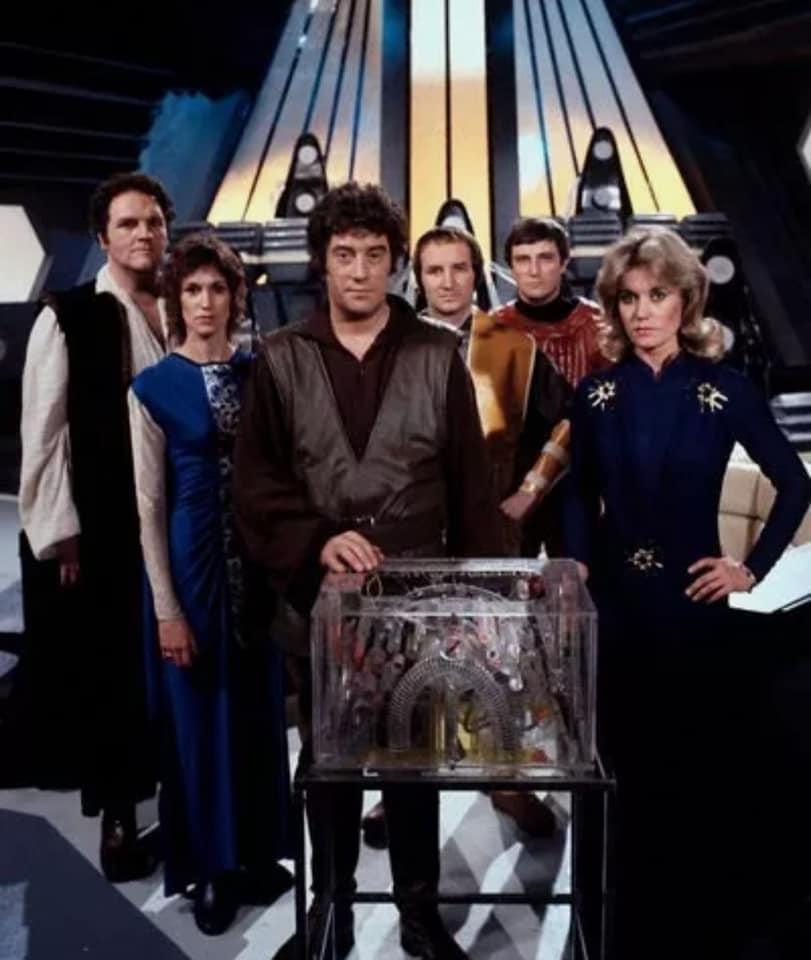
Photo copyright BBC
Once again we look back at the catalogue of characters who have touched the Doctor’s life – this week, the very lovely Sophie Aldred as Ace…
Ace was the seventh Doctor’s main companion and was the basis for such successes as Rose Tyler, whether people like to admit it or not and to this day remains one of the best remembered characters of all.
Played by Sophie Aldred, Ace was first seen in the 24th season finale Dragonfire and although some of her characteristics and mannerisms were a little exaggerated to begin with – eg the catchphrase of shouting “Ace!” and the overindulgence in explosive behaviour – by the 25th anniversary season, these had been toned down.
There was a real partnership between the Doctor and Ace that hadn’t been seen since Sarah Jane but in keeping with the darker, grand chessmaster seventh Doctor, there was a plan for Ace.
Caught in a timestorm and deposited on Iceworld, the Doctor was immediately caught with this young girl, lost, alone but a real survivor. She jumped at the chance of joining him in the Tardis but for once everything was not as it seemed.
People talk about the complicated story arcs of twenty-first century Who but the template for this began with the seventh Doctor.
For the first time he was no longer a wandering traveller but a man with a mission. He set out to wipe out his greatest enemies in schemes that stretched back to his first incarnation and that junkyard in Totter’s Lane. Both the Daleks and the Cybermen were his main targets in an effort to bring peace to the universe. And Ace was slap bang in the middle of it as the main enemy had yet to show themselves.
Ace had a backstory, a history; a teenage girl with no dad and who hated her mother. Through her journeys on the Tardis she grew when entire stories where dedicated to her. Her fear of clowns is forefront in The Greatest Show in the Galaxy, her trust in Mike, a potential new boyfriend, is shattered when he is revealed as a racist agent working with the Daleks, reinforcing her belief that she is alone in the world and she is the only person she can rely on.
But the Doctor deliberately puts her In harm’s way when he takes her to Gabriel Chase, a house she burned down in retaliation for her Asian friend being badly burned in a racist fire bombing and where she finds an alien force ready to take the throne. By making her confront her past the Doctor is slowly breaking down her emotional barriers and letting her become the person she was meant to be. He recognises she has been touched by alien forces in the past but the battle isn’t over yet.
In the Curse of Fenric, the real enemy is confronted. Fenric is a force once imprisoned by what we believe to be the first Doctor but it has manipulated its way by placing Ace aboard the Tardis to draw the Time Lord into its trap in World War Two using Russian and British soldiers and a horde of vampires. And it is only Ace who can save the day by allowing the doctor to destroy her faith in him and by saving her own mother, the mother she hates, as a baby, Ace secures her own future when she finally admits she loves her. The final scene where she takes a swim in dangerous currents as voices from her past echo in her mind is the point where she sheds her teenage angst and becomes the confident young woman that fights alongside the Brigadier in Battlefield and fights the Master when she is infected by the Cheetah people.
No one can deny the strength and depth of Sophie’s performance and the seventh Doctor has given us quite a few classics, a fact a lot of people forget. Even Russell T Davies’ penchant for housing estates was first seen in the final McCoy story, Survival.
Like many companions, Ace has further developed in books and the Big Finish range and if the television series had continued it would have been revealed the Doctor had a plan all along for Ace. He had put her through so many trials in order to send her to the Time Lord academy where she would show the Time Lords exactly the sort of people they should be when facing the universe.
The character would be spoken of again in the Sarah jane Adventures as the leader of the company A Charitable Earth. Indeed she was due to appear alongside Sarah Jane but the death of Elizabeth Sladen stopped production. You can’t help but wonder just what an adult version of Ace would be like butting heads with Sarah Jane in memory of the Doctor.
So keep your Rose Tylers and Tegan Jovenkas, there has never been a companion like Ace before or since and the fact the Doctor wanted his entire species to be just like his friend Ace; well, what greater compliment could he give his best friend.
By Owen Quinn author of the Time Warriors and Zombie Blues
He’s the man who almost took over the Star Trek universe, he’s been to the Harte of Dixie and written a brand new book. But to millions of fans around the world he will always be George, the lovable Newcomer from Alien Nation. The Time Warriors are proud to talk exclusively to Eric Pierpoint. Here Eric tells us what happened the day the show was cancelled, how he made his George different to the movie version and exactly how he would have played the captain in Star Trek. Oh and who is exactly is Caleb O’Toole?
TW:How did you land the role of George in Alien Nation?
EP: Hello Irish Friends!
First, I have to say, it is always terrific to hear from fans of Alien Nation. The show stands out in my career as one of the highlights. As I reflect on it, it was the best combination of producers/writers/crew/actors in my experience in over 35 years in the business. Though it certainly was a challenge in terms of how hard we worked (plus the make up… itchy all day!), it was ultimately the most satisfying television role of all. Ken Johnson, the executive producer and a friend for years, called me one day back in 1989 and asked me if I would be interested in doing AN. I looked at the film and thought, well, James Caan was pretty good as Sikes… so I told Ken I was interested in the role. He said, “No! I want you to play George!” So, I looked at the film again. Light bulbs went off.
TW: How did you try to make George different to the movie version? It must have been a pleasure to go to work every day given thequality of the scripts?
EP: I tried to give George a softness and humor that would work well with the gruffness of the Sikes character. I also wanted to make him even more “human” that the humans in a way. He had two big hearts. I think that worked well for those who can relate to someone who has so much to overcome, who try so hard to fit into a new world. Those new to the United States, who speak a different language, must try all the more to gain a foothold, to overcome prejudice. I also wanted him to be incredibly strong in his character, so you knew he would succeed in the end. I wanted him to be totally reliable and honest. I loved what the writers did with AN. It was a challenge every day to create new culture on the set. We had to be on our toes and inventive. I mean, just how do you stage a man having a baby? Or celebrate the fertilization through a third party as in Three To Tango? When you get material like that, it makes those 4am make up calls every day ok. We did push the envelope as far as societal issues are concerned. I think that is what made the show. Prejudice was in every episode and portrayed without stigmatizing anyone. That is the luxury of doing this with alien characters. It is a mirror that we held up to society. I can’t tell you how many times I have been recognized, stopped in the street or a grocery store, by fans who were minorities. They loved the show and got the challenge of George and the Francisco family. I rode the subway at 3am in NY one time way past my stop because folks in the car recognized me and wanted to talk about the show. THAT was a huge highlight. And there were many, whether it was the birth episode, the GAME face off, or trying to play George playing baseball. Mostly, it was the cast and crew, the everyday laughs that made it great.
TW:Had you any idea the show was going to be cancelled? What was it like on the set that day and do you keep in touch with the others?
EP: We had no idea the show was going to be cancelled. After the first year, we were literally on our way to New York to do publicity. I got the call not to get on the plane, that they were shutting us down due to costs and also the head of the network who simply did not get the show. Of course, later we came back for five television movies. I think it was best as a series, though it was great to go back and do the films. Getting that phone call was great. We had no idea were were coming back. The outcry from the fans, coupled with Ken Johnson’s passion for the project and several network fans of the show, made it happen. As sad as it was the day we were cancelled, we were that happy we got to give it another try. So, letting it go after five films was not as difficult. We still get together to this day and most of us have remained great friends. I am in touch with Ken, some of the writers, Gary Graham, Terri Treas, Michele Scarabelli quite often. My house for barbecues!
TW:How did you get into acting?
EP: I got the itch to act when I was graduating from The University of Redlands. It seemed like a natural fit. It was discouraging at first when I tried to get my foot into the door. I felt I needed more training, so I went for a MFA acting degree at The Catholic University of America, which had a great drama department. I studied classical and modern theater for several years before I hit the streets of New York. My big break came in the form of a small film called Windy City. It ultimately didn’t do much, but it got Hollywood interested. They flew me out to test me for various projects. Until then, it took over 80 auditions to get my first job in New York. My first television series came about in the early 1980’s. It was called Hot Pursuit, and Alien Nation producer Ken Johnson was the Executive Producer. It was because of that show that we became friends and ended up in AN together. Of course, I have done so many different shows to date, but his stand out.
TW:You’ve almost been cast as the Star Trek captain on a number of occasions. What would your Captain have been like?
EP: I was considered several times for captain roles in Star Trek. Those did not pan out as the producers went with either a female or an African American lead. But, I still had a blast doing several alien parts. I did manage one captain role on Deep Space Nine. I think had I been cast as the main captain in one of the series I would have given him a level of authority and laced the part with enough humor to add the other side. I figure if you’re going to watch these characters every week, humor goes a long way. The original Star Trek had that with Kirk and Spock.
TW:What have you been working on lately?
EP: Lately, I have been working as a recurring character on Hart of Dixie, Parks and Recreation and some other projects. The latest one is called Farmed and Dangerous, a comedy about the genetically modified food business. It is coming out next month. I play a rich rancher who has developed food made out of oil to feed his cattle…things go HORRIBLY WRONG! You will see. Stay tuned. I’ll post on my website where to find it.
On what he would have brought to Star Trek as a captain: ‘I figure if you’re going to watch these characters every week, humor goes a long way. The original Star Trek had that with Kirk and Spock.’
TW:Tell us about your new book Caleb O’Toole. Have you always had a passion for writing? Where did you get the inspiration from for it?
EP: I have been writing a lot in recent years. My first novel, The Last Ride of Caleb O’Toole is coming out this September. It is historical fiction for middle readers (9-14) about Caleb and his two sisters who must survive a dangerous journey on the Oregon Trail in 1877. Right now you can preorder it on many sites including Amazon.com. The best thing it to go to my website. You can also join me on my Eric Pierpoint Connection Facebook page and ask questions about the book or showbiz. This is set up now in anticipation of the book’s release. Alien Nation fans especially welcome! Go to: www.ericpierpoint.net and hit the Author button, scroll around and read about it.
There is also a button you can hit that will take you to various book sites and you can order there. I’m, of course, really proud of this novel. And amazed that I actually had the discipline to sit and do it, research it. I took my dog, Joey, on my own great adventure (you can find photos of our trip on the website). We learned tons about the Western Migration and the challenges of pioneer survival. But, really, it is just a bloody good western and I hope you enjoy it. The inspiration to write it came from my own pioneer family history. My ancestors came across the Oregon, California, and Mormon Trails in 1848. Many of the women were so called Prairie doctors…tough pioneer women who could tend to the wounded and sick along the way. This led the way for the menfolk to become doctors down the road. Much of this comes out in the book. I also have done a lot of work with children, so I wanted this book to appeal to them. I believe there is a hero locked inside every one of them. This book speaks to that.
By Owen Quinn author of the Time Warriors and Zombie Blues
copyright Netflix
As I write this I have just literally finished my two day binge of Stranger Things season 3 and my God, what a rollercoaster it was.
By the time you read this you will know what the shock ending was but to be fair, I sort of gathered that it was coming. It’s like frigging Walking Dead and teenagers having sex in the Friday the 13th movies; one sniff of a happy ending and the universe rips your soul right out. It’s no secret I was openly crying by the end of this. It is so beautifully written not even a stone can fail to be moved.
I found season two a bit up and down and could skip through certain parts but within the first two episodes of this season I was hooked.
The Duffer brothers have capitalised on what fans loved last year, what worked and what didn’t. This year’s eight episodes have been so tight and so structured that it is obvious they had a lot of fun with this year.
We have three separate storylines dividing our heroes but sending them all on the same collision course to the shocking climax.
There’s no point in saying the cast are great because they are. There isn’t a single poor performance and everyone is on the mark getting stronger with every year. Add in brand new characters including Robin, the show’s first gay character. It feels such a natural progression because spliced in with all the horror is a gorgeous coming of age story.
I could fully identify with poor Will as he realises that his friends now like girls and Dungeons and Dragons is not the focus any more of their nights and weekends. I loved the subtle undercurrent that suggested Will may be gay when Mike tells him it’s not his fault Will doesn’t like girls. But is it because Will is scared of being left behind or the fear of growing up and facing the big bad world?
Mike and Elle are madly in love as are Max and Lucas. Even Dustin has a new brainy girlfriend Suzie whom he met at science camp. Steve learns about himself through Robin and grows up to become a hero while Hopper and Joyce get closer. The kids are more honest about how they feel than the two adults which is a joy to watch. By bringing back Murray (Brett Gelman), we get to enjoy Hopper and Joyce’ sexual tension put out in the open by Murray’s bluntness and chastised like a couple of kids.
The world is ending and Hopper is being a big man baby because Joyce stood him up for dinner.
Murray is a breath of fresh air this season as he gets right into the action and gains a new friend in the shape of Alexi, the Russian scientist helping open the Gate again and triggering the rise of the Mind Flayer once more.
But I get ahead of myself. What Stranger Things does so well is use the 80s background but weave a story about childhood innocence amid events outside the realm of normal. Season three is not different.
We have nods and homages to Aliens, The Blob, The Thing and Invasion of Body Snatchers as well monster movies that sit side by side with classic 80s tunes like ‘I Think We’re Alone Now.’ Setting it all against a background where malls were on the rise and killing local high street stores is so well weaved that it gives us a tapestry of the times.
We also get the epics 80s battles that spawned Rambo and Arnie in the 80s with evil Russians. This time round the Russians have been able to build an underground base below the new Starcourt mall in order to reopen the Gate to the Upside Down. It’s underdog Hopper versus the Russian killer machine just as Rocky faced the expressionless man mountain Drago in classic 80s style.
They’ve gotten a foothold thanks to corrupt Mayor Larry Kline (Cary Elwes) who plays the perfect slimy official and one obstacle that Hopper loves to beat the crap out of. All he sees is money and power completely ignoring the threat to the town of Hawkins.
It’s a great mix of characters that hit the most horrific season of Stranger Things yet. The Mind Flayer is back and powered by the Gate opening begins to infect the townspeople in the most horrific of ways. But the plan is simple; kill Elle then kill everyone she loves along with everyone in the world. The doorway to Hell is opening and Hawkins is Ground Zero.
For me, evil works best when it hides itself in normality to rip our lives apart. Stranger Things does it exquisitely without sheering away from anything.
Those initial scenes with exploding rats the Mind Flayer uses to build its body are gross enough but when it summons all the infected humans, they dissolve and are absorbed into it which is both graphic and terrifying. Seeing characters like the lovely pensioner Mrs Driscoll being murdered make it personal because we all know someone like her. She could even be your granny. Mind Flayer loose in our world is a stunning sight. Its hatred of Elle drives it. When it wipes out the Holloway family, it is sickening as we see Heather Holloway dissolve and become part of its body, We see her father Tom melt to form another monster along with co worker Bruce. There is no saving them demonstrating the ruthlessness of the Mind Flayer. This is true horror from the citizens dissolving to a rabid Mrs Driscoll eating fertiliser to Nancy and Jonathan being attacked in a hospital littered with dead bodies. These images are stuck in my head and although reflected in other movies and shows there is something unique here when Stranger Things does it.
Mind Flayer’s return is nicely telegraphed by Will whose hurt at his friend’s being leaving him for girlfriends is quickly put to the back burner when he realises that they have a battle to fight once again. This gives him a maturity that is not based on hormones as they face down the new threat.
Dustin, Steve, Robin and the new standout performance of Lucas’ sister Erica as part of the nerd team is one of the best aspects of this series. She sees them all in a new light including her brother. Just as Steve and Dustin were the sudden hot couple of season two, now we can add Eric into that duo. Every line is great and young Priah Ferguson is brilliant holding them all in check. Similarly new character Robin, Steve’s fellow gay employee is wonderful. Remember being gay in the 80s was still a big thing with shows like Dynasty making gay characters at the forefront of the show and the prejudice was still strong. Robin’s admission to Steve is heartfelt and beautifully accepted and played down just as it should be. Without Robin Steve and Dustin would not have been able to decipher the Russian code and Steve could not have made his emotional journey to become more adult. I love how Stranger Things echoes life and keep bringing new people into our group that help expand and grow them individually. Maxine teaches Elle about boys and how to handle them when they lie. Nancy stumbles on the story of the century while facing sexism in the workplace, something I remember Quantum Leap did brilliantly by placing Sam at the receiving end of it. It is this Lois Lane drive that gets her and boyfriend Jonathan fired as the Mid Flayer claims more victims including the reporters that belittled her. The scene in the hospital where Nancy and Jonathan battle and defeat her possessed newspaper boss Tom Holloway (Michal Park) and reporter Bruce (Jake Busey) is a great metaphor for women’s equality in the work place. Even Nancy’s heart to heart with her other Karen Wheeler (Kara Buono) in which she discovers her mother is repressed is a perfect reflection of the role of women and why television characters such as Alexis, Krystal, Sue Ellen and Angela Channing were so important as they showed women such as Nancy could be powerful in a male dominated environment.
Even Hopper’s and Joyce’s repressed love for each other are timeless themes that are so well written here that you want to punch the reporters right in the face. I hope we see Nancy in the position of running the paper next season.
In reflection this is a season about change and not to judge someone by how you see them. Change is inevitable as we see by Joyce’s flashbacks to the death of Bob Newby. We loved him so much to be reminded of his death is as powerful now as watching it in season two. Joyce’s plans to move away with her sons to another city are yet another part of the change. As Hopper’s final speech shows that is life. Inspired by the change that his daughter is discovering boys scares him but then doesn’t change do that to us all? The future is not in stone and life has thrown us all curveballs that set us on paths we never thought of and took us to places that we never expected. We hope for a smooth ride but bumps will happen. It is how we deal with them alongside those around us that will define us in the end.
As with Billy, the token villain is as much a victim as anyone else. He is forced by the Mind Flayer to infect others against their will and while it would be standard to label him as a villain, it’s much more than that. Trying to seduce Mrs Wheeler just for the hell of it shows Billy had no compulsion and deserved what he got. It is Elle who sees Billy’s pain when his father’s abuse of his mother forced her away leaving Billy behind. It is the loss of his mother that set Billy on the path where he is a figure of hate. So he’s just lashing out at the world explaining why he didn’t treat his sister kindly. Billy is just a little boy wanting his mother and it is this pain that saves the day and brings back his humanity. He is killed saving Elle and this act makes him someone we will mourn because we got to see behind the veil.
That is how this season has been structured all along; three separate paths that are all connected, heading to the truly exciting climax. Even as evil is about to succeed, we get yet another character that adds to the mix and provides the key needed for Hooper and Joyce to save everyone.
Amidst the horror of the Mind Flayer controlling Billy so he sets Elle before it to devour, we get a musical with Dustin and Suzie duetting Never Ending Story which is actually heartwarming and a moment of delight just before tragedy strikes. It also reminds us that light will always shine in the most horrific situations life throws us into. Similarly with the nurse on the hospital station gossiping on the phone as people are murdered around her. It keeps us grounded that people will still be people no matter what and we can laugh as Nancy is trapped by the Mind Flayer and Jonathan is nearly beaten to death.
Change sometimes means losing people along the way. It is the loss of both Billy and Hopper that makes the final fifteen minutes so heartbreaking that I couldn’t help myself and sobbed. Joyce takes the boys and Elle to another city leaving a trail of promises that they will come for Christmas and Thanksgiving. However when you get to my age you realises promises are unintentionally empty and contact is lost no matter how good your intentions are. You lose contact along the way as new people and places come into your life. But it doesn’t mean those experiences you had with your best friends are devalued. Those times as a kid shape who you are, they form bonds that will stretch across decades and sometimes, just sometimes, change is the best thing that could happen to you.
The seeds are set for a very different season four. Elle has lost her powers battling the Mind Flayer and there is still a secret base under the mall. The deaths are now part of a conspiracy theory so will that bring crackpots to the Hawkins? Will they track Joyce and her family down to bring up bad memories? Is the threat of the Mind Flayer really gone? How will Maine cope following Billy’s death? The team is scattered after the three month time jump leaving so many cards up in the air. Who will replace Hopper next season?
But then again, will we shift to Russia to find the answers following the Marvelesque post credits sequence? Could it be that something else happened in the exploding chamber that we didn’t realise? Do we have a flicker of hope in the Russian prison of Hopper being alive after all?
I could easily make this review a ‘this is what happened in season three one’ which is pointless. You guys have watched it and hopefully loved it. I hope you cried along with me and been reminded of situations from your life that are reflected in this season. I fell in love with these characters so much mire this year. I wrote the Time Warriors and Zombie Blues books to be storytelling with a heart. I wanted the reader to identify with something in the stories despite the time travel and aliens and monsters. I hope that if I have done that half as well as the Duffer brothers have with this season of Stranger Things then I will be a happy man.
By Owen Quinn author of the Time Warriors and Zombie Blues
Novelist Owen Quinn has had a rather prophetic incident…
Scientists have revealed they have created a new jellyfish life form called a Medusoid (pictured below). In a surprising twist of reality paralleling fiction, Owen Quinn’s story Experiment Four in his first novel The Time Warriors: First Footsteps, genetically engineered jellyfish monsters storm an island off the west coast of Ireland. A raging battle ensues against these escaped experiments and all life is threatened with extinction.
And now in reality the Medusoid has been created by American tissue engineers using artificial elastic silicone. It resembles a jellyfish and propels itself through the water when stimulated with electricity but it has no brain- yet. However, they are working on newer, evolved versions that can think for themselves. Using rat heart cells they were able to reverse engineer the anatomy of a jellyfish and were surprised by the results. Author Owen Quinn said: “Those guys had better be careful. Experiment Four is more than a story; it’s a reality waiting to happen. And the Time Warriors may not be there to save us this time.”
By Owen Quinn author of the Time Warriors and Zombie Blues
Photo copyright Owen Quinn
So we’re about to enter a new era for Doctor Who which despite what you may have read, has caused a massive division in fandom. Many see it as a PC stunt and a desperate attempt to revitalise the show given its falling ratings. Even the trio of new companions tick the right boxes allegedly.
Now let’s admit it, Peter Capaldi was not served well by his stories. He should have a string of classics as powerful and timeless as Pyramids of Mars or Seeds of Doom. Instead we got the moon is an egg…
Now let me be clear, this is not about transgender or gender equality. I’ve seen this argument used along with the antifeminist one towards people who aren’t taken by the idea of a female Doctor. This is abhorrent to bring such an ethical question down to that. I never saw very few including me defend the new female Ghostbusters whom the world tore them apart to the level of racism. So ladies can’t be Ghostbusters? Have these fools ever been to a convention? I’ve also heard they had a female captain in Star Trek and that one baffles me. Janeway was a separate entity to Kirk and the others, not a regeneration of the same person!
This article is about the logic and implications of a species that can change gender.
It all began as a joke from Tom Baker when he announced at his leaving press conference that his successor could be a woman. Then producer John Nathan-Turner decided as he always did to push it as good press for the show. It remained a rumour every time an actor left the role but never came to pass. It remained up there alongside the Tardis becoming a portaloo.
photo copyright Owen Quinn
Oddly enough, it was Steven Moffat, the man ultimately responsible for the Time Lord gender changing that gave us our first female Doctor in the form of Joanna Lumley. This occurred in the Children In Need story, Curse of the Fatal Death but she promptly ran off to have an affair with the Master! Oh how everyone laughed.
I can hear all the fans who think the show started with Christopher Eccleston yelling now about how in the Doctor’s Wife, the Doctor stated a Time Lord called The Corsair had been a woman on a couple of occasions. Today’s fans cry this is proof positive that the Doctor can become a woman because, as they say, it is canon.
I love that word canon; like most in the English language it can be so fluid and used to fit any argument as any time. Of course we all know what comes out of a cannon; yep, big balls!
I jest of course. A cannon isn’t canon after all. So I’m going to show that canon is double edged sword. I’m going to look at how a gender changing species can play havoc with personal relationships and how it doesn’t make sense as a species. How one line changed fifty years of established fact and casts a darker light on the actions of the first, ninth and tenth Doctors.. We’re going to travel back to the beginning and examine just how the Doctor lost his crown jewels.
We establish in the very first story, An Unearthly Child, that the Doctor is a grandfather to young Susan.
This is firmly and unequivocally canon.
When Carole Ann Ford was brought back to resume the role of Susan in the Five Doctors, John Nathan Turner wanted her to drop the grandfather title and just called our favourite Time Lord, Doctor. Fair play to her; she refused, insisting the Doctor is, was and always will be her grandfather. We never learned anything more about their family but leaving Susan behind to live a life with freedom fighter David Campbell in the Dalek Invasion of Earth broke his hearts.
But let’s stop for a minute and look at exactly that means in the light of the gender change. It completely changes the emotion of this action and dilutes it story wise.
Pre gender change it is an act of deep love from the Doctor to prevent his granddaughter ending up like him; alone and drifting. He knew she would never leave his side despite being in love with David because of their bond so he made the decision for her. Her happiness was more important to him than a life on the run with him. However, now it takes on a whole new perspective.
It becomes one of the cruellest things the Doctor has ever done.
Now Susan will spend the rest of her lives on Earth with no Tardis. What happens to David if Susan regenerates one day and becomes a man? He will not be in love with this person because it’s not Susan. As the tenth Doctor says, when you regenerate you die and a new different man (now woman) walks away.
Even worse, if Susan becomes pregnant, what happens if she regenerates into a man while still carrying a child?
It opens up a whole new moral question. The Doctor has effectively condemned his granddaughter to a hell that would destroy her and David.
Surely that as an intelligent technological species is immoral? Are Time Lords arrogant enough not to care and see emotions and love as disposal? Thirteen lives where gender is fluid is cruel. How many ancestors would that Time Lord meet throughout their lives? What if they fell in love with one of their relatives and didn’t realise the lineage? If Susan became a man it is possible David would love him too. But when you put children into the equation, then it’s a whole new story.
Photo copyright Owen Quinn
What happens if mummy suddenly disappears one night and a new face and body tells you they are your mummy or daddy? Does daddy then have to regenerate into a lady to maintain the balance? How does that impact the family structure? Does gender change from mummy automatically make you Daddy? Similarly does grandfather become grandmother? What does that do to a child’s psyche? It has lost the founding figures in its young life and having a different face will not compensate for the emotional trauma of losing a parent even if they have a different face.
As the tenth Doctor says the old person dies and a new person walks away. That has to have a tremendous impact on a young child. Adult Time Lords accept it easily enough. It is said that no matter what body they wear, another Time Lord can recognise them from their aura. But does this ability to recognise each other no matter what the body, apply to normal Gallifreyans like a child and its mother? I’m not so sure it does.
In later years the ninth would fall in love with Rose Tyler. He deliberately enticed her so she would leave Mickey Smith to come with him. He was jealous of both Adam and Captain Jack when Rose seemed interested in them. Hence the whole discussion about dancing (The Doctor Dances curiously enough) where the ninth Doctor makes it clear he has had intimate relationships He’s jealous to the point where he’s quite prepared to let Jack die on his exploding ship. But even he never took the final step of committing to a life with Rose in his tenth incarnation.
As the tenth Doctor tells Sarah Jane in School Reunion, he cannot love anyone because it is too painful to watch them wither and die while he goes on.
And yet he actively encourages it with Rose. Again this changes the love story we cried at in Doomsday into something dark and cruel. Is the Doctor so lonely after the end of the Time Lords that he will willingly lead a young girl on to think they could have a happy ever after together? What if in The Stolen Earth when injured by a Dalek, the Doctor regenerated not into another tenth Doctor but a woman? Rose had crossed entire dimensions to track down the man she loves and I have to emphasise, man. She even allows Donna to die in a cruel manner in Turn Left to achieve that goal.
I have no doubt the Doctor loved her but in light of the new ability to change gender, it comes across as cruel, a way to pass the time. The Doctor allows Rose to love him but he isn’t being honest with her. He doesn’t tell her everything. Did he count on the fact that Rose would wither and die to justify keeping that secret to himself?
Remember that the Doctor dropped Rose in the Girl In The Fireplace, choosing to live a life with Madam Pompadour which adds to the notion that their love was on the Doctor’s terms and not what Rose believed it to be. Is that just another example of the dark cruelty of a Time Lord?
In the end he left her with his double to satisfy the life she wanted because he couldn’t do it. A crisis of conscience perhaps? Poor Leela remained on Gallifrey as she fell in love with a guard called Andred. Somebody’s getting a Janis thorn if they regenerate overnight.
Of course there is always the question of compatibility? It is heavily indicated the Doctor has sex. He has children and a wife which would indicate his mating rituals are the same as ours. We know this from Donna’s reaction to seeing a naked tenth Doctor in Journey’s End. We know he has a penis or Rose Tyler is going to be one shocked lady when she gets him home. Time Ladies have boobs also and I refer back to Time Tots.
We’ll come back to Susan’s situation later because it’s all canon but we race through the first twenty six years of the show. We discover little about what it is to be a Time Lord.
The second Doctor talks to Victoria about his family and how they sleep in his memory. Family does not have to be blood so that remains a nice character moment. The third Doctor talks of his childhood and a hermit on the mountain.
It isn’t until Romana that we meet our first Time Lady. Up to that point Time Lords were all men in the show. It is also the first time we hear of the Time Tots in a conversation between the fourth Doctor and Romana.
Now I have heard people refer to the novel Lungbarrow as proof that Time Lords do not procreate like we do. But that’s in the bin because it’s not canon.
Time Lords are born and sleep in cribs just like human babies (Good Man Goes to War) and are read nursery rhymes (The Five Doctors). They grow and play with their friends as the Master and Doctor did when they were kids. They have mothers and fathers and this is where it gets complicated.
Not all Gallifreyans are Time Lords: Gallifreyan children are born into normal families before being taken away at eight years of age to join the Time Lord Academy. They are made into Time Lords once they graduate and given their regeneration cycle. If the Doctor had never gone to the Academy, he would have been a normal Gallifreyan living his family, raising his family just like the ones we saw running from the Daleks in the Day of the Doctor or an outcast in the wastelands as seen in Invasion of Time.
Being a Time Lord is a hierarchy, a gift bestowed on those that qualify and graduate from the Academy. We saw the Doctor given a second life cycle in the Time of the Doctor. Indeed, to fight in the Time War, the Master received his new lives which were first offered in the Five Doctors.
Time Lords can marry as we saw in The Wedding of River Song.
In fact over the course of the classic series we saw a total of 6 Time Ladies. There was Romana, the Rani, Chancellor Flavia, Thalia, Susan and the Inquisitor. Even right through to the end of the David Tennant era, we never saw a single female Time Lord. The fact they were all dead probably explains it. I’m not counting the mysterious woman helping Wilf nor the ladies at Rassilon’s table in the End of Time. It was never established if she was a Time Lady or not but she was close to being revealed as the Doctor’s mother.
We do learn however that the Doctor was a husband and a father, painful memories that surface when he meets Jenny in the Doctor’s Daughter. They all died in the Time War and since he can’t sense any other Time Lords we can assume that Susan died too.
It wasn’t until the Doctor’s Wife that the idea of a Time Lord becoming a woman was spoken about. That paved the way for the Master to become the Missy.
As she says, she couldn’t exactly go on calling herself the Master. Let’s check that out. Regenerating into a female obviously results into a name change. You have both male and female doctors in life so he’s safe but not the Master. So if it means you have to change your name, surely that’s only the tip of the implications?
After that we witness a male Time Lord, the General in Hell Bent, becoming into a female who immediately says she is delighted to be a woman again. This along with the line about The Corsair indicates that the gender swap is not a wanted event. When the eleventh Doctor arrived, he thought he had regenerated into a girl which horrified him until he realised he had an Adam’s apple bringing great relief.
So we are expected to believe that this ability to swap genders just happened out of nowhere? No because the answer lies in the return of the eighth Doctor. How ironic that is again Steven Moffat that changed the entire show with a single line.
In the mini episode the Night of the Doctor, the Doctor is killed then brought back to life by the Sisterhood of Karn.
In the fourth doctor story the Brain of Morbius, the Sisterhood have an elixir that can bring someone back from death. Indeed they used it on the Doctor after his battle with Morbius, a renegade Time Lord in a Frankenstein’s monster like body. But in Night of the Doctor, they have refined and improved it.
Up til that point regeneration had been a lottery with the exception of the second Doctor who was given a choice by the Time Lords before being exiled to Earth. In the end, they chose his third incarnation for him. What the eleventh Doctor told Clyde in Death of the Doctor can be dismissed as nonsense given everything else that has happened to contradict what he said.
But anyway back to Karn. Ohila, a member of the Sisterhood, tells the Doctor the elixir can trigger his regeneration but with added benefits.
He can now choose to be young or old, fat or thin, man or woman. And that’s the line that changed everything. The Doctor now can choose to be female if he pleases but he chooses the warrior elixir.
We can assume that sometime after this the Time Lords somehow got their hands on the improved elixir hence the ability to become any gender they wished. Was there a regeneration crisis in an unseen story that made them use the new improved elixir? If not, why do the Time Lords act like it has always been this way normal to swap genders?
Liar, liar, pants on fire!
So why is this more important than the canon callers realise? Well, there has been a continuing series of audio adventures called Big Finish that have allowed the eighth Doctor to have years of adventures along with his other incarnations. He has had many companions including the first Irish one.
He mentions them all by name on screen before he takes the elixir. Producer Steven Moffat has stated this makes all of the eight Doctor’s adventures on audio canon.
Indeed the fact the movie stated the Doctor is half human has been brushed under the carpet. It is canon at the end of the day but highlights my point about fans picking and choosing their ‘canon.’ You can’t pick one and ignore the rest. Although personally, I’m glad this was never mentioned again.
This brings us back to Susan. She returns in several stories alongside the eight Doctor set after her television adventures.
David is dead but Susan has a son, half human, half Time Lord. The Doctor is a great grandfather now. This is again canon as confirmed by the show’s producer.
Remember in Destiny of the Daleks Romana projected possible future bodies to regenerate into after the Doctor complained about her choosing to look like Princess Astra. The interesting thing here is not only are all her choices female but some of them are also aliens. Could it be that Time Lords can become another species other than human?
Again it is a point ignored by many as everyone jumps on the bandwagon and screams canon.
To be a fan means to be able to say when the show isn’t delivering, not to blindly accept that every episode is great. It’s also our responsibility to point out inconsistencies or to patch events together in a sensical manner when writers don’t.
Doctor Who is a show of contradictions. Susan said she made up the name Tardis but every Gallifreyan adopted it apparently out of nowhere. The Tardis wheezing and groaning is the sound of the Doctor leaving the brakes on when landing. It seems every Time Lord forgot about the brakes. Why does the eleventh Doctor begin to regenerate at Lake Silencio when shot by River Song when we discover in Time of the Doctor he has no regenerations left? Why does Sarah Jane not remember events of the Five Doctors? How is Captain Jack being scooped up by the Tardis at the end of season one of Torchwood then running like a madman complete with coat and Doctor’s hand on his back in Utopia?
With so many writers and interpretations there are bound to be contradictions. When you change the fundamental character into something to fit the century, a change that flies in the established history yet is remedied by a single line of dialogue, then it has to be looked at. It’s no longer a question of whether a character like the Doctor should remain a man as he has been for decades. It’s a question of whether it is the right thing to do within the logic of the series or a knee jerk reaction to ratings.
As the seventh Doctor once said, time will tell, it always does.
By Owen Quinn author of the Time Warriors and Zombie Blues
Photo copyright Owen Quinn
Of all the questions Star Wars fans have asked over the years the one I have never heard is ‘Why was there a hole in the Death Star?’
I’ve heard ‘Why didn’t Obi Wan Kenobi change Luke’s surname to keep his dad from finding him?’ ‘Why didn’t Obi Wan change his own surname to keep his identity secret from being found by Vader?’ ‘Did George know that Luke and Leia were brother and sister when they kissed?’ ‘Why couldn’t R2 fly in the original trilogy?’ ‘And did Han really shoot first?’
Yet Disney decided that it was the one burning issue in the Star Wars galaxy that needed addressed in a movie.
So was born Rogue One.
Despite the fact I personally think it’s a car wreck of a movie, it did very well financially and critically world wide. How is beyond me given most of the trailer was not in the actual movie including the centre piece where Jyn Erso is trapped by a TIE fighter atop the transmission platform. It turned out the director Gareth allegedly advised the marketing guys that these scenes were not going to be included but they went ahead and fired them out anyway. False advertising anyone? Yes, I’m looking at you too Predators.
While the world fell in love with Rogue One, I had a serious problem with it as I said. It wasn’t the fact it was badly cut and put together. It wasn’t the fact cameos were shoe horned into the movie like Walrus Man and the droids. I didn’t even mind they resurrected Peter Cushing as Grand Moff Tarkin but I do have an issue they didn’t make his voice more like the man himself. Guy Henry did a great job though.
It is the fact that they needed to explain the weakness in the Death Star that allowed Luke to fire the shot that saved the Rebel Alliance from obliteration. But in their desire to justify something that never needed justifying in the first place not one Star Wars fan lost in their bliss at new Star Wars action realised that the very fabric of A New Hope was being ripped away right in front of them.
So let’s look at it from Rogue One’s perspective.
Photo copyright Disney
Kidnapped by the Empire and forced to work on the new weapon of mass destruction the Death Star, Galen Erso designed a flaw into the station. He put a vent into the design that would allow a shot to penetrate the interior of the energy core resulting in a massive cascade that would destroy the station from within as we saw in the original and in the special edition and in the following special edition. Damn, that’s a lot of explosions for one Death Star.
In revenge for being taken from his daughter and murder of his wife, Galen laid his trap in the reactor module.
According to him any pressurised explosion to the reactor module would set off a chain reaction that would totally destroy the Death Star. Luke does exactly this but while the fans were swallowed up this, they failed to see that Galen’s plan was a bit shit.
Of course, it all ended well as Luke fires the magic shot using the Force destroying Tarkin and his weapon seconds before the Death Star fires and takes out everything.
So caught up in the drama, Star Wars fans freaked out, thankful that Rogue One and A New Hope join together to make a pair of great movies that leave us breathless that the hole mystery has finally been explained.
While it is exciting and good action that has encapsulated me and millions of others for years, a crucial fact escaped most of the teary eyed fans that swamped the Disney store and Smyths toy stores looking for Rogue One merchandise for their already bulging shelves.
That hole explanation had just undermined the entire Star Wars trilogy faster than a Darth Vader choke hold on a mouthy Imperial.
Hang on a minute!!
The original trilogy was all about this vast Empire that had the galaxy under its heel. Everyone was under the domination of the Emperor and his lackeys with no sign of hope for the future. So confident was the Emperor in his own dark Sith abilities that he was confident right through to Return of the Jedi that he would triumph. The Rebel Alliance was a mere inconvenience that irritated like a wasp’s nest but something that would not be wiped out one day. There is no hope for anyone until a farmboy emerges from the sands of Tattoine to become the greatest threat to the Empire ever.
This boy, Luke Skywalker, will uncover dark secrets that the Emperor thought Vader would never learn making the need to bring Luke to the Dark Side imperative.
It is the old story of David and Goliath. The Empire is an unstoppable giant that represses the galaxy yet Luke is a light that can stand against them and put a crack in that evil façade to show the galaxy that the Empire was not all powerful. They are not the unstoppable force they once seemed. A simple boy blows up their piece de resistance, the Death Star, a weapon designed to put the Empire’s stamp on the galaxy to crush any final resistance following the fall of the senate.
Grand Moff Tarkin is so coldly confident in the power of the Death Star he does not even conceive the Empire will fail. It simply isn’t a question. Even moments from his death Tarkin scowls at an underling seeking to escape the Death Star.
‘Evacuate?! In our moment of triumph? I think you overestimate their chances!’
This beautiful line perfectly demonstrate’s the Empire’s own over confidence but also the Emperor’s mind set from Return of the Jedi. Having learned from the weakness in the Death Star, he is so sure he can turn Luke and destroy the Rebel Alliance in one fell swoop that he sets his trap with an unfinished Death Star that rebels can fly right in and blow up.
Defeat is not an option.
The Empire is so ingrained by the Emperor’s own confidence that again he does not see that a father’s love for his son can be the one thing that can bring down the Empire and Palpatine’s own death.
Again we have an echo of another age old theme; that there is good in everyone if it can be reached. It is Vader’s realisation that the Emperor is about to murder his own son that burns the darkness from the galaxy to give hope on a scale never imagined.
The original trilogy echoes the age old story that one person can make a difference; that the darkness can be stopped no matter how scary it seems. Seeing the Death Star bear down from the skies of Jedha unleashing its powerful weapons to boil alive the populace below as enough to secure the spread of terror Tarkin wanted. Luke’s destruction of the Death Star echoes another age old theme; that pride comes before a fall.
But looking at the trilogy outside of Rogue One’s introduction is a story of good versus evil that hope and light will always win. Darkness will fall and that the ties of family can overcome the deadliest of situations. In the end for Vader, blood was truly thicker than water. It inspired us and thrilled us for generations. That final scene with the cast gathered celebrating with the Ewoks encapsulates the spirit of not only Star Wars but classic story telling throughout the ages.
Now put Rogue One into the spin and it all falls apart.
Luke succeeded not because he was a new hope but because Galen put a weakness in the Death Star. Without Rogue One, it is Luke’s own self belief in his abilities that destroyed the Death Star not technology which is the path of a hero and a classic theme.
By adding a hole in a shaft, Galen also shows that the Empire was never going to be defeated by a simple farmboy. Luke would have died along with the entire Rebel Alliance at Yavin if it hadn’t been for Galen’s convenient hole. Vader would never have known about his children and turned against the Emperor. The galaxy would have choked under the Empire’s grip for all eternity. It undermines the classic story telling tool that no threat is too big and that there will always be an underdog champion to lead the way for others to freedom.
Even at that it wasn’t exactly the best plan Galen came up with. Look at the scene in A New Hope where the Alliance is briefing the pilots on their objective as mentioned earlier but with Rogue One eyes.
Now, if I had been there, I’d have been on the first transport out going in the opposite direction because none of the pilots exactly inspire confidence in winning.
‘The Death Star is heavily shielded and carries a fire power greater than half the star fleet,’ announces the wise, old rebel leader. Way to go on inspiring confidence man.
He goes on to say the Death Star is designed for a large scale attack and that a single one manned fighter should be able to penetrate the outer defence.
The General himself states that the Empire does not consider a one manned fighter to be a threat again perfectly demonstrating their hubris and overconfidence without Rogue One. These are the qualities that will bring them down, not a conveniently placed hole.
But I have to change that word as the hole Galen created isn’t convenient at all. It is placed at the end of a heavily defended trench filled with cannons which a ship must fly down, avoid being blown up and fire lasers into a two metre hole.
Way to go Galen. You’d almost think that he knew a farmboy strong in the Force would be the one to blow up the Death Star without using his computers. The confidence in the room isn’t great to be honest with only Luke thinking that the plan may work as he used to shoot womp rats in his T-16 back home because they are two meters long just like the shaft.
Oh, and Galen almost force shielded the shaft to make the job that more difficult for the lucky pilot in whose hands the future of the rebels lay. Again, anyone else get the feeling that Galen didn’t really think it through?
He put a two metre shaft beneath another shaft, made sure it was heavily shielded and could only be accessed by making it alive down a trench brimming with laser cannons firing at you. One bump and you’d miss and that is assuming your entire squadron does not get massacred while they are escorting you down said trench. And thank God for that Corellian ship coming in at the last second to get Vader out of the way so Luke has the time to focus the Force and make the successful shot that allowed more movies. Who said there’s never a Wookie about when you need one?
Maybe Galen was a Force sensitive or a Jedi Knight that could see the future. No, I’m not buying it either.
No, it not only makes no story sense but destroys the thematic beauty of the trilogy.
Are you still really going to tell me we needed Rogue One and Galen’s hole? I don’t think so.
By Owen Quinn author of the Time Warriors and Zombie Blues
All Spiderman photos on this page copyright Owen Quinn
Do you know what? When you think about it, our lives are influenced by strangers and you don’t realise it until they die.
With the sad passing of comic genius Stan Lee, this has been brought home to me through a simple question. I was asked to write a tribute to him and my first reaction was that I am not a comic aficionado like many of my peers.
By no means am I an expert on the Marvel universe. However the more I thought about it, the more I realised that Stan Lee had influenced me. I don’t need to be able to rhyme off the history of the Avengers or the Hulk or when Peter Parker was possessed by Doctor Octopus. This tribute is more than that. Just as Stan took us on a journey that will speak to future generations, my path with him began a long time ago.
Fantasy, science fiction and horror have always been part of my D.N.A. for as long as I remember. That was down to my late mother who started me on this journey of time and space and super heroes.
As a young kid growing up in Northern Ireland I lived in a world where it wasn’t cool to be a geek. It was a term of derision and you were seen as a freak. Halfway across the world Stan had been pumping out comics for several years before I came upon his world. As a writer myself, it is not the easiest thing to get your ideas out there and get the world on board with your dreams. But these were more than characters in a comic book. The beauty of Stan was he spoke to his audience through the characters he created.
He never wanted to be a comic book writer. All Stan wanted was to write and he ended up in a position writing for comic books. Initially he thought it would be a venue to gain some writing experience then move on to be a ‘writer.’ As we know now it was his destiny to never leave Marvel and like me he wanted characters that were flawed. The greatest trick of writing is to talk to your audience; to secure your story by speaking to something within them. Stan knew when he was asked to create super heroes they could not be the cardboard ones of old he despised with perfect lives and handsome features.
No, Stan knew if he were to get his readers on board he would have heroes that would speak to them in their own language.
The first time he spoke to me was through a certain webhead. I remember vividly picking up my first Spiderman comic and was immediately mesmerised. I wasn’t just reading fantastical adventures of a super powered kid.
I was Peter Parker.
As a bullied child in school, I identified with the character immediately. From the first instant I learned of Peter Parker I saw myself.
Peter was a geek like me. He was interested in other things that weren’t the norm like me. He didn’t play sport just like me. He wasn’t part of the incrowd nor was he successful with girls. Every day at school he faced bullies and felt alone and dejected. His world was his bedroom where he indulged in his passions of science. I retreated to my bedroom where I travelled the stars and walked in times future and past.
Here was someone else who experienced the same things I did on a daily basis. Stan and I were having a conversation without us even knowing it with the turn of every page. What he did brilliantly was connect with his audience…the geeks. He showed us that despite all the trials of school and growing up, you could still be special and make a difference. But being special was a mantle that you had to have a strength of character to carry with you. The murder of Uncle Ben is his way of telling us that family should be cherished as you never know when they will be taken from you. It is this along with Ben’s words of wisdom about power and responsibility that cements Peter’s mission in life to fight the good fight. He becomes Spiderman because he did the wrong thing at the wrong time resulting in the loss of his family. Regret and guilt spurns him forward to do the right thing making the world right in memory of Uncle Ben. Isn’t that what we do every day? To make the world better by honouring our parents and those that we have lost along the way?
Despite all the bullying and derision Peter faces in life, he does the right thing by people as a force for good. This was telling me that you have to rise above the bullies and be a better person.
I was hooked from that instant. Peter Parker is still my favourite character. His journey was a message to all of us that things will turn out right in the end. Peter is smart, designs his own costume, creates his own weaponry and gets the girl in the shape of Gwen and Mary Jane. He does all this without the false fortune and glory you have being a jock whose lives were ultimately filled with fake friendships and insecurities. Stan showed us that nobody has the perfect life through his characters even if it appears to be so.
I knew life would get better and the bullies would eventually go. I wrote my own stories to match what Stan was doing. To this day, my characters are modelled on his template.
In the Time Warriors, Jacke, Michael, Tyran and Varran all have flaws. Michael is similar to Peter having been bullied but all of them still do the right thing by others. They stop the monsters to let normality reign despite what they have suffered. Their frailties make them better people.
Superman and Batman were super, super heroes. They didn’t really have flaws except to live dual identities. But Stan didn’t do that. His road was much more interesting.
Iron Man was an alcoholic with a dodgy heart. Hulk had anger management issues. Captain America was struggling to adjust to a time he was not born into. Indeed Steve Rogers had body issues leading him to take the super serum leaving him a muscled soldier. Vision was a kind of Data character. Hank Pym had insecurities that he wasn’t good enough in the eyes of others forcing him to become Giant Man. That flaw speaks to every person on the planet. At some point all of us have felt inferior to someone else that you believe is better looking or better dressed or have seemingly effortless success with the opposite sex. I most certainly have but Stan showed us that appearances are deceiving.
copyright Owen Quinn
All his characters had some sort of flaw attached to their personality. Nothing was taboo. Parent issues, drugs, domestic violence, racism, gender, celebrity, self discovery and immigration were just a few of the issues his stories explored. Like all good writers, he took the human condition and spun it against a super hero tapestry that caught me and millions of others like flies.
As a teenager I saw the x Men and the Fantastic 4 as a bunch of misfits each with issues just like the rest of us. As an adult I can see stories about immigration and prejudice with the government fearmongering in the comics.
Stan was way ahead of his time as his stories reflect what is happening in modern day America to those that are different. But the one thing that binds every hero in the Marvel universe is the fact they are misfits trying to fit in. They are looking for a place where they are happy; a place where they are treated like everyone else. Isn’t that what we all want from life no matter who we are?
Nightcrawler looked like a demon yet he was deeply religious. Wolverine was in fact a victim of torture and suffering post traumatic stress and abuse issues. Even the Gods suffered as Thor fought to find his place in his father’s expectations.
Stan and I spoke for years after that first issue right up to the release of the Ant Man and Wasp movie. These movies reflected the themes he had written about for years. Tony Stark’s own worst enemy was himself but movie Tony lived in fear of death from the shrapnel in his heart despite his cockiness.
Although the new Spiderman in Homecoming for me completely undermined the beauty of Peter Parker by letting Tony Stark hand him everything including his suit. However that is a story for another article…
Everyone talks about how Star Trek explores social issues through its writing which it does beautifully but Stan did it long before Gene. He changed the world first to the point where he challenged the policies of the Comic Codes Authority indirectly leading to a change that is still in place today.
Stan was a dreamer. He wanted to write stories that reached the masses. Those stories reflected real people and real issues that we face on a daily basis. For those who were different he shone a light of hope. For those that looked different he told them they were equal to everyone else. He told us that it was society preconceived notions of what is normal was what needed to catch up to accepting us.
All of us that were different were the future.
He told me that life was going to be alright despite the darkness. He showed that imagination had no limits, dreams do come true and never give up on yourself even if the rest of the world dissed you.
So why do I feel his death keenly when I never met him? It’s very simple.
Stan was just like me. He was the dreamer that never grew up. We have had in-depth conversations on what it is to be human and what it is to write a good story. He sat dreaming of worlds and people others couldn’t. It’s a rare gift to create a universe where you can instantly slot yourself into any character.
For years my conversations were limited to the geek community but how my heart explodes with pride today. Kids everywhere openly display their love of super heroes. The tide has turned and it’s weird for a kid not to like this crazy world we have enjoyed for years. It has brought entire families together in their love of the movies and inspired an entire generation to read again. In an ever changing world darkness is fought by the tiniest little boy or girl dressed as a Marvel superhero. They are embracing acceptance of others whether they are green or red or blue. They are seeing the person within no matter what they look like on the outside. They will follow in Stan’s footsteps like I did and write their own stories. They will develop their creative talents whether it is making movies or art and all thanks to a plethora of characters that don’t follow the norm.
I never realised this until I heard the news of Stan’s death. Now I will never meet him to tell him how much he actually helped in writing stories that talk to people rather than preach to them. But if there is an afterlife where superheroes go then I hope he is hearing the crescendo of love and adoration at his loss from young and old alike.
I know there are other kids sitting all around the world echoing his beginnings and dreaming up their own stories and heroes just like I did.
Stan has gone home but somewhere a child is picking up a Marvel comic and witnessing the light of a very special soul. His soul will whisper to generations yet to come that it’s ok to be different and dreams can come true. He will tell them the darkness will fall and to make mistakes is human as long as we learn from them.
Most of all he will tell them what he told me; there is a hero in all of us. In the end we are all stories. Stan Lee’s will stand for eternity.
By Owen Quinn author of the Time Warriors and Zombie Blues
Photo copyright Paramount Pictures
How did you first become interested in acting and what made you decide to do it as a career?
I could always sing and in High school we did big musicals and I was in them….I realized that I liked being on the stage more than I like football!!!
What defines acting for you?
As an actor you are a story teller…and your ability to do that defines you. It is a craft that you must train like an athlete to master.
What do you look for in a script before accepting a role?
I look for challenges . Emotionally and physically.
What was your first breakthrough role?
On stage it was in the musical’ Elmer Gantry”. I feel I have yet to have
one in film.
Was your first day on a tv set everything you expected or not at all?
My first day on set was for a TV film call The Great Wallenda’s about a high wire circus family. We shot in Florida. I was a bit nervous but I had a blast.
How do you approach every new character you play.Do you stick to the script or do you have the leeway to add your own twist to the character?
I was trained as a classical actor so I have high regard for the author. I feel we have a responsibility to honor their work. It’s your job to make the words come alive. You don’t say to Shakespeare, “Who wrote this crap?!”.
Were you a fan of Star Trek before you got the role of Damar?
Only the first series. I didn’t know DS9 at all.
How did you land the role and did you know what a Cardassian was?
I had no idea who or what a Cardassian was. After the audition I thought, “They could get an extra to play this, why am I here?”. I didn’t know they had such big plans for Damar.
What was the original character breakdown given to you and did you know he was intended to be a long running character?
I thought it was going to be one day’s work. I had five lines. “They’re in range Sir.” I ended up on the show for five years and became the leader of the Empire!!
Is it hard coming into an established group of actors on a show like DS9 or does having so many actors in prosthetics make it easier to bond?
DS9 was full of classically trained actor who really knew what they were doing. It was a great bunch who had great respect for the work. Everyone was very open and helpful.
Had you had much experience in the way of prosthetics and how did you find having to wear them?
Never. It was fun for the first few years then it got tiresome. Four a.m. for three hours!!!
You and Marc Alamo had a fantastic on screen chemistry. How much does that play into your enjoying a role?
It is terrific when you get along with the actors you work with. Mark and I had great respect for each other coming from the stage.
Damar had a lovely streak of sarcasm and came out with some great one liners (The one about Leeta’s breasts comes to mind) Was that something you were able to adlib?
There was no ad libbing. The writers were very strict as they should be in my opinion. They were very good at picking up your strengths as well and wrote to them.
On a show like Deep Space 9,how much collaboration is there between the writers and the actor about their characters?
The writers watch you develop and then write for you. For example. They liked the way I looked in Quark’s bar so I ended up and alcoholic for two seasons!!
Were you pleased when Damar became the saviour of Cardassia? No one could have seen that coming.
It was great to play. I got to stop drinking that horrible Kanar!. Damar had a great arc.
What for you defined Deep Space 9?
The quality of the writers and actors. Especially Ira Behr.
What is the legacy of Damar you’re most proud of?
He died to save his people.
You also appeared on Star Trek Enterprise as an alien Captain. There always seems to be a buzz when an actor from one Trek show appears on another.Did you find that?
A bit. They offered me the Part saying it is a new race and was going to figure in the story. Not!!
Were those prosthetics easier than Damar’s?
Yes. Probably because they were saving money. I wasn’t very fond of the look.
What was attending your first convention like.Did you know what to expect?
It was a blast. I had great fun and respect for the fans. They pay so much to come and I think they deserve your attention.
How has these events changed your perception of fandom in general?
I am a big fan of fans. For the most part they are smart, interested, and caring. Rarely do I think…as Shatner said, “Get a life!”
You are a part of history now because of your portrayal of Damar. What has been your greatest lesson about acting from playing the role?
Grace and respect.
Can you tell us about the Enterprise Blues Band?
It Vaughn Armstrong’s idea. He wrote some songs and got some of us who were musician’s as well to do them. It was great fun and it gave the fans another look at who we were. We have a large European fan base and love playing there. In face we would love to come and pal for you all!
You now teach acting and directing. How vital is it for an actor to have more than one string to their bow?
An actor need to be a Jack of All trades. I have played Aliens, lawyers, elephant tamers and the devil. Actor are the most interesting people I know. You must become and expert in whatever field you are playing so you always have a wide range of knowledge. Studying the craft of acting will make you better at whatever you choose to do even if you never set foot on a stage.
What is the greatest lesson you could teach someone about acting or is an ever evolving craft?
To be present in your life. No matter whatever it is.
By Owen Quinn author of the Time Warriors and Zombie Blues
Owen once again looks at the characters from the history of Doctor Who who have helped form the character. All these characters – some you’ll recall, some you won’t – were vital to the series that we all love so well. This week… Kamelion.
Kamelion was one of those ideas that seemed brilliant at the time but turned out to be something of a disaster.
First seen in the King’s Demons, Kamelion was used a puppet of the Master to stop the signing of the Magna Carter to change history. Kamelion seemed to be linked mentally to the Master who took great delight in showing the fifth Doctor Kamelion’s shape shifting powers which included turning into the Doctor himself. To break this connection, the Doctor enters a battle of wills for control over the sentient machine. The Doctor wins, bundling Kamelion aboard the Tardis where he immediately shows self awareness and puts Tegan firmly in her place. His link with the Master seems to have been permanently broken. The Master, played by Anthony Ainley, had found Kamelion on the Xerephan homeworld and used it as a means to escape. This was a planet the Doctor had banished the Master to in a previous adventure, Time Flight, which ended Peter Davison’s debut season.
Kamelion could change appearance and look like anyone in the universe.
Then producer, John Nathan Turner, saw the potential of adding such a companion to the show but, in reality, Kamelion was little more than a mannequin that could do little more than turn its head and blink lights. Such a character could have opened great story possibilities and would have come in very handy recently on the banks of Lake Silencio when time decreed the Time Lord must die. But for some reason, Kamelion was doomed to off screen appearances.
Instead of having him become a person that could be more mobile, Kamelion stayed aboard the Tardis but was ignored story wise, bar a brief deleted scene in the Awakening with Turlough that was released on the story’s DVD release. And one question of continuity that fans have pointed out is in the story Frontios and Kamelion’s whereabouts. In that story, the Tardis is destroyed, seemingly in a meteor storm, but in fact has been ripped apart and displaced under the surface of the planet. Fans quite rightly asked where Kamelion was when the Tardis was left like that but answers as always were strangely mute from the mouths of the production office.
When Peter Davison decided to leave the show, Mark Strickson and Jane Fielding were to follow, and the decision was made that Kamelion needed to go too.
In Planet of Fire by Peter Grimwade, not only was Turlough written out and Peri introduced, but the fifth Doctor had to destroy Kamelion at his own hand to stop the Master’s plans.
The renegade Time Lord had linked into Kamelion’s mind, causing him to steer the Tardis to a volcano world where people from Turlough’s homeworld where banished as political prisoners. The Master had accidentally shrunk himself and needed the healing blue flames of the planet’s natural gases to cure himself.
Kamelion became an unwilling slave as he was forced to carry out the Master’s bidding by turning the religious zealot inhabitants against the Doctor as he became the Master to secure his will and death of the Doctor. Peri became his helpless prisoner before the conflict between being loyal to the Doctor and carrying out the Master’s plans allows her to escape. She is pursued across the planet surface by the robot which is constantly shifting between appearances as his mind falls apart. It seemed that the Master had somehow been able to re-establish his mind control over Kamelion. It is this conflict that finally allows the Doctor to stop his enemy when Kamelion sacrifices himself, his mind ripped apart by the pressure. In a heart breaking scene, Kamelion is lost, his mind shattered by the conflicting loyalties. He lies helpless begging for the Doctor to kill him and the Time Lord can only offer a few words as he destroys his companion. This sees the first time the Doctor has willingly terminated the life of a companion.
The robot was voiced by Gerald Flood, a veteran of television, but the whole experiment was far from successful. Kamelion could have been an asset to the show in ways K9 could never have been but again sloppy writing and bad back stage decisions saw Kamelion side-lined.
He would appear once more as a hallucination as the fifth Doctor regenerates showing the guilt the Time Lord has over his actions. And, like many companions, he reappeared in novels, the missing adventure range book the Crystal Buchephalus being the best example, written by Craig Hinton.
In a series that sees so many human and alien companions, it was a refreshing change to have a robotic one, but budgetary and logic restrictions often work against such characters. But in this case, lack of imagination on behalf of the Doctor Who production team made this concept a failure.
But while he has been rarely mentioned, Kamelion deserves our recognition. After all, if a human companion had sacrificed themselves in this way, they would have been heroes. Just because he was a robot, Kamelion deserves no less.