Belfast in Conversation: Owen Quinn and Laurence Doherty talk writing

By Owen Quinn

Click on the link below to set your reminder and join the craic! https://youtu.be/MpTn9d55mq0

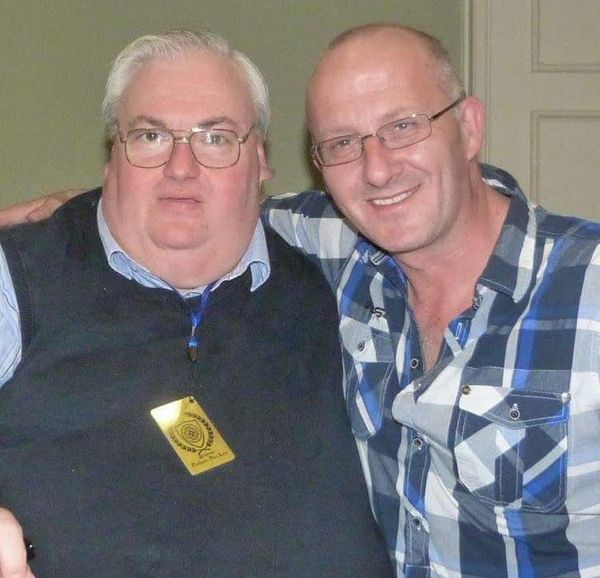
Coming Sunday 13th December at 1:30 pm sees the release of the long awaited Belfast In Conversation’s episode featuring two writers. owen Quinn and Laurence Doherty share their experiences and stories about their respective journeys in the writing world in Northern Ireland.

Owen is a novelist who has written a stage play the Dragons of Azrael and a regular feature writer and story teller with Phantasmagoria magazine and the Gruesome Grotesques anthology books. Laurence is a script writer who has been an extra in many productions and directed several projects.

Recorded back in November this episode promises to be a fascinating insight into two very different worlds which hopefully inspire and educate budding writers from all areas.

copyright Owen Quinn
copyright Laurence Doherty

The Time of the Wobbly Sets

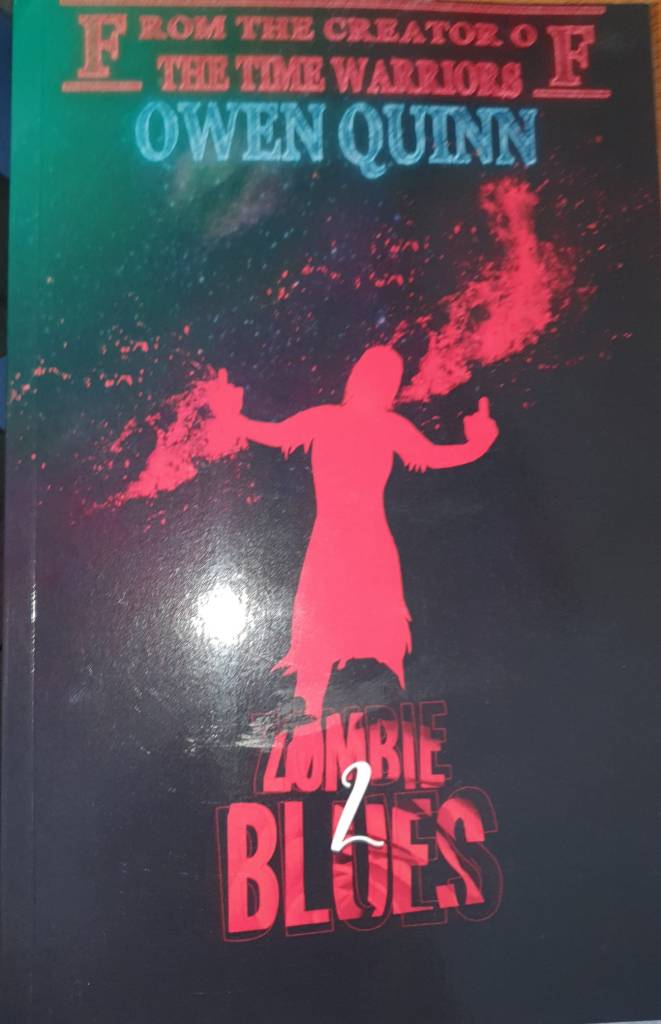
By Owen Quinn author of the Time Warriors and Zombie Blues

Copyright Owen Quinn

It has become a sad reality that the audiences of today have become somewhat spoilt. What with their CGI improvements, CGI sets, CGI characters, everything seems so alive and seamless. We now have living breathing dinosaurs by the dozen. I was there when the T- Rex blasted out of the cinema screens for the first time in Jurassic Park and we stared in awe as the brontosaurus jumped on its hind legs to grab a leafy branch before an a astounded Alan Grant. And it truly was one of cinema’s magic moments.

And what really struck me was how the new Doctor Who era benefits more than any other show from the new digital age. When people compare the new to the old, they talk of the wobbly sets and cardboard monsters and how laughable they were.
Hang on a minute.
If it hadn’t been for those wobbly sets we wouldn’t have the plethora of shows we have today like digital effect coated candies compared to the rotten old coffee flavour sweet in a box of chocolates that’s always left behind.
And it simply isn’t true that all the sets wobbled; I’ve seen more wobbly sets in Crossroads and Neighbours compared to Who. Though I have to say my favourite is the Six Million Dollar Man story the Return of Bigfoot which remains a personal favourite of mine from that seventies bionic feast. Steve, on the run from the OSI and his friends because they think he’s turned traitor, has a battle with Sasquatch himself where Steve is thrown into a series of metal barrels. Such is the force of the impact being thrown into them by the big man, that Steve smashes into the obviously solid barrels and a lid comes flying off which hits him in the head. Unfortunately it’s made of rubber as it literally folds about his head leaving him rubberised ie at death’s door.

“““““““““““““““““““““““““““““““““““““““““““““““““““““““““““““““““““““““““““““““““““““““““`copyright Owen Quinn


In Star Trek the nacelles of the Enterprise become see through in certain effect scenes later corrected in the updated CGI improved DVD releases which also added new effects and crisper, cleaner versions of the Enterprise. Some say we don’t need it but I can live it. Thing is, when I was a kid and watched them the first time round it never bothered me because I was captured by the stories themselves. Yet there is this snobbery about the old days and awful effects. I disagree. The old days were brilliant. These were people making low budget shows with little money, pushing boundaries and experimenting with new special effects like CSO which if the actor wore the wrong colour ended up like the Enterprise’s nacelles. However if it hadn’t been for these trail blazers we would none of the effects we have today which feel now like they were always there. One case in point recently brought up was painting bubble wrap green as an alien hand in the 1974 Doctor Who adventure the Ark in Space where the fourth Doctor, Sarah Jane and harry Sullivan faced the insect Wirrn in what is regarded as one of the show’s classics and showcases Tom Baker’s Doctor via his humans are indomitable speech. Here the Wirrn infect their hosts transforming the poor unfortunate into one of them. In a scene that was trimmed for being too horrific, the commander of space station Nerva begins to mutate. Noah, played by Christopher Masters, pulls his hand out from under his uniform and it is gone, replaced by an alien one. It is obviously bubblewrap painted green but not to me at the time. It was a horrible sight and terrified me because this man was becoming an alien. He was in pain and agony and there was nothing to be done for him. It is laughed at now but at the time bubblewrap was a brand new invention and something the special effects crew latched onto as something that could be used to create something never seen before.

Copyright Owen Quinn


But perhaps the greatest instance of wobbly sets and special effects was the 1964 Doctor Who adventure The Web Planet. The first Doctor, played by William Hartnell and his companions are forced onto a mysterious world populated by giant ants, the Zarbi, giant mothmen, the Menoptera and the alien consciousness controlling them all the Animus. I saw this for the first time in an audience at a convention where they laughed and chuckled as the Zarbi wandered about on screen banging into the sets and each other. But they were missing the point. The Web Planet for me imbues the determination and fire of the people making it. While the 1960s technology could barely create what the writer had in mind, it was the sheer scale of the story that caught me. Often it is too easy to dress actors up in blue skin and white hair and make them alien but here was a real attempt to create an alien world which for the most part succeeded but was let down by the execution especially the Zarbi where the poor guys in the suits couldn’t see where they were going. And despite the fact the producers probably groaned as they read the script and wondered how they were going to put it on screen with limited money and time, they did it. It was like a low budget Starship Troopers with giant alien insects no where near as agile as their CGI counterparts of late years. But it worked and while sets may be cardboard and plywood, the burning idea behind these stories, to constantly push the boundaries of television. It is one of man’s greatest traits that when he is told he can’t do something, he finds a way. If they had shelved this story then other stretches would never have happened. Other monsters may never have seen the light of day but with all these shows it is a credit to the writers, producers and special effects guys that what they did laid the foundation for what we have today. They were trying to push the boundaries of what science fiction could be on television and aiming for higher and higher concepts to make the universe more alien because they knew people would bore of men with funny skin and funky hairdos to portray the future and the audiences had, and still do, have an insatiable taste for new and clever aliens. If they didn’t always succeed it didn’t matter as long as the story was strong eg the appalling dinosaur model work in the Jon Pertwee story Invasion of the Dinosaurs and the ropey Loch Ness Monster in the classic gem Terror of the Zygons. As a kid I never noticed, I only saw giant monsters and let’s face it, in the Blake’s 7 last ever episode Blake, did David Collins, playing Deva, one of Blake’s new crew, being shot and crashing into a giant cardboard tube masquerading as a power conduit take away from the viewer’s enjoyment? No, because they were enthralled by the confrontation between Blake and Avon played by Gareth Thomas and Paul Darrow in what was to their final meeting, seconds before the entire cast is shot by the Federation and we are left forever wondering did Avon die in those final moments before the screen went black and gunshots were heard? No because the ambition of the storytelling eclipsed all else. Nor do we care about metal drums made of rubber because the Six Million Dollar Man was fighting Bigfoot! How brilliant of an idea was that? It’s so good it remains a much fondly remembered classic to this day. And for every quarry in Doctor Who, there was the jungle set in the fourth Doctor 1975 story Planet of Evil which stands up to this day.
So forget the fact Star Trek had the same props from story to story, forget Blake’s 7 and Doctor Who shared sets and props (the most famous being the appearance of third Doctor adversary a Sea Devil in Blake’s 7 season four opener Rescue) and forget that some ships were literally built from egg boxes and washing up liquid bottles, see these stories for what they are. Wobbly sets are not to be laughed at; they have to be see as breathless, stunning leaps of imagination that stand testament to the best of human determination to make the impossible possible; to paraphrase Shakespeare, the story’s the thing.

TW remembers Sapphire And Steel

By Owen Quinn author of the Time Warriors and Zombie Blues

Time- oh, time. As Picard says, it’s the companion that walks alongside us through life; to the Doctor and his friends, it’s the ocean in which they swim daily. To Sam Beckett it’s where he can put right where things once went wrong; to the Star trek crews it’s the one place they find themselves in that cannot be altered in case there’s a war with the Klingons except of course if your name’s JJ Abrams, then nothing is sacred, especially if you’re a Vulcan. Talk about kicking a culture when it’s down.

But what if time was your enemy? A living breathing entity that could enter our reality and literally do what it pleased with the innocent and unsuspecting? What if it were the ultimate silent killer; no maniacal laugh, no grand schemes, no boasting of its plans to the hero. What if it were the ultimate enemy where the war literally would never end? No matter how many times you stopped it, another scheme would pop up somewhere else.

And who could possibly stand against such an enemy?

Well, that’s where you call in Sapphire and Steel.

This show slipped onto our screens almost without a fanfare in 1979 and ran until 1982 on ITV. Produced by ATV and written almost entirely by P J Hammond. The only exception was story 5 which was co-written by Anthony Read and Don Houghton, names familiar to Doctor Who fans. Hammond himself incidentally has gone on to contribute two scripts to Torchwood- Small Worlds and From Out of the Rain.

Starring David McCallum and Joanna Lumley (Man from Uncle and The new Avengers respectively), Sapphire and Steel are elementals in human form who are assigned each time to stop whatever is happening. They have mental abilities far beyond anything we know but they can be killed or at least displaced.

At the start of each episode a fiery web would appear with a voice over that would tell you irregularities have been found and that Sapphire and Steel have been assigned (see below).

Uniquely each story has no title and is known only as story one, two etc and each was basically a stage play with the third story the only one having any location filming.

The greatest tool any show has to scare its audiences is to make normal, every day things turn against us and in story 1 it was the use of nursery rhymes.

In a house in the country, a mother and father are singing a nursery rhyme to their daughter when some force invades leaving the child alone. All the clocks stop and the parents have vanished. Calling the police only brings Sapphire and Steel.

The series boasted limited special effects and no background music – again making it a stage play of sorts. This only added to the atmosphere and in a lot of respects when the nursery rhymes like Ring around the Rosie and Goosey Goosey Gander are being used by the entity it is very Amityville Horror/ Poltergeist in nature. This utterly terrified the viewer, as winds would strike up out of nowhere as it tried to kill our heroes.

Steel was gruff, with poor people skills, while Sapphire was more caring. Joanna Lumley was stunning as Sapphire and their underplayed partnership conveyed a deep trust and caring between the two. Long before Steven Moffat made the phrase ‘Tick tock goes the clock’ frightening in Doctor Who, Sapphire and Steel were doing this in abundance. Hammond infused them with lines that could chill to the bone: ‘A-tishoo, a-tishoo, we all fall down’ took on a whole new meaning as the force tried to lure the children – and our heroes – into its trap and much more effectively than Who has ever done.

Add the claustrophobic constraints of a house and a simple landing and the show worked perfectly, and to this day remains a fan favourite. There is a real sense that they will not succeed in saving the day as time attacks again and again, manipulating the simple phrases of a nursery rhyme to open dimensions and trap Sapphire in a painting. If she moves one muscle she will be trapped forever and this is where we see the magic of this show. Steel is helpless to save her and desperately races to free her. Here he is forced to rely on the children and using his emotion to save her but there are no hugs or smiles when he does. The look between the pair conveys a thousand words which highlights their alien qualities and deep respect at the same time. While Battlestar Galactica and Buck Rogers were special effect filled extravaganzas, Sapphire and Steel works best on minimalism.

Language is the key to this series and knowing what can scare people. Like Danny Glick scraping at the window whispering to be let in in Salem’s Lot scared the life out of people, so Sapphire and Steel achieve this effect in equal measure.

As I have already said ‘We all Fall Down’ resonates to this day as it takes on a whole new meaning in this story when twisted by the evil. The world’s survival depends literally on a child not saying these words, something that is the norm for all children. Looping a policeman in time so he is eternally knocking a front door is another example of the beauty of this show. The house is a battleground where children are being used to subvert reality. There is no conscience, no morality, just a cold determination by evil to imprint itself on our world. The resolution lies in the past itself but unlike other shows there is no heart-felt goodbyes at the climax. The problem is solved and Sapphire and Steel simply vanish like ghosts. Maybe modern horror trying to emulate a good ghost story should stop for a moment and look back at this story. It is a quintessential master class in not only how to write a scary story but how to execute it as well. And that’s why this show remains one of the most loved in sci-fi history.

Time Warriors remember Peter Cushing

By Owen Quinn author of the Time Warriors and Zombie Blues

Ask anyone to name an actor associated with British horror and two will always come up.

 Christopher Lee and Peter Cushing.

I never got to meet him which I regret. He terrified me in the Hammer horror movies and swept me along in his battles with the Daleks.

It is nearly twenty five years since Peter died and yet it seems he is still around. I think it’s fair to say that although he is not the first actor to be brought back via CGI, he is the first to be so at the forefront of the story to the point kids couldn’t tell he wasn’t real.

That moment in Rogue One when Grand Moff Tarkin turned to the camera and we saw Peter Cushing’s face has divided many.  If it is a good thing or not is a matter for another time but it did introduce one of our greatest actors to a whole new generation of children. Cushing in the first Star Wars movie brought a grandeur to the proceedings that contributed immensely to the movie’s success. He did admit that that he wondered what a Grand Moff was and initially thought it was a moth. He also said he hadn’t a clue what was going on as it was for children and took roles that he thought people would like to see him in. Despite this lack of understanding, his cold, emotionless slaughter of an entire planet encapsulated audiences. He was the true villain of the piece and when you look at it, Darth Vader was his lackey even if Tarkin ruled the galaxy in comfy slippers. Guy Henry did a great job in capturing Cushing’s take on Tarkin, a man focused entirely on dominating the galaxy with his super weapon.

Did you know that somewhere in the world at any given time, a Peter Cushing movie is being shown? Known throughout the industry as a consummate gentleman, Peter was also an active writer whose career spanned six decades. He has played virtually everything from Van Helsing to Sherlock Holmes to Doctor Who himself and endures to this day in every performance. He was also asked to play the doctor on television but declined. His reasons were simple: it wasn’t his cup of tea and he didn’t like the Daleks!

There are few actors that can span generations but Peter was one of them. His distinctive timeless features adorned many a screen big and small in over one hundred movies and shows like Space 1999. His rich voice enhanced many a radio play. He was adored by everyone, young and old alike. Children loved him as the Doctor because he portrayed him as a kindly old grandfather with a hint of mischief in his eye, while adults loved him staking Dracula, spearing mummies or battling the Seven Golden Vampires. Even his lesser roles – such as Night of the Big Heat where he simply played an islander who loved a pint in his local – were thoughtfully played by the actor. One thing you could never do is forget Peter Cushing and fans just lit up whenever and wherever he appeared.

His career began in the British Theatre before making a name for himself in Hollywood in movies like The Man in the Iron Mask and A Chump in Oxford. Returning to his homeland during the Second World War, he began working in television in shows like 1984. But the British film industry was booming and a company called Hammer began making horror movies which would define the careers of Peter and Christopher Lee alike.

To the world they are the British horror industry and no matter how naff the script was – and there were some naff ones – it was the sincere and straight way the actors played the roles that managed to lift them beyond mediocre. Famously, while playing Sherlock Holmes, Peter didn’t like the taste of a pipe and kept a glass of milk on hand to take away the taste. Again don’t forget the slippers in Star Wars.

Despite his stardom and international success, Peter feared typecasting like many actors, so to take away this he took on the role of Doctor Who in two movies for Amicus, Hammer’s main rivals. He played him as a grandfather, fiercely protective of his granddaughters, who invented a time machine, the Tardis, in his back garden. Both movies had Peter face off against the Daleks in glorious technicolour. It was these movies that inspired today’s new generation of Daleks for Matt Smith. It speaks volumes about Peter’s character that he wasn’t even aware how loved he was and, as I said, he could walk across any medium and immediately be loved by fans.

No matter where he appeared, his presence lit up the room and gave a gravitas to any scene as seen in Space 1999 where he played Raan and the only high profile actor who has appeared in both the old and new Avengers opposite Patrick McNee featuring the Cybernauts.

Indeed, he was a favourite on the Morecambe and Wise show where he endured the running joke of never getting paid for his services and eternally seeking that elusive fiver. This he would finally get on This is Your Life when Ernie appeared, Eric having passed at this stage, and gave him that fiver before stealing it off him again. But that was Peter, loved by everyone, a perfectionist actor and a real star. Many so called celebrities of today who quite simply aren’t famous for their talent could learn a lesson in star quality from Peter and indeed his great friend Christopher Lee. There was no tantrums or diva behaviour, just grounded acting which endeared them to the crews they worked with too.

He was married to his beloved Helen for many years before she died. And such was his humility he wrote to Jim’ll Fix It to ask could he have a rose named after his late wife. Who else among the so called stars of today would even think about doing that? They would simply fire a few thousand in someone’s direction and make it happen. For Peter he had lost his soul mate in her passing and in an interview he said that her loss had left him where his only ambition was to join her one day. Life was all about killing time now. One of my most prized possessions is letter to me from Peter when I wrote to him back in the nineties asking for his autograph. He sent me the most beautiful letter about himself and thanking me for remarking on the fact that his wife had a rose named after her. It has to be the most touching letter from a celebrity I have ever received and as much as I loved the man then, in that moment, he was a hero. Not for the trappings of celebrity but for being a man whose loss became our loss and to acknowledge that in a letter was simply mind-blowing. That quality should be shown to all these newbie celebs. And every time I see him in a movie that letter springs to mind.

Not a religious man but one of strong ethical beliefs, Peter lived his life to the full as a poem left by Helen urged him to live it to the max but his grief had obvious physical effects on him. And that’s why Peter’s so loved to this day. When he hurt, the world hurt with him. He was the people’s actor, no airs or graces and a gentleman to the end. He was quality, he was class, he was indomitable and he will never ever be forgotten.

I think we’ll leave the last word to co star Christopher Lee. On Peter’s death he said: “At some point in your lives, every one of you will notice that you have in your life one person, one friend whom you love and care for very much. That person is so close to you that you are able to share some things only with him. For example, you can call that friend and from the very first maniacal laugh or some other joke, you will know who is at the other end of that line. We used to do that so often. And then when that person is gone, there will be nothing like that in your life ever again.”

There will never be his like again.

Doctor Who The Ark DVD Review

By Owen Quinn author of the Time Warriors and Zombie Blues

Photo copyright BBC

There is no doubt that this story, the second outing for Tom Baker as the fourth Doctor, is a timeless classic. It is now out again, digitally remastered and packed with extras which were missing from its earlier release several years ago.

For many this was the beginning of the golden era as Baker firmly establishes himself in the role. It is here the classic speech about the human species being indomitable as the Doctor addresses a huge chamber of sleeping humans is made which gives us a rare glimpse of how the Time Lord sees our species.

Together with Sarah Jane Smith (Elizabeth Sladen) and Harry Sullivan (Ian Marter) , the Tardis takes our heroes to the far future. There they find themselves on the space station Nerva, the Ark of the title, where the last of humanity is in slumber following the mass exodus of Earth. However something has stolen bodies and is intent on wiping out the last of the humans.

The insectoid Wirrn are one of the alien species that fans have wanted to see return for a long time and it’s easy to see why. They lay their eggs in humans allowing them to hatch while their slime can mutate a human into a Wirrn. It is the horror of this process that makes them so special.

Everything works about this story. The Nerva station would feature in the next two stories and be revisited in the Big Finish audio plays as did the Wirrn against the sixth Doctor. It is here that the famous scene where Sarah gets stuck in an air duct forcing the Doctor to goad her into fighting her way free happens. This is referenced years later by the eleventh Doctor in the Sarah Jane Adventures story the death of the Doctor.

This was truly a golden age as Harry and Sarah are the perfect foils for the Doctor. It is a pity that Harry would leave after this season as Ian Marter makes you fall in love with Harry with the slightest of facial expressions and dialogue. The sets are absolutely stunning as are the performances. What this story achieves is a heart and when Noah, the leader of the newly awakened humans and the first victim of the Wirrn mutation, sacrifices himself to save his own kind, there is a deep poignancy about it. It is the old theme of the human spirit overcoming alien threats to save the day making it the most powerful force in the universe.

You wouldn’t believe that this is only Tom Baker’s second outing in the role as he makes the role his own immediately. He, Ian and Elizabeth bounce off each other like a well oiled machine and all memory of Jon Pertwee is gone by the end of the first episode.

This is a story of simple ideas executed well. The cliffhanger to episode one is nothing more than a Wirrn falling out of a cupboard on top of Harry yet it is so effectively done that I remember it from its very first broadcast. However the horror factor is pulled back as in the scene where the Doctor confronts a mutated Noah. The original cut had his head split open as he completes the transformation into a Wirrn but it was cut for graphic purposes. Even the Wirrn themselves are well done. When trapping the Doctor in a cargo hold, the set is effectively darkened not only to heighten the horror but hide the fact the Wirrn can’t walk. But this is to its credit as the huge insects burned themselves into audience’s minds forever.

Ark in Space is the perfect Doctor Who and one that Russell T Davies cited as his favourite.

The extras add much to the story as we get behind the scenes and there are a few surprises here too.

When someone talks about magic, they are talking about the Ark in Space. Buy it.

Heroes of Doctor Who: The Brigadier

By Oen Quinn author of the Time Warriors and Zombie Blues

Who’d have thought that the character of the Brigadier, played by Nicholas Courtney, would become a mainstay in the Doctor’s life when he was introduced way back in Patrick Troughton’s era in battles with the Yeti and the Cybermen?

When the programme was facing cancellation back in 1970, the decision was made that the Doctor would be exiled to Earth and team up with UNIT, the United Nations Taskforce, to protect the planet from alien threats.

In the beginning the Brigadier was UNIT; he was the face that would be the Doctor’s comfort blanket. The typical soldier, the Brigadier would be the butt of the Doctor’s wrath and put downs and in following episodes their relationship was sorely tested as their approaches to dealing with any threat to humanity differed completely. As seen in the Silurians, the Doctor was still fighting for a peaceful solution with the reptilian species, the original inhabitants of Earth, despite the fact they had released a virus that almost wiped out mankind. But the Brigadier responded by blowing up the Silurian caves killing them. It was the right approach but one that jarred with the Doctor. This third incarnation, played by Jon Pertwee, was a man of action but a great politician, always seeking the peaceful solution whether it be the throne rooms of Peladon or the antimatter universe of Omega, total destruction for him was the last resort.

And as much as the Brigadier dealt with the Doctor and his shenanigans, he trusted him completely even though he despaired of the Doctor’s snub of all things political and military.

When the Master appears to repeatedly torture them with a variety of alien cohorts, the Brigadier isn’t fazed at all by this alien nemesis and his plans which in turn inspired his men to follow him regardless. In many ways the Doctor and the Brig were the ultimate odd couple, bickering and arguing, with the Doctor constantly winding him up only to do exactly what the soldier asked him to do.

Neither was the Brig impressed by the Doctor and his Tardis, indeed he never even travelled in it until the Three Doctors where he believed Omega’s antimatter universe was in fact the beach at Cromber.

But as times changed with the Doctor getting his ability to time travel again, UNIT began to be phased out. Many elements were playing into this; the real life death of Roger Delgado who played the Master, Jon Pertwee’s desire to move on as well as Katy Manning’s, who played Jo Grant, recent departure. But right to the end, UNIT gave real action packed scenes and a true sense of realism. In stories such as the Daemons and Terror of the Autons, viewers saw the ensemble shine with the Brigadier at the heart of everything in the battle against evil.

And with the arrival of Tom Baker’s fourth Doctor, the series returned to its travelling roots and the Brigadier’s relationship with this Doctor was as it ever was. He asked him to do something and the Time Lord would moan about it before actually doing it. The Brigadier’s last appearance was in the classic Terror of the Zygons although UNIT would pop up in a couple more episodes. He would not be seen until the twentieth anniversary story Mawdryn Undead where it was revealed the Brigadier had retired and was a maths teacher, having suffered a nervous breakdown. As always this was connected to the Doctor and a spaceship that was travelling between two time zones. Nicholas Courteney gives the performance of his life as two Brigadiers and ends up in another trip in the Tardis. Whether it was because of this adventure where he realized he wasn’t crazy after all, the Brigadier teamed up with the second Doctor in the Five Doctors and seemed to be returning to military life. He was in full action man swing in Battlefield alongside the seventh Doctor and met the sixth Doctor in the Children in Need skit, Dimensions in Time. And although he only met the first Doctor in the two anniversary stories, Nicholas worked with the first Doctor in the Dalek Masterplan as Brett Vyon, brother of future companion Sara Kingdom. And of course the Brigadier entered the world of audio adventures of Big Finish where he also kept his record intact by battling alongside the eighth Doctor.

However, despite the comic strip meeting, the Brigadier was not asked back for the new era, something that Nicholas wasn’t happy about. And I have to agree. The Sontaran Stratagem was an all-out UNIT story which didn’t feel right without the Brig. His absence was explained by having him tied up in Peru. But in the Matt Smith adventure The Wedding of River Song, it is revealed that the Doctor frequently visits the Brigadier for a night out on the tiles but this time as the Doctor’s own death is approaching, he learns the Brigadier has died, mirroring the real life passing of Nicholas. Although it is a touching moment, it doesn’t justify the character’s absence. Although he was resurrected for one last bash against the Sontarans and the Bane in the Sarah Jane Adventures, it only served to reinforce the fact he should have met the ninth, tenth and eleventh Doctors. But since this is now something we can’t change we can only watch old episodes and regale each other with memories of Nicholas’ numerous convention appearances. I met him twice and was shocked to discover he had a bald patch like a Pope’s cap and he smoked cigars but he was so generous with his time and smiled and chatted to everyone; something that can’t be said about some actors. Everyone speaks highly of him, his love of people, his grace, dignity and generosity are as legend as the character he played.

It’s bittersweet that the Brigadier will never appear in new Doctor Who but with technology today, maybe a story like Trials and Tribbleations may come to pass, allowing the current crew to interact in old stories. In this game you never know.

TW looks back at Battlestar Galactica

By Owen Quinn author of the Time Warriors and Zombie Blues

Copyright ABC

On the 17th September 1978 we were treated to a single run of science fiction episodes from a series called Battlestar Galactica. Created by Glen A. Larson as something called Adam’s Ark, it wasn’t until the advent of Star Wars the previous year that made studios sit up and realize there may be money in this space lark yet. Larson intended to do them as television movies but the network Universal Studios decided to go weekly with 24 episodes in total. Who would have thought that such a little show would spawn a legacy that right until this very day. It spellbound fans everywhere and to the horror of me and everyone else it was cancelled and replaced by some cub scout show with Adama.

Week upon week we were caught by that magnificent theme music as we sweep across the Battlestar Galactica and went on adventures with our heroes Starbuck, Apollo and Sheba. Some were good, some were bad but there is no denying that they shoved more mythology and elements in this solitary season that would last in the minds of fans for decades.

The Pegasus, the Ship of Lights, Kobol, Baltar and the Cylons. Despite the fluffiness of certain episodes, people forget the more horrific elements of the show. The mass murder and attempted genocide of humanity and that horrible fate when humans were put into the insectoid Ovion feeding chambers. What was missed in this was the fact you melted alive as your flesh broke down to feed the Ovion young. The sight of that woman clawing uselessly at the chamber to escape as her flesh sticks to the base is horror at its best. It also shows how nasty the Cylons were in the way they managed to get other alien races to take down humanity by any means necessary. It was not enough to simply shoot them; if the human body served another alien’s needs then so be it.

Now Patrick Macnee provided the voice of the Cylon Imperious Leader, a reptilian like creature that sat atop a huge dais issuing orders. He also provided the opening narration for every episode of the original run so it was a nice audience tease when he appeared in the flesh in the two part War of the Gods as the mysterious Count Iblis.

copyright ABC

What was very clever about this piece of casting was that it left the audience wondering was this the Imperious Leader assuming human guise to lure the Galacticans into a trap that would see the Cylon goal of genocide come to pass or was it another alien from the super fast orbs of lights that kidnapped several of Galactica’s pilots at the beginning of this episode. Or maybe neither. These two were episodes – 15 and 16 in running order – were broadcast over two weeks on 14th and 21st January 1979.

Sent by Adama, played by the legendary Lorne Greene, to find the missing pilots Starbuck, Sheba and Apollo (played by Dirk Benedict, later of A-Team fame, Anne Lockhart, daughter of the original Mrs Robinson in Lost in Space, June, and Richard Hatch, who would return to the remake Galactica as rebel Tom Zarek respectively). Instead they find Count Iblis, a human man in a wrecked spaceship on the planet below. He appears friendly at first so they take him back to the Galactica where he begins to exert a strange influence over everyone including the council. Whatever Iblis wants they give him freely, including command of the fleet. The benevolent Count uses the short falls of Adama’s command to turn the people to his side. They are starving, he gives it to them when the plants in the agri-domes begin sprouting, they live in corridors, they will have homes and Iblis does this like some sort of Jesus figure. He is the saviour the humans need and Adama and crew are powerless to stop him, especially since he’s actually right in what he says. He tells Adama he is an advanced being and that Adama must devise three tests to validate Iblis’s claims.

Meanwhile the mysterious light ships continue to plague both the Galactica and Baltar’s Base ship. The tests devised are to plot an exact course to Earth and deliver their greatest enemy to them which he does when Baltar, played by Star Trek’s John Colicos, is brought aboard the Galactica. The third test was yet to be decided. This only serves to cement Iblis as a holy saviour. Baltar recognizes Iblis’ voice as that of the Imperious Leader but it would mean Iblis was thousands of years old. As Iblis plunges the fleet into a state of absolute pleasure, a helpless Adama sends Starbuck and Apollo to investigate the wreckage for something to use against the Count. Iblis suddenly appears before them impervious to their weapons and he tries to kill Sheba with Apollo stepping in front of the blast. Suddenly the sky fills with light ships and Iblis reverts to his true form, a devil like creature before vanishing. On their way back, they are taken aboard the Ship of Lights where they are told they are what earlier humans called angels, the implication being that Iblis was the Devil. They raise Apollo from the dead since he was not meant to die and has a great purpose. Upon being returned to the fleet they have no recollection of what happened but are able to give the coordinates that will lead them to Earth. A gift from the angels.

These two episodes pack quite a lot in and add to the Galactica mythology arc. Written by Glen A. Larson himself it holds ideas that would undoubtedly have continued on in future seasons had they happened. Indeed the whole concept of the Ship of Lights and angels would be used once more in the Ronald D. Moore remake. The implication that Apollo had a bigger destiny was returned to in the episode Experiment in Terra where the Ship returns and sends him on a mission to what we believe to be Earth to prevent nuclear destruction. Indeed the fact that Baltar recognizes Iblis’s voice adds credence to the theory that the humans belief in angels and demons may have be real and on a grander scale, does this mean the humans are caught in a war between heaven and hell? It would explain how easily Iblis was able to take Baltar from his base ship and bring him right to the Galacticans. Is the Imperious Leader the Devil himself and the Cylons his demons? One fan theory was that the robotic Cylons were actually reptilian creatures in suits of armour which again gives strength to the religious themes in the show. Was the Ship of Lights a Chariot of the Gods? Alas we will never know but the lovely touch of the Galactican’s uniforms changing to pure white while aboard the Ship is also a religious touch. And as a wolf in sheep’s clothing it is also adopted by Iblis in his fashion sense. Add to that the fact the light ships knew he was aboard the Galactica yet didn’t take him off it could be interpreted by a test from God for the Galacticans.

There were some nice character touches that reminded viewers of past adventures. Sheba was the daughter of Commander Cain of the Pegasus and was left behind on the Galactica when the Pegasus disappeared again into space. Her loneliness and isolation makes her a perfect victim for Iblis’s mental influence and she falls for his charms hook, line and sinker. Equally, Boomer’s resentment of super cool Apollo and Starbuck, though under the surface, makes him another target that falls to Iblis. The Council of 12 are ready to give it all to Iblis which follows nicely from the fact they are figureheads only and bowed to Adama’s experience and command. Their power, such as it was, is no more so better to follow a God than be a hollow man. It also sets up some events for the future as Baltar has no intention of staying Adama’s prisoner and the prisoners he is put in with will play a part in their escape in a couple of episodes time in Baltar’s escape. This also sees the last appearance of Lucifer, Baltar’s Cylon servant, voiced by Lost in Space’s Doctor Smith himself, Johnathan Harris, and the introduction of the game Triad. It still amazes me how much detail and story was created in just 24 episodes. It is a real tragedy that we never got to go to any future seasons with this crew and I am completely ignoring the appalling Galactica 1980 series (aside from a couple of good episodes, the Starbuck one and when the Cylons find Earth too) which thankfully didn’t last long.

And this just shows how layered a show Battlestar Galactica was when it wanted to be, something followed through with in the remake but for me and many others, nothing will quite stand against the rise of excitement when we hear that rousing orchestral theme music written by Glen A. Larson and Stu Philips. It didn’t just deal in aliens and spaceships but real themes that have made fans think and speculate for years since its original broadcast.

TW looks back at Space 1999 year 2

By Owen Quinn author of the Time Warriors and Zombie Blues

Following a high concept first season, the second season of Gerry Anderson’s Space 1999 was given a major revamp.

The previously huge command centre set was scaled down to give a more claustrophobic atmosphere for action sequences and heighten the drama while the majority of the cast were dropped with the exception of Alan Carter, the Australian Eagle pilot which was rumoured to be because he was such a hit with fans especially the ladies.
No explanations were given for the departures and introduction of Tony Verdeschi, John Koenig’s right hand man. They were simply there. But in an unprecedented move the Space 1999 annual of that year told how the original cast had left via various accidents in unseen adventures in which they were killed including Paul, Victor and Kano. Another survivor from the original cast was comms officer Sandra Benes played by Zienia Merton. Both Hollywood legends and real life husband and wife, Martin Landau and Barbara Bain secured their roles of Commander John Koenig and Doctor Helena Russell.
This change also saw a complete shift of tone for the show as producer Fred Freiberger took the reins. He famously oversaw the final original Star Trek season which came for severe criticism and many feared quite rightly that this would also see the end of Space 1999. But there were many more factors involved in its demise which lay the blame unfairly at Fred’s feet.
The original show had been high concept space opera with many great episodes that touched on religion, fate and real science although the moon being blown out of orbit by a nuclear explosion was a plot device to kick-start the series but welcome nonetheless.
Many have maligned this season but there is much to enjoy and episodes that stand the test of time to take their place among the classics of science fiction.
This time round the emphasis was real sci fi fun with aliens, which were few and far between in the first series. Large, brash, action packed and colourful, this set of stories saw the crew face aliens, monsters and mad robots. Bu the biggest addition to the crew was the character of Maya, an alien shape shifter that could take the form of any animal she saw. This for me is the first great part. Played by the beautiful Catherine Schell, Maya was given a solid background and genuine reason to join the crew of Moonbase Alpha. In the premier episode the Metamorph, Maya’s father, Mentor played by sci fi legend Brian Blessed, his second appearance on the show, kidnaps an eagle crew and drains their minds to fuel a machine that is keeping his planet together then sends the mindless zombies to work in mines in secret.

Although his intentions to save his world are good the means are far from honourable as he kidnaps any and all passing aliens o keep his people alive. When Maya discovers the truth, she helps the Alphans and Koenig is able to destroy the machine and the planet as well, leaving Maya the last of her kind, a fact we will soon discover isn’t true. Though logic failed in the process of her becoming any alien were not addressed ala Odo in Deep Space 9 eg her clothes changed along with her and returned to normal in every shift but kids didn’t care and neither did I. We were all just excited to see what sort of monster she would become like the one eyed horned beast or part gorilla, part lizard. And we loved her even more for it. And no one can ever tell me fans didn’t do the turn to camera shot she did as the image of her chosen animal appeared in her eye. I did, actually still do. One can live in hope though I have been known to turn into a tiger on occasion.
Over the course of the season we have some really poorly executed ideas eg Maya and Koenig face the death penalty for picking flowers and fir trees are their judges. Every cliché is here in all its colourful glory, evil doppelgangers, mad robots, aliens who don’t understand emotion and mysterious alien temples.
But for every dud, there is a genuine classic and to this day everyone remembers the two part Bringers of Wonder when a ship from Earth arrives on Alpha to rescue them filled with old friends and family. Turns out their friends are illusions generated by hideous blob like monsters that remain a fantastic invention to this day; visually they were burned into your brain. Here they wanted Alpha’s nuclear reserve to feed and only Koenig can see them for what they really are.
It’s the passion of the performances that lift even the dullest of episodes and perhaps influenced by the funny ending scenes of the third Star Trek season, attempts to humanise the Alphans were attempted by Tony’s running gag about making his own beer or his pining after Maya at the climax of each story. Furthering this was the full on romance between Koenig and Doctor Russell and again Tony and Maya. Though this left the impression the rest of the Alphans were going to die virgins but any port in a storm I say.

And in an episode there was areal attempt to examine these relationships, asking the question, were they in love with the wrong people? It worked well and gave depth to the four leads previously unseen. It was in this second season that people call camp that the Alphans became human and made us connect with them on an emotional level even when they were lost in time in medieval Scotland about to be burned at the stake. You were desperate for them to survive and the trick they did best was literally getting the Alphans out of danger by the skin of their teeth.
Another key factor was the incidental music, all pumped up and full on exciting along with the revamped title sequence and theme tune that made the heart pump with excitement. It truly enhanced so many otherwise dull action scenes but the other great thing was when someone got thumped they smashed into the scenery in a storm of sparks and look of genuine pain. None of your Dalek victims that suddenly gasp in pain and cushion themselves as they fall after the Dalek shoots them, no this was in your face smashed against a wall and I often wondered how many claims were made for injury on the job. Just imagine those work injury adverts with a hapless security guard from Alpha lying in abed.
“I swear to God mister, it was a faulty comlock that made the alien smack me into the computer that wasn’t supposed to be there!” Ooh, underdog! You don’t need to be in a red shirt anymore for bad things to happen.
And for a show that had been supposedly reduced to camp status, it drew in some huge names including Brian Blessed, Patrick Mower, better known to Emmerdale viewers now, Freddie Jones (Krull, Emmerdale), Stuart Damon (The Champions), Wilfred Mott himself Bernard Cribbins, Start Trek and Quantum Leap’s Carolyn Seymour, Dave Prowse and Patrick Troughton. Not bad considering Hammer legends Peter Cushing and Christopher Lee had also appeared in the first season.
For me and thousands like me, we have a ball in the second season. There was fun, there was action, drama, passion, aliens that were designed to be different and exciting and effects that have more than stood the test of time. With Maya we had barely scratched the surface of her character when we discovered more Pyschons were out there including her brother and a Hannibal Lector type criminal who mimicked her shape shifting abilities. We also learned the Pyschons were a hunted species by the Dorcons and they came to claim the last of the species.
With the Bluray release on its way there is so much fun and excitement to be had by this show and old friends we have forgotten. It is one of my favourites in my DVD collection. Go on, check the episodes out on YouTube.
At the end of the day, who doesn’t love an Eagle? Rest my case.

Doctor Who: A Little Appreciation

By Owen Quinn author of the Time Warriors and Zombie Blues

Copyright Owen Quinn cover by Stephen Mooney

Like millions of other Doctor Who fans I was delighted to hear Doctor Who was coming back, revamped and reimagined by Russell T Davies. I knew he was a long-time fan from his Queer As Folk series where he placed a Doctor Who fan as a living breathing normal person rather than the saddo nerd depicted by numerous shows and news reports that hunted young nerds being choked by their 30 foot Tom Baker scarf.

Rumours gathered like storm clouds; Billie Piper as the companion, shock horror, is this going to be a musical version or hadn’t they the money for a real actor? The Daleks were in, then they were out then they were in again. The Tardis was going to be radically different and not a police box at all. But it was. Who would play him? And slowly, everything fell into place. Photos of Christopher Eccleston in his jumper and leather jacket leaning up against the Tardis, the fireball trailers and huge billboards plastered everywhere.

Secrecy was paramount and the feeling was the BBC that had once let their biggest money spinner die like a neglected dog were now 100% behind this new version but the question still remained? Was this going to be Doctor Who or something Who in name only?

I watched it with the wife and remember I am a long-time fan; in my mind there is no other programme that will ever compare to it and as the end credits rolled my first words were, “I hope they can do better than that.” I disliked it immensely. What was Davies thinking? He had gone on record as saying he had been influenced by the likes of Buffy and Angel with story arcs and action packed 45 minute episodes. And yet we got burping bins, sloppy characterisation in the Auton Mickey scenes, a classic villain that was woefully underused, a lost opportunity to include old Doctors in the Clive scenes and poor incidental music that jarred the ear. Yes there were good points like Jackie, the new Tardis and the Time War reveal but it was a disaster. And the next episode didn’t do anything else but reinforce my initial reaction. God this is poor. Eccleston bopping to Britney was embarrassing to say the least and my guts were sinking with every scene. This new version was not good at all for me.

But then came the Unquiet Dead. Now we were talking, the Doctor was back. Everything was perfect and my hopes were raised and from this point in I grabbed it with every fibre of my being. I loved the triple cliffhanger in Aliens of London, the gas mask zombies in The Empty Child and the brilliant reinvention of the Daleks, making them the war machines they should always have been. And in the climatic Parting of the Ways when the Emperor is revealed and we get a glimpse of the Time War, those words “Rose, I’m coming to get you!” made me sit up and cheers and within thirteen weeks we had a new Doctor who was fascinated by his new teeth and I was fully back as a fan.

Yes there were a couple of dodgy episodes, Boomtown and the Long Game which felt forced into the overall arc but these paled in comparison to “Are you my mummy and the uplifting climax of this story with the Doctor and Rose dancing. And I have to disagree with those that said the show finally found a reality by introducing housing estates and how tired the show had become. Bandwagon jumpers piss me off because they don’t think and say what they feel, they think and say what they think others want to hear. In Sylvester McCoy’s final two years, the show churned out more classics than are ever given credit for. McCoy was the first to face flying Daleks, he was the first to use a housing estate background to plant alien threats and Ace had the most detailed background and characterisation of any companion previously, an arc that would have been resolved in the aborted 27th season. Ace was not his companion; she was an equal partner just as Rose was so if anything, Davies looked at this and used this era as his template for the new era. Indeed in his only Doctor Who novel, Damaged Goods, he again uses the council estate as the backdrop to an alien invasion and stating that the Doctor can enter royal courts and mix with kings and queens but he can’t get through a simple PVC door.

With the introduction of the tenth Doctor things took a huge leap in confidence. The Cybermen came back as did Davros, the Master and the Sontarans, all updated for a new generation while pleasing the old one. Although I don’t agree with the love story between Rose and the Doctor, it served some fantastic stories using new aliens and historical figures such as Tooth and Claw which gave us Queen Victoria versus a werewolf. The writing was sharp, the characterisations spot on with the semi-regular characters such as Mickey growing believably before our eyes. In School Reunion we finally brideged the old and the new much like Star Trek the Next Generation when Spock came back. However the Doctor Who team did it so much better. Sarah Jane Smith along with K9 returned and the moment the tenth Doctor met Sarah n the darkened school was the moment David Tennant became the Doctor for real. Here the characters were deepened immensely, dealing with the issues of what life with the Doctor actually meant for his companions. Even Rose’s mother Jackie in Love and Monsters got this treatment as we saw the effect on her while Rose was travelling with the Doctor. Alone and lonely, she was easy prey for anyone that saw her as a vulnerable widow looking for some form of relief to make her dull life exciting again. We had already seen Rose reported as a missing person and now we saw just how traumatic Sarah’s departure from the Tardis had been for her. And to this point for me, the Doctor became even more real as faced with the consequences of his actions, he became more caring and less dismissive of his friends. This led to characters recurring after they left him ala Martha Jones and Jack Harkness, to being forced to wipe Donna Noble’s mind after she absorbed a Time Lord consciousness. He even met up again with third Doctor companion Jo Grant in the Sarah Jane Adventures. This had the greater effect of the Doctor isolating himself again, a trait that recently saw him in the Matt Smith incarnation let Amy and Rory think he was dead in order to protect them from him and give them a normal life again especially since they lost their baby because of his actions. And I think this is the greatest achievement of this new era of the show. Actions matter and have consequences. Companions leave but are still connected to the Doctor’s life and as Davros showed him in the episode Journey’s End, he changes people into soldiers, corrupting their innocence of what life is like but in fact we as the viewer see, he opens their eyes and become by default his eyes and ears in defending the Earth. As Harriet Jones said the Doctor wouldn’t be there to save them all the time as shown in Torchwood Children of Earth, Sarah Jane Adventures The Death of the Doctor which name checked a host of companions still fighting the good fight in the Doctor’s name and Turn Left where Earth history is completely changed when he is killed in The Runaway Bride while fighting the Racnoss. What Russell T Davies had created more than anyone else was making us care to a degree much deeper than ever before. Even those passing acquaintances play a larger role such as Harriet Jones and Mr Copper from Voyage of the Damned.

Stephen Moffat has continued this tradition by making the series even more serialised with the introduction of river Song and the mystery of her identity. In a Good Man Goes to War, which remains for me the single most perfect episode of drama, not sci fi, but drama of the year. Everything from the misdirection sing the Doctor’s crib to Matt Smith’s reaction to her identity made me smile and it didn’t matter people knew who she was. It was perfect. Matt’s Doctor is more than the other two the most faithful incarnation to the old Doctors. He is mad, mischievous, happy and dark with his mannerisms so Doctor like that it’s obvious he was born to play the role. Along with the return of the classic revamped monsters, we have a host of new ones that stand alongside the Daleks and Cybermen such as the Silents, the Weeping Angels and the nameless entity that almost got the Doctor killed by a murderous mob in the classic Midnight, a true tour de force in good writing and drama.

And on top of that one off characters that offer a glimpse of a whole world of unseen adventures like the Silurian warrior living in Victorian London and the Sontaran that became a nurse and Lorna Bucket, a girl that met the Doctor for thirty seconds and joined an army just to see him again.

It is no wonder then that the new Who is such a success and makes people wonder why the BBC ever let it die. It has everything a viewer can want, not a fan but a viewer, the people you want to come back week after week because the fans will always be there, viewers will desert you in a second if they don’t like what they see.

And the new Who has done that in leaps and bounds through good writing, characterisation and moments that make you laugh and cry. Like the classic show it has its odd wobbly effect and slow story but also like the classic it has built a whole new universe populated with memorable characters. No one cares the Skaresen in Terror of the Zygons is awful because the story is so good nor do people care when a door opens for no reason in Image of the Fendahl because the Doctor needs to escape for plot purposes. It’s the structure that keeps us there and by the way, isn’t it bizarre that we only see the Daleks sucked back into the void at the climax of Doomsday and no Cybermen or that Jack at the climax of Torchwood season 1 is in his office when the Tardis materializes yet next time we see him he is racing down a street, fully dressed with the Doctor’s hand in a backpack in Utopia. And not to mention the scene in School Reunion where the kids locked into the computers by their headphones suddenly lose them all in one second, running out of the room at Mickey’s insistence with smiles on their faces rather than terror.

See? Some things never change and that’s exactly why we love Doctor Who so.Owen Quinn is the author of the acclaimed Time Warriors series of books.

TW Defends AVP Requiem

By Owen Quinn author of the Time Warriors and Zombie Blues

All photos copyright Fox

So here we go again in the ongoing debate between me and my buddy as to what is good and not so good in this sci fi and horror world we love so much.

We both love the Aliens and Predator franchises (mostly, yes I’m looking at you Covenant and The Predator) but the much anticipated crossovers are not held in the high regard they should be. I like the first one because anything with Lance Henriksen I love anyway but the second is usually dismissed as not very good. For the purposes of this article that’s the politest language I can use but the words of my buddy haunt me as I type those prophetic words. You know who you are you close minded heathens.

But I disagree completely. It’s a great movie!

AVP Requiem is by far the most realistic, gritty and terrifying of all the movies featuring our beloved Xenomorphs and Predators. Everything about these creatures especially the Xenomorphs is based on nightmares and Requiem takes full advantage of this. The bottom line is the question; what would happen if the Aliens reached Earth? The Predators are not a threat anywhere in the same league as the Xenomorphs because they operate on a hunter’s code of honour. Needless killing is not in their nature; the hunt is everything. The Xenomorphs are a different kettle of fish. There is no reasoning with them. They are driven by one instinct and one instinct only; to take as many hosts as possible to breed for their Queen. They have no conscience, no morals, no reasoning except to kill and gather hosts. They are stealthy and formidable enemies which is one of the reasons the Predators chose them to hunt. Earth had been used as a breeding ground by the Predators in the past and  kept a Queen and her eggs in stasis in controlled environments for the purpose of controlled hunts. The one scene that did stand out for me in the first movie was that scene where hundreds of the Xenomorphs swarm from a pyramid temple. Even the Predators knew this was a doomsday situation and choose to detonate one of their nukes to stop the infestation. That very scene gripped the fanboy in me because even in Aliens we didn’t see so many of these creatures in a mass attack. Right there I wondered what would happen if they arrived on modern day Earth.

Shane Salemo obviously thought the same thing because requiem was born.

The greatest enemy is the one you don’t know exists so if these creatures got a hold on Earth, the consequences would be devastating. We know the company has wanted embryos for biological warfare and we also know Ripley managed to stop the Aliens getting to Earth at the climax of Alien Resurrection so the very thought of these things walking our streets is the very stuff nightmares are made of.

This is what makes Requiem absolutely riveting stuff. The writer has taken the fear factor that is the Xenomorphs and amplified it tenfold against the background of the ton of Gunnison.

The first clever thing they did was cast no big names. Well, I had never heard or seen any of them which added to the realism of it for me. Nobody ran about muscle bound or armed to the teeth with every gadget the military had to give. There were no prisoners fuelled by killer instincts or cloned hybrids fighting alongside mercenaries.

Every last person was an ordinary citizen, a cast of every day Joe and Josephine Bloggs that you would know in your own lives. The waitress, the bad boy, the fighting brothers, old friends you no longer connect with, cute kids and the homeless people you walk by in the streets. There is nobody with super powers and special skills that will help them kill monsters. The biggest struggle these people face is paying the bills and keeping a roof over their family’s heads.

When the waitress, Carrie, is pinned by the Predalien and impregnated it is heartbreaking especially when her body is found. Real life murder of someone as innocent and harmless as Carrie is a shock to the system if you heard it reported on the news but her death here is much more tragic because of the nature of it.

Aside from a few instances the people have normal names we are again familiar with in real life. We meet Kelly, Robert, David, Molly, Carrie, Tom and Johnny to name but a few. I personally know people with these names, some of them friends of mine. On a psychological level this is where the movie connects with us. Some of us have been waiters or waitresses. There are no jobs here out of the ordinary and no space ships to work on. Everything is relatable to the audience consciously and subconsciously.

Even the Predators have underestimated the immensity of the threat the Xenomorphs pose to this town which is a great tragedy. They have bred faster than expected and now literally control the town.

Right from the get go this movie has balls and capitalises on part of the human psyche we preach in real life. A huge part of a town’s populace is children. We saw Newt stay alive despite a Xenomorph infestation in Aliens. In a deleted scene we saw her brother Timmy, with a face hugger wrapped round him but it never followed through to the chest bursting part.

In Requiem there is no such shying away from the reality of an alien invasion. Kids are very much at the fore front of the horror here in scenes I never thought they would be brave enough to do.

There are so many nightmares scenes that have stayed with me to this day. Salemo goes for it to show what would happen warts and all if aliens infested a town. Even if the aliens landed in a city it would have made no difference. The same things would have happened. Within minutes of the movie starting we have a little boy not only see his father’s arm fall off in an acid burn but attacked by a face hugger. The scene is beautifully done and brimming with tension with that little sound the kid makes as the hugger wraps round his face hitting your senses like a hammer. It is subtle but there is no adult watching this scene did not instinctively want to help the kid.

As a parent you see your own child which kicks our protective natures into full throttle. But worse is to come as the kid gains consciousness only to see his father die as his chest explodes. Moments later the little boy suffers the same fate and again it is all in the reaction of the child actor. The second he clutches his chest we know what is coming and again that sticks in our heads because we picture our own kids in danger.

But it just escalates from there. Most movies that feature a kid dying under a supernatural or unnatural threat will end it there but not Requiem.

We tell our kids that there are no such things as monsters. We check under the bed and in the closet to prove to them there is no scary monster there before they will even think of going to sleep. It’s a double edged sword because as parents we fear something happening to our children. One of the most vulnerable times for all of us is when we are asleep. We lock the doors and windows double checking until we feel comfortable to go to sleep. That’s why we leave the door to our children’s rooms ajar so we can hear them in distress and leap straight away to protect them. Our homes are our castles and nothing should ever break that.

In the next shocking scene that is literally the stuff of nightmares, little Molly O’Brien’s bedroom is invaded when a Xenomorph smashes through her window and kills her father. So much for the assurance that there was no such thing as monsters. Molly manages to survive the apocalyptic ending along with her mother Kelly. God knows what those images of her father dying, the monster smashing its way into her room and mass slaughter will do to her as the years pass. It’s a nice touch because just because the movie ends for us doesn’t mean those characters end. Ripley herself is a good example of this.

What all great horror movies do is take what we consider as normality and twist it into something abhorrent and terrifying to the point you will never look at it the same way again. The swimming pool scene comes to mind. How many times as children did we think that there might be a shark or monster under the water? As a parent I often played at monster going underwater and grabbing my kid in mock scares. It’s a scare that ends in laughter and good memories. In Requiem in ends in a chlorine soaked death.

We all see hospitals as places of safety where usually our loved ones go to heal. Even if they do die in hospital they are treated with respect and dignity. However Salemo screws this completely in a way I again never saw coming. The sight of multiple Xenomorphs swarming all over the hospital exterior is a shocker. But the most shocking scene for me and the one that has stuck with me all these years more than any other horror movie is the maternity ward.

I remember very clearly the moment the Predalien entered the room full of mothers in labour. I thought that when it saw this it would withdraw and leave this sacred happy moment. But when it began to attack and impregnate every last one of them my jaw hit the floor. Being a father and having gone through the labour process with my wife, it really struck a cord with me. I said at the start of this that nothing was sacred and this movie had balls to go all the way with the horrors of Xenomorphs. This epitomises it for me. My morals and sense of reasoning double stepped me here because I thought it would show mercy like a Predator would do but to be kicked in the balls like that should have told me that this was not going to end well. At that point I would have happily kicked the crap out of the first smiling extraterrestrial I met on the way out of the cinema.

If anything, this movie shows that no matter what there is hope too as humans will prevail somehow against the odds and fight to live another day through the characters of Kelly, Molly, Ricky and Dallas. They are the lone survivors of the massacre. Gunnison’s last remaining citizens are tricked to go to the town centre and die at the hands of the government’s final solution. In reality the government killing its own citizens is unbelievable but in this situation understandable. Add to that this is not the first time we have seen this in movies for example Outbreak and The Crazies remake. It is a desperate final solution but there is no other option. It does follow the pattern of all the other movies with the entire cast bar a few dead at the hands of either Aliens or Predators.

Requiem gives us the most realistic view of a Xenomorph infestation. There is no happy ending and everyone from the young to the old is potential hosts for the embryos. It speaks to our most basic instincts as humans and more importantly parents on levels that shock us with images that stick with you. I have no doubt that even if you hate the movie and send me gifs with Simpsons characters typing worst movie ever, those images pop into your mind when you think of AVP Requiem.

So with all this in mind, the next time you happen to come across the movie on a night you have nothing else to watch, give it a second chance. You just might find it’s a much richer and layered movie than you first thought.