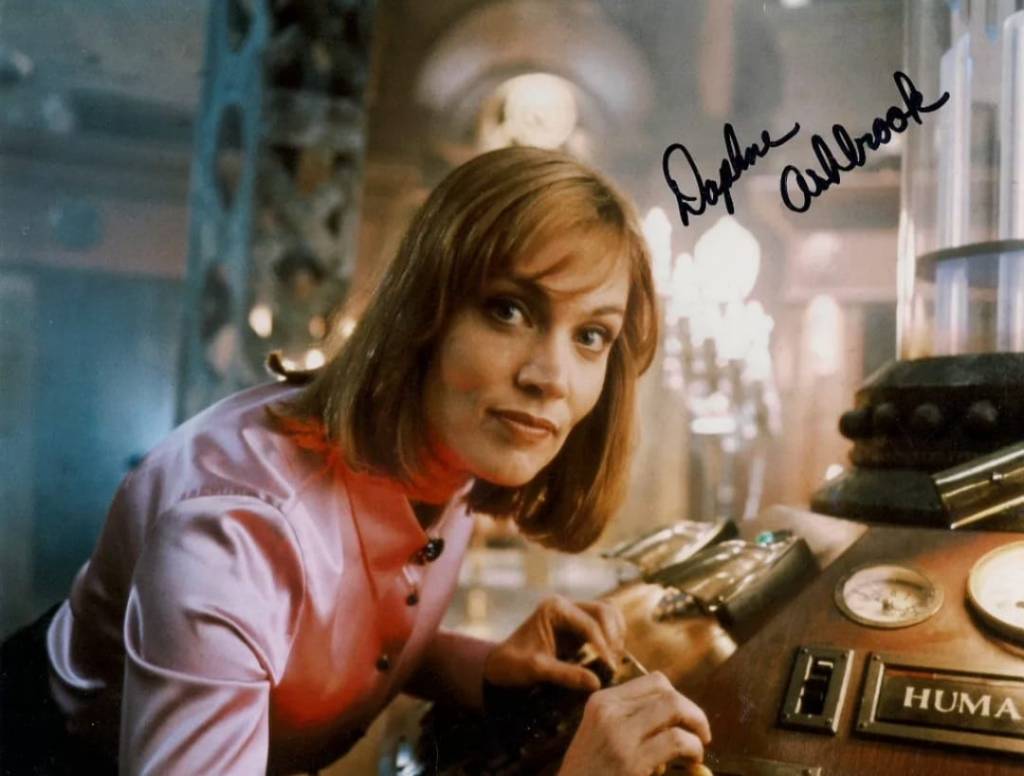
Heroes of Doctor Who: Zoe

By Owen Quinn author of the Time Warriors and Zombie Blues

Once again we look back through Doctor Who’s long history and look at one of the characters who shaped the Timelord we know and love so well…

Copyright BBC

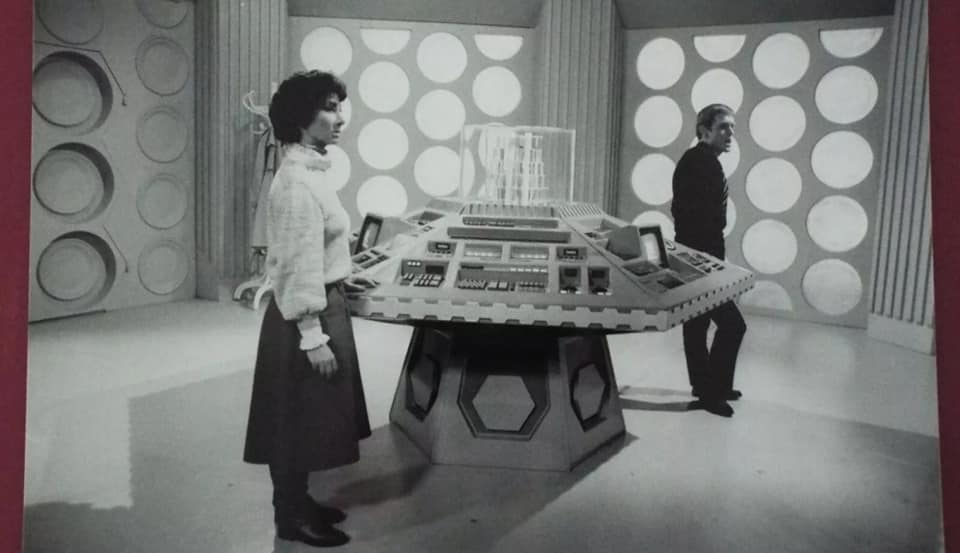
Having left Victoria behind in modern day England with her new adopted family, the second Doctor and Jamie encounter young scientist Zoe Herriot, played by Wendy Padbury, on a space station being targeted by the Cybermen. In the Wheel in Space, they came to see the genius of Zoe’s intellect and she quickly boarded the Tardis to find out more about the strange men that had saved them.

She is the first companion ever to be cautioned by the Doctor about the dangerous life they faced in the Tardis. To this end, he showed her their adventure Evil of the Daleks as a warning. This was really done to lead into a repeat for the BBC but it showed that the Tardis recorded every landing it had ever made, forming them into a chronicle of sorts.

Zoe also showed, even in the future comic strip, that heroes existed when she conjured one up in the Mind Robber where they when trapped in the Land of Fiction where they encounter various characters from books and stories while avoiding the white robots. She was also the first companion ever to be caught in the most bizarre cliffhanger at the start of this story when the Tardis exploded, leaving her clinging to the console in space screaming her lungs out. Even today it remains a powerful image where not even the Tardis is safe.

Her intellect matched the Doctor’s as in the Krotons they are both subjected to the Krotons’ mental tests to see if they are worthy of serving the crystalline creatures. The Doctor fails but Zoe saves him from death by correctly solving the puzzle.

She teamed up with UNIT in the Invasion where the Cybermen attacked the Earth. She refused to be the quiet little woman along with photographer Isabelle and threw herself headlong into danger.

She and Jamie became best buddies and neither he nor the Doctor realised how much Zoe was relied on to save the day. Even in The Mind Robber, she takes the lead and solves many of the traps set by the Master of the Land of Fiction.

But none of them saw what was coming when they landed in a series of war zones where soldiers from Earth’s history were fighting in a battle created by the War Lords to fill their armies with the best fighters. From Roman centurions and World War II soldiers to Mexican bandits, Zoe faced them all with strength and determination. However, unable to stop them all, the Doctor is forced to call the Time Lords, the people he has been hiding from all these years, resulting in his being put on trial and exiled to Earth for interfering in the universe. Zoe and Jamie are returned to their own times, their memories wiped of all their adventures in the Tardis bar the first one.

She did make a reappearance in the twentieth anniversary story the Five Doctors as a Tomb of Rassilon phantom designed to scare the Doctor away but the fact they remembered who the Brigadier was alerted the Doctor that his friends weren’t real.

Zoe has returned time and again in the Missing Adventures range of books as well as the BBC range and the audio stories from Big Finish.

Indeed her mind wipe is the focus of a Companion Chronicle when an alien race discovers she is a time traveller but she is indignant as she has no memory of it. As they piece together what happened, it is quite an adult exploration of the ramifications of life with the Doctor so don’t think it’s just about the past, it’s so much deeper than that…

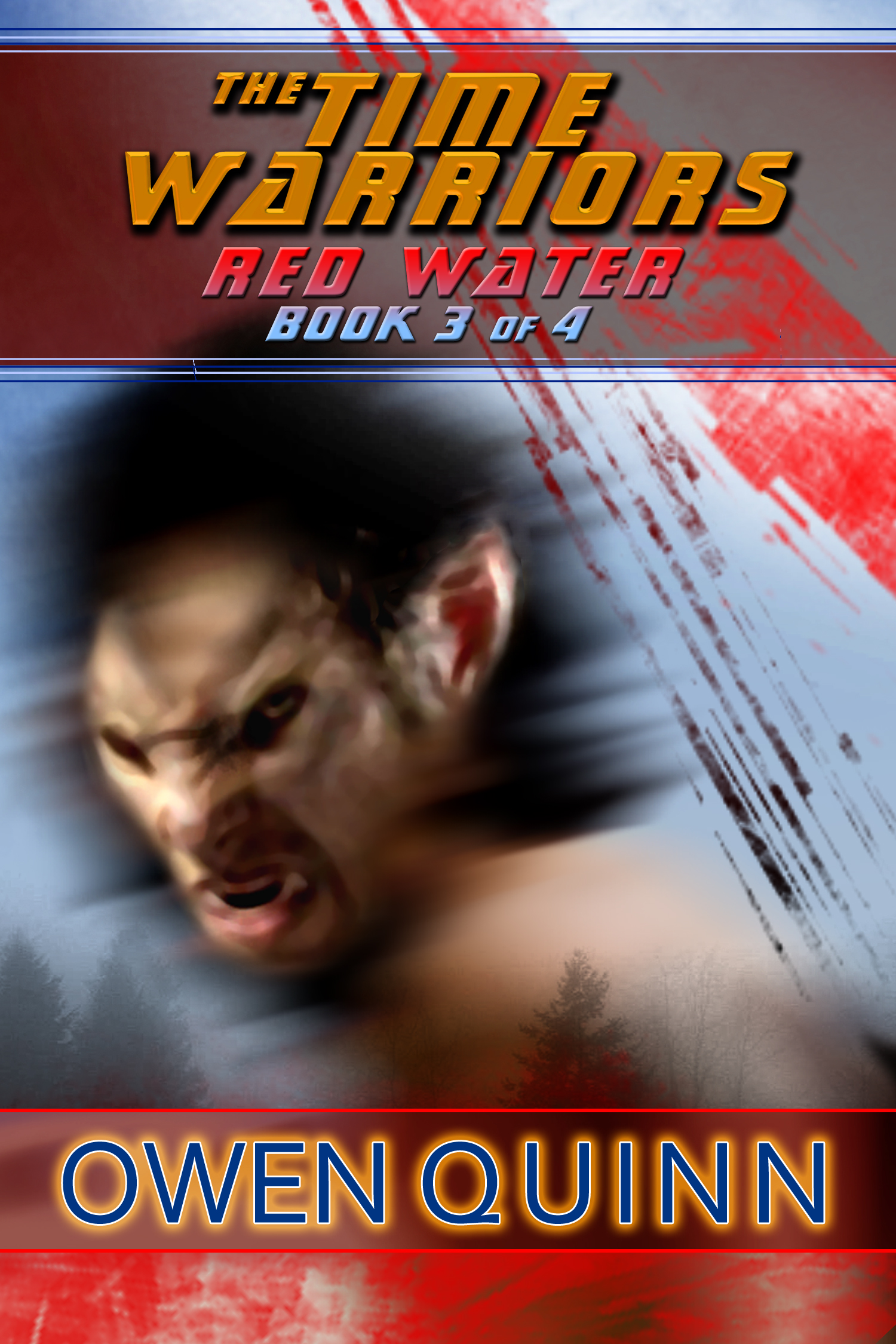
Behind the Story: The Time Warriors Red Water

By Owen Quinn author of the Time Warriors and Zombie Blues

Copyright Owen Quinn Promo art designed by Conaire McMullan

When an old friend of Varran’s calls the Time Warriors to the town of Red Water after he hears Bigfoot has murdered a local, they begin a journey that will not only bring old faces back into Varran’s life but reveal a previously unknown part of the Xereban’s life. Deep in the forests awaits something dark that intends to consume the planet.

There’s no greater fascination for me than the possibility of monsters out there which should not exist. My biggest love has always been for Bigfoot or Sasquatch. It’s been a love of mine ever since I can remember. The classic battle between the Six Million Dollar Man with Bigfoot in the two part story the Secret of Bigfoot only cemented it in my head forever.

When I created the Time Warriors series I always intended for them to follow in the footsteps of Steve Austin and face the giants of the mountains. But how?

Believe it or not my first concept was to have Varran and the others discover a group of Nazis that had been brought to America after the war. While they agreed to work for the American government, they were carrying out their own agenda along side sympathisers to the Nazi cause. The scientists have captured a tribe of Sasquatch and are controlling them via implants. They Intend to build an army of these ape men to take control of the country and begin the Fourth Reich. Hey I was only a kid when i thought of these things so it is kind of hokey but if someone can think a tornado made of sharks is a good idea then nothing is off the table.

Again I rethought it. I realised this was a chance to delve into another part of Varran’s past which had not yet been revealed. In First Footstep I said he had a Native American hand made blanket adorning his wall. Well time to see how that happened. But still how do I work in Bigfoot? The legends are intertwined with Native American myth and artwork. He has been known to them and there are over 108 names of which Sasquatch is but one. No matter how I tried I couldn’t make a connection to Varran’s past. The Skinwalker was an easy addition as it is also part of Native American legends. That would be the villain and there would be a huge punch up between it and Bigfoot very much in the tone of the old Hulk comics where Hulk and whatever equally bulky foe he faced beating the crap out of each other.

So basically at that point the story essentially was there but was missing the spine. Now being fascinated by the subject of Bigfoot I watched every documentary I could find and there it was as if God himself pointed it in my direction. I always had in my head that reality was like a giant honeycomb where certain points were weak allowing access to other dimensions. I also had the lost history of Earth in my head so why not add this in? What if millenia ago there was a war between demons and ancient humans where the demons were sealed in a dark dimension? What if they stayed there, licking their wounds until the day they could break through and reclaim the Earth for themselves. This lent itself to adding the world of the supernatural to the Time Warriors’ universe which expanded it. Therefore the real killer became a innocent wolf possessed by one of these demons twisting it into something unholy. It intended to jump bodies and take over a Bigfoot which would allow the other demons to follow through and do the same.

What Bigfoot really is I explore here and give my own take on it using every part of lore I have ever learned.

Yet I still hadn’t got the missing link to make Varran part of it. By chance I was watching another documentary about a captured young Bigfoot called Jacko. Story goes that Jacko was found by some loggers and captured. He was put on a train to become part of a travelling show run by George Tilbury. However for some reason Jacko disappeared from the moving train from inside a locked cage.

That was it. That was how I connected Varran to the Bigfoot legend and gained the trust of the Native Americans who were more than aware of the Bigfoot species and their purpose in the world.

That was it, that was Red Water complete, all I had to do was string it all together and make it an exciting story. I would love to see the Bigfoot and Skinwalker smackdown on screen or even as art like in the Marvel comic vein.

The story of Red Water is far from over and the sight of a Bigfoot walking the corridors of the Juggernaught have to be revisited again. Strangely enough work has begun on Return to Red Water.

Get your copy today here https://www.amazon.co.uk/Time-Warriors-Red-Water-Book/dp/1463594275/ref=sr_1_2?dchild=1&keywords=red+water+owen+quinn&qid=1609268453&sr=8-2

Behind the story: The Time Warriors: The Skull

By Owen Quinn author of the Time Warriors and Zombie Blues

Copyright Owen Quinn cover designed by Conaire McMullan

Summoned to 1975, they find Brussels in the grip of a serial killer with a difference. All the bodies have been sucked dry leaving hideous corpses in its wake. As they race to save the latest victim, things go wrong. Jacke disappears while tribal warriors stalk the streets. With no clues, Varran and the others find themselves running out of time. But it may be too late as Jacke comes face to face with the killer. A killer she thought long dead…

WARNING: SPOILERS AHEAD!

The Skull is the second story in the two story book Spooklight & The Skull. I experimented with a two story book that would be easy reading as a choice against a more plot heavy novel or anthology book. They would be two stand alone adventures, one reflecting a new threat while the other would bring back an old enemy.

I love revisiting old monsters and villains and bringing them back for a rematch should never just be for sensationalism’s sake. The story has to warrant it and I try to bring new dimensions to them eg the Collector’s return in Cavalandria and the Mentara in The Belbridge Mystery.

In the Skull we see the return of the Veldrox, the creatures upon which the entire vampire myth is based. I’ve always been fascinated by the story of the crystal skulls and where they came from. Experts for decades have tried to decipher them and a certain Doctor Jones has also experienced their power first hand. So I adapted them into the skeletal remains of the Veldrox. They were somehow programmed to sustain the Veldrox in a deep suspension until they were able to rebuild themselves. They could still influence hapless humans to carry out their will in order to restore themselves. Somehow the crystal lattices are able to project the Veldrox’s mind to whisper in people’s dreams and influence them to carry out their will.

In the Skull the corrupted Belgian Jarvis Cochrane who has murdered his father to attain his fortune is the victim rather like Frank was lured in by the Cenobites in Hellraiser. He barely escapes from Peru pursued by the Tegzaria, a secret society of jungle warriors who in some lost history have been appointed to secure the skulls and ensure the Veldrox never rise again. I added them to give another layer of mystery which also tied into the themes of lost histories references in Return to Eden featuring the Numarans. Who said the history books are right? it’s much more fun to tear them up and rewrite. Who can resist lost civilisations filled with technology or men walking right along beside dinosaurs? It also allows the reader to fill in the blanks and spin yet another universe in their minds which brings them into the story.

To give us an international flavour I set the story in Brussels in 1975 to subvert reader expectations. The Time Warriors have been summoned to help investigate a series of dessicated bodies. There is a serial killer at large but one that is unlike anything the police have ever faced before.

Now diversity among characters is something that should be encouraged and is becoming more widespread. It would be very easy to shoehorn all sorts of nationalities or minorities into a story but it has to be organic. In this case I came up with the character of Catalina, a transgender character formerly called Thomas. Thomas had been married with kids but went through with the transition despite the stigma of the time. I wanted Catalina to not only be a trailblazer but a figure that would pave the way for those today. That was why it was important that she was a police detective whom had gone through all the prejudice and was still fighting the battle every day. Like Jacke, i wanted her to be an example to others and be a figure of hope for anyone in that situation. Indeed she is a beacon for anyone who feels they are different to everyone else and searching for their place in the world. She finds that the battle will be hard but worth it in the end from the Warriors.

Teaming up they track down the killer. Jarvis has been kidnapping women to feed to the Veldrox. Using their flesh it is regenerating its body and is almost complete. Using history they track the original victims but history changes when Jacke replaces the original kidnap victim and is taken by Jarvis instead. The Veldrox has sensed Jacke’s previous encounter in Venom when she became a vampire drone. The race is on to save Jacke and stop an ancient evil from resurrecting consuming the entire world.

For me this story works on the personal level as the character of Catalina learns more about herself in the bizarrest of situations including fighting alongside the Tegzaria. There are nice character moments and mirrors such as Jarvis and Catalina opposite poles in life yet taken down different paths.

Get your copy today by clicking here today https://www.amazon.co.uk/Time-Warriors-Spooklight-Skull-ebook/dp/B07FKSTJ1Y/ref=sr_1_1?dchild=1&keywords=the+time+warriors+spooklight&qid=1609257471&sr=8-1

Heroes of Doctor Who: Jo Grant

By Owen Quinn author of the Time Warriors and Zombie Blues

In our new regular feature each week we’ll be looking back at characters that have come and gone in the Doctor Who mythology and we do our bit to ensure they will never be forgotten. This week, the third Doctor, John Pertwee’s companion: Jo Grant.

There are few companions like Jo Grant. Played by Katy Manning, Jo was brought in as a more traditional companion as the producers felt that previous sidekick scientist Liz Shaw was too much the equal of the Doctor, played at the time by Jon Pertwee.

Jo was ditzy, clumsy and rushed in, ever eager to please her new boss, not realising that the Brigadier had placed her with the Time Lord just to keep her out of his hair because her uncle was high up in the ministry.

Right in the path of harm’s way was just where Jo would end up for the next couple of years as she and the Doctor battled a whole plethora of alien creatures. Much has been written about the UNIT family both on and off the screen and Jo was the little sister that kept getting into scrapes. On more than one occasion, she almost ended up killing the Doctor.

In her first adventure, Terror of the Autons (January, 1971), she was hypnotised by the Master into triggering a bomb intended for the Doctor. Despite his initial reservations about her, the Doctor quickly grew to love Jo Grant. In some ways she was the first companion to be loved by the Doctor. Long before Rose Tyler, Jo’s eventual departure was one of the most emotional ever. She met her husband to be while battling giant maggots in Wales where miners were dying from touching a toxic sludge. Caught up in his eco beliefs and desire to save the world (and remember, this was long before our current ‘save the environment’ culture), Jo decided to travel to the Amazon with him. Everyone remembers that poignant moment where the Doctor silently raises his glass to her future before slipping off into the night alone. That final shot of him driving his beloved Bessie car into the night speaks volumes compared to Rose sniffling all over a wall in another dimension.

Katy Manning was Jo Grant in every way. She was clumsy but had the heart of a lion. She put her life on the line for the Doctor on more than one occasion as she believed completely in him. In the Daemons, she threw herself before Azal, the basis for the Devil as he was about to kill the Doctor under the Master’s influence. She was the first companion to encounter multiple Doctors in the Three Doctors and even the Master had a grudging respect for her in the end. From Ogrons to Draconians, from Seas Devils to Daleks, Jo displayed a bravery that would put many to shame. She went blindly to find the secret of Axos as she knew something was wrong and, despite her encounters, she didn’t believe the Tardis had taken her to another world but alien priests and primitives soon changed her mind.

At this point in time, the Doctor was stranded on Earth, his mind wiped of all time travel by the Time Lords, but at the end of the Three Doctors – when he was pardoned having saved the universe from the renegade Time Lord Omega – he wouldn’t leave unless Jo came with him. Out in the universe she found even deadlier situations including an army of Daleks on a planet populated by invisible creatures and fungus spitting plants, the dreaded Aggedor in the kingdom of Peladon. There she teamed up with Ice Warriors and almost stayed to become the Queen but life with the Doctor drew her back. They were also miniaturised in a travelling show full of creatures in Carnival of Monsters including the dreaded Drashigs, half dog, half caterpillar and became a prisoner of the Ogrons.

Even alone, as a prisoner of the Master, beautifully played by Roger Delgado, she was brave and spirited and wasn’t afraid of opening her mouth.

Jo’s adventures continued in novels and comic strips (including an adventure with the 8th Doctor in Genocide). But it wasn’t until the advent of the Sarah Jane Adventures that Jo finally returned to our screens, as mad and clumsy as ever and still battling to save the Planet. She was still married and now a mother of seven. When UNIT brought her to their base for the Death of the Doctor, Sarah Jane and Jo finally met and immediately formed a bond. Jo was saddened and jealous that Sarah Jane had met the Doctor again several times while he had never returned to see her. When the 11th Doctor materialises, she chides him for looking like a baby while he says she looks like she’s been baked.

Only when the Doctor transports himself, Jo and Sarah Jane to an alien world to escape the Shansheeth, does Jo finally get her chance to confront him. In a moving moment the Doctor tells her he has been watching her and knows all the wonderful things she has done with her life including throwing herself over Niagara Falls in a tea chest to protest against some environmental threat. He is so proud of her and everything she has become and in that conversation Jo finds the assurance she has sought all her life. She is happy to stay behind and let him continue his travels, knowing that part of her is still out there.

It is a beautiful full circle for the character but her journeys continue in the Big Finish range of audio plays where Jo’s character has been explored further including her tendency to throw her life away for the Doctor in the Many Deaths of Jo Grant.

Jo has never been forgotten, especially since she’s the first companion to pose nude with a Dalek. At the end of Death of the Doctor, Jo drives off in black taxi with her grandson to continue her fight for the world, a fight that began with plastic aliens, an evil Time Lord and nearly blowing up her best friend. If there is any justice we should see Jo Grant one last time for the 50th anniversary; if not, she may just pose nude again with a Dalek.

That was Jo Grant; the girl who always made an impression and will never, ever be forgotten.

TW talks to the legend Phil Davis

By Owen Quinn author of the Time Warriors and Zombie Blues

He defends the streets of Whitechapel; has battled the Alien beside Sigourney Weaver, tried to bring hell on Earth in Being Human, fought the tenth Doctor and Donna in Pompeii and is part of the cult that is Quadrophenia. Today in the wake of the end of Being Human we talk to the legend that is Phil Davis on his career, Whitechapel and what it was really like behind the scenes of Alien3.

copyright BBC

TW: Phil, first of all thanks so much for taking the time to chat to us, it’s truly an honour. Let’s go back to the beginning. How did you get into acting?

PD: Oh that’s a long story. I come from an ordinary working class family and was bought up on a council estate in Essex. Somehow by the age of nine or ten I had got it into my head that I was going to be an actor. We didn’t go to the theatre or the cinema, so this was before I had ever seen a play. I could read out loud comfortably and I liked showing off so maybe that was the beginning of it. This idea of ‘being an actor’ stuck in my head and became a sort of obsession.

At Secondary school I started doing the school plays and joined all the Amateur Dramatic societies. The more I did it the more I fell in love with it. But it was very complicated. I was aware of course that most theatricals did not come from backgrounds like mine and I was not a prodigy. I didn’t bag all the best parts in the school plays or the local youth theatre. I struggled through my teens with the idea that maybe I was kidding myself. With a few exceptions, my teachers at school did their best to discourage me. My parents didn’t discourage me but couldn’t help really, it was outside of their scope. I think they were worried that I was going to end up terribly disappointed. So it was a tortuous few years. I did get into the National Youth Theatre which was encouraging, along with two other boys from our local youth theatre group but my first two seasons I didn’t shine, I was keen as mustard but not given anything much to do.

In my third and last season with the NYT I was given a good part in a Peter Terson play called Good Lads at Heart. I got a couple of good notices in the London papers and foolishly left school when I should have been studying for A levels, got a job in the coffee bar of the Shaw theatre where a new professional theatre company was being formed by the NYT management. I hung around waiting to be snapped up. It didn’t happen. Also I’d burned my boats. Grants were available for Drama school students back then in the early 70s but they did require academic qualifications to bag one. So drama school was out. Then one day I answered an advert in the Stage newspaper and got myself an audition at the theatre Royal in Stratford E15, run by the legendary director Joan Littlewood. I got the job. I was off. Terrific luck, she worked in such an idiosyncratic way that my lack of training was a positive advantage. She liked me. I stayed for a year. My first professional job as an actor.

On his early days: “I didn’t bag all the best parts in the school plays or the local youth theatre. I struggled through my teens with the idea that maybe I was kidding myself.”

TW: You’ve done several historical roles, Nicholas Nickleby and Bleak House, have you a passion for these types of dramas?

PD: Not particularly. I am a Dickens fan, I love the novels, but for me it’s all about the characters, Dickens wrote brilliant characters. Even the small supporting cast in Dickens provide with th reader with specific characteristics and individuality so they are great to play. Smallweed in Bleak House was a gift from heaven. Incidentally I think the reason Bleak House was so successful was that they gave it time, fifteen half hour episodes, it’s a huge and complex novel, you can’t dramatise it into a two or three hour mini series without filleting out what is special about it in my opinion. But I wouldn’t claim to have a special passion for dramas set in the past. I wish contemporary dramas were as rich and interesting.

TW: You appeared in Alien3, were you a fan of the previous movies. Was it a hard shoot or did you have a blast doing it?

PD: I did enjoy the previous movies, especially the first but I had mixed feelings about taking it on. It’s always a frustration playing a small part in a big budget American film, it’s rarely fun. I had spent several months doing a fringe theatre production in London, it was a great success but there was no money. I needed to earn some dosh and Alien 3 coming along was perfect in that respect so it would be churlish to complain. Our band of convicts were called in to Pinewood studios every shooting day, about whether we were likely to get on camera or not, we went mad with boredom, there were card schools, chess clubs, scrabble competitions. The atmosphere on set was fractious and unpleasant, a lot of money was at stake and Fincher was making it up as he went along, story changes, script changes, every day. One character found out, (having shot all his best scenes) that he was supposed to be educationally sub-normal. It was difficult not to laugh. So not much fun, but lucrative.

On Alien 3:”The atmosphere on set was fractious and unpleasant and [David] Fincher was making it up as he went along”

TW: What sort of things influenced you growing up?

PD: It was so long ago it’s difficult to remember. In truth the major influences were not theatrical. I was a Beatles fan (obviously), I liked The Stones, The Animals, The Pretty Things and American Blues Bands Some jazz artists. Lots of different kinds of contemporary music spoke to me. I remember discovering the ‘Mersybeat’ poets Roger Mcgough, Adrian Henri and Brian Patten and finding these opened the door to other poets, I found and loved Ionesco along with some Pinter sketches. US films of the 70s, actors De Niro, Jack Nicholson, Dustin Hoffman. And the British New Wave, Albert Finney, Saturday Night and Sunday Morning, early Ken Loach. Casting around. Whatever we could get. I was desperate to be an actor and I knew I would not be a traditional ‘actor laddie’ type, so I was always drawn to anything new or avant garde, the offbeat, but in working class Essex in the late 60s it seemed like everything interesting was happening elsewhere.

TW: Have there been parts or shows you would love to have been in but never had the chance?

PD: Oh, yes. Of course. I’ve had a great career but there’s a lot I’ve not done, never got near. I’ve never been in a Shakespeare play, or Chekhov, Ibsen, nothing classical at all. I wonder sometimes how I might have measured up against a couple of ‘great’ roles. The grass is always greener. A couple of film roles floated towards me then went elsewhere. One of the things I learned though, when I’d got going as an actor, was to let things go. I never got bitter and twisted about the stuff I missed out on. I got on with the stuff that came my way and determined to make the very best of every opportunity. I wish, in a way, that I’d done more theatre over the last twenty years, there offers and opportunities but I chose a different route.I think of myself primarily as a screen actor. I still love it.

TW: Lucius in Dr. Who, did you visit the Tardis, was it a happy set?

PD: Yes. It was a happy set. Nice people, very welcoming, David and Catherine were very nice. I looked at the Tardis. Good fun but hard work. The climax was shot in a quarry in Swansea, in the middle of the night, in October and I was wearing a toga, no thermal underwear possible, freezing! My kids were very impressed that I was in a Dr Who, gained a lot of cred, they don’t usually take much notice so that was nice. Actually I found it quite difficult. I had to be very serious, earnest, bashing on with cryptic dialogue while David quipped and gagged around it. Did my best to make it work but not my finest hour I fear. Tried my best.

copyright BBC

On influences: “I was a Beatles fan (obviously)”

TW: You’re also a writer and director…

PD: Well I haven’t directed anything for nearly 12 years. In the mid 80s I wrote a stage play and put it on myself at The Old Red Lion pub theatre in Islington, North London. It did well and I started to wonder if there might be a film in it and so I wrote a screenplay. Eventually the BBC picked it up for its Screen 1 strand of one off films (this doesn’t exist anymore – great shame) and much to my surprise they let me direct it. It was well recieved and played at the London and Sydney film festivals before it screened on the TV. Suddenly I had another career. I spent most of the 90s juggling my acting work with directing assignments. I never found the time to write. It was stressful and complicated. A film or TV mini-series can take up almost a year if you’re directing it and about six weeks if you’re acting in it. But it was a heady and exciting time. I loved the directing but the politics of raising money for a project and dealing with financiers is never easy. On ID, one of my feature films, we had seven different sources of finance, seven different sets of executives all wanting a say in the final cut. One of the things I found was that when I went on to an acting job after directing something it was with a sense of profound relief, all I have to do is play my part, to take responsibility for that part of it. It freed me up. I became a better actor for having directed. I had a clearer idea of what the camera was doing but it was more than that. I was more relaxed. More confident.

I feel that the directing part of my career is probably over but I do have one project, a film, I’m trying to raise some money for. But I’m primarily, first and foremost an actor.

TW: How did Whitechapel come about?

PD: No big story. They offered me the part. I’d worked with Rupert Penry Jones some years before on North Square, the legal series for (UK channel) Channel 4 set in Leeds and we had become friends. When he read it he reccommended me to the producers and they told him I was already top of the list. So we were off.

I didn’t think it would lead to a long-running series. It was a one off-mini series about a psychopath replicating the crimes of Jack the Ripper. I didn’t see how you could sustain a series of this kind and of course we couldn’t. We had to change the format. We would have run out of copycats. I think it’s found a form now that could run and run. The two-hour stories, all with some link to the past. Whitechapel is a strange beast. It’s where the cop show and the horror movie meet. An interesting place to be. Pull the curtains, double lock the doors and have Whitechapel scare the pants off you. Lovely! We are shooting series four now and it keeps developing. Even more Gothic and scary this new one!

On Doctor Who: “The climax was shot in a quarry in Swansea, in the middle of the night, in October and I was wearing a toga”

TW: What, for you makes, Whitechapel work so well?

PD: I’m not sure that I know really. Some things catch people’s imagination and some don’t. I think the horror movie part of it gives it an edge, it’s sort of preposterous but that doesn’t matter, people like to be scared. I think also, from speaking to people, that the relationship between Miles and Chandler is key, chalk and cheese, very different but a good combination, a good chemistry. The new series will be more of the same, but hopefully bigger and better.

TW: How do you find meeting fans face to face? Are they a bit wary of you in case you do a Miles on them?

PD: The Whitechapel fans may be nervous but I get recognized from quite a wide variety of work. There are the Quadrophenia freaks, even though it was hundreds of years ago, the Mike Leigh fans, followers of Silk etc etc. Actually, I don’t get bothered very much, people say ‘hello’ and ‘well done’ and that’s gratifying. It’s nice when people seem pleased to see you but it has never been a problem. I’m not shy, I don’t mind stopping for a brief chat. Every so often people seemed shocked to see me, ‘you’re off the telly’ they say, as if I live in the TV and have escaped into real life, but mostly it’s very nice to be appreciated.

TW: Right now you’re The Devil in Being Human. Did you have to audition for that role and how does one play Satan without slipping into cliche?

PD: I didn’t audition. It was a straight offer. Toby Whithouse, the writer, was familiar with my work and wanted me to do it. He’s not quite the Devil in all his glory at the beginning of the series. He’s reduced, trapped in the failing body of an old man (what made them think of me?) only when he sets the vampire and the werewolf against each other does he begin to regain his power. He is vicious, spiteful, with a sort of distilled contempt for the world and everyone in it. I didn’t worry about cliche. I didn’t seek out and watch any other screen devils. I just got on with my version. I made him as disgusting as I could, make-up painted veins in my face, blackened my teeth, put wax in my ears. It was fun. Then when he rises he sort of gets younger, turns into a dapper and mischievous imp. He is funny. Except that he’s set on destroying everything that is good in the world. Enormous fun. I tried to play him with relish.

On life: ‘Every so often people seemed shocked to see me, ‘you’re off the telly’ they say, as if I live in the TV and have escaped into real life, but mostly it’s very nice to be appreciated.’

TW: Do you enjoy the horror roles?

PD: I’ve played more bad guys than good ones. Something about my face perhaps. But of course I enjoy them. There have been some nice characters. Stan in Vera Drake, Graham in Births, Marriages and Deaths, Maloney in Rose and Maloney. But the monsters, the pyschopaths that come my way are very enjoyable.

TW: Aside from Whitechapel what else is coming up?

PD: There’s a film called Borrowed Time due for release this year. I’m very pleased with it. Google it online and find out about it. It’s worth a look. Tiny budget, made under very difficult circumstances but done with love and a good piece of work. One of the ironies of my work is that often it’s the less populist stuff that I am fondest of. I did a monologue last year called Double Lesson. It went out without much fanfare in a documentary strand called First Cut and rather disappeared without trace. It’s about a schoolteacher coming up to retirement who loses his restraint and attacks a pupil. It may well be the best thing I’ve ever done. You might find it on Youtube. Keep trying. Double Lesson with Phil Davis Ch4. My other favourites are 20,000 streets under the sky adapted from Patrick Hamilton’s novels which was on BBC4 and garnered a small audience but is a nice piece and the Curse of Steptoe in which I play Wilfred Bamble the actor from the famous sitcom. Some of these roles break the mould for me, they are characters you would not normally assume that I would play, and I love them all the more for it.

TW: Phil, thank you very much!

Heroes of Doctor Who: Peri Brown

By Owen Quinn author of the the Time Warriors and Zombie Blues

Once again we scour the Doctor Who universe for those you may know or may not but all of which helped make the Doctor the Timelord he is today…

Perpugillian Brown, Peri for short, was the first American to travel in the Tardis and one of the few companions to oversee a Doctor’s regeneration.

With the growing success of the show in the States, then producer John Nathan Turner saw an opportunity to appeal to the American audiences and would-be investors by adding an international flavour to the Tardis for the first time ever.

In reality, in over twenty years, the Doctor’s companions had all been Scottish, English, an alien that spoke with an English accent or a robot. Ok, we know it was made in the UK and was on a budget but it was a natural progression and did the programme’s profile no harm at all. However, Nicola Bryant, the beautiful actress chose to play Peri, was actually English and had to pretend to be an American for the public eye.

A botany student, Peri was introduced in Planet of Fire, both Turlough and Kamelions’ final stories (bar hallucinations in the impending regeneration) so she had to make an impact and who better to put her up against than the Master? Her stepfather was an archaeologist diving for relics off the coast of Lanzarote. He disapproved of Peri’s plans to go off travelling with two boys she had met, so he trapped her on his boat. Unknown to him, she was not to be stopped and taking something that she thought was valuable from his treasures – little did she know she had just taken an alien artefact, one that was sending a signal.

That signal had brought the Tardis to Lanzarote. Turlough saved Peri from drowning bringing her aboard the Tardis. At the same time, the Master had taken control of the robotic shape shifter, Kamelion, who was living aboard the Tardis. Suddenly finding herself kidnapped, Peri was alone on an alien world chased by a mad robot that kept changing form until she discovered the Master had been shrunk and needed the healing flames to return to normal.

But the gritty murderous people of Androzani and her fatal poisoning left its mark as the Doctor gave up his life for Peri. She watched as he regenerated right before her into someone a lot more brazen than the mild mannered fifth Doctor.

Confused by this new face, back stage mismanagement caused her and the sixth Doctor to have a tumultuous relationship, something both Colin Baker and Nicola were unhappy with. Why would you travel with someone rude, arrogant and who had tried to kill you?

But there was a definite chemistry between the two and despite what critics said, I feel there are several classics in the first season. After the Attack of the Cybermen, Vengeance on Varos saw the introduction of the slug-like Sil who became an instant hit with his penchant for marshminnows and ruthless business streak. Peri more than stood up for herself despite being turned into a bird hybrid and almost becoming lunch for the cannibalistic Androgums (although they aren’t really cannibals; they only look human).

Peri was often reduced to the screaming companion via poor writing and again the Borad tried to turn her into a half human and half Morlock to breed with. Even though she was constantly dressed in shorts and tight tops – there was no doubt Peri was eye candy for the dads, emphasised by that famous bikini scene in Planet of Fire where the camera for some reason seemed to stick on her, em, boobs. Strange that.

But by Revelation of the Daleks, Peri had covered up. But the resulting cancellation of the show, or suspension, as the official line goes, plans to pit Peri against the ice Warriors and the Celestial Toymaker went up in smoke. However Big Finish changed all that and the adventures finally took place last year. Peri was also one of the few companions at that time to do an actual radio play outside of the Big Finish range.

By the time Trial of a Time Lord returned, Peri and the Doctor were best buddies, happy to travel together where she was his number one priority. But it was in the next story that Peri’s finest moment was to come and sadly her final one.

In Mindwarp, Peri was murdered, her body possessed by Kiv, another of Sil’s kind. His body was dying and Peri became his host. Her head was shaved and brain wiped to sustain this new personality. Too late to save her, the Doctor was sucked out of time by the Time Lords and she is shot to death by Brian Blessed’s Lord Yrcanos who had fallen in love with her. It was by far the best exit ever for a companion but in the final episode, it is revealed her death was a trick to secure the Doctor’s guilty verdict by the Valeyard. In reality, she married Yrcanos and became his queen. Yet strangely the Doctor never went back to see if this was the life she really wanted or was she just making the best of things? Colin addressed this in a graphic novel he wrote and the New Adventures series saw her finally meet the seventh Doctor and return home under a cloud disliking the Doctor for abandoning her.

However as is the trend these days, Big Finish took up the story and Peri had extended adventures with both the fifth and sixth Doctor which, as with every surviving character, explored and deepened the character of Peri including another possible ending for her adventure after Mindwarp.

Having been part of one of the most turbulent eras of Doctor Who, it is a credit to Nicola that she still loves the show and is immensely proud of her time in it. Having met her a couple of times, I can tell you Nicola is as beautiful and graceful in real life as she was on the Tardis. She is honest and proud about her time on the show and she and Colin have proved that, with proper writing, the two of them soar and things could have been a whole lot different.

TW talks to Stargate and Arrow star David Nkyl

By Owen Quinn author of the Time Warriors and Zombie Blues

How did you first become interested in acting?

I loved the idea of being a different person every day I go to work.

Where did you train? 

University of BC, in Los Angeles privately and in Vancouver privately.

Is being bilingual an advantage to you in your career?

It is in my life, so it is in my career. Language is a great way to provide perspective.

What defines acting for you?

Courage, will, and smart choices.

What’s been the biggest lesson you’ve learned over the years in your craft? 

That truth is multi-faceted and infinitely expandable. You corner of it is only a piece, so don’t be too precious with it.

You have an impressive theatre background.What is it about acting in front of a live audience that appeals to you?

The instant feedback.

Is theatre the best training ground an actor can have? 

I think it is. You learn the basics in a much more robust setting. It forces you to have a stronger voice and a stronger voice means a stronger position.

Can you tell us how and why you cofounded the Misery Loves Company Theatre?

I met some terrific people when I was in Prague who had various levels of experience in theatre. We put together an english language theatre to keep us busy, but mainly to do work we would not normally get a chance to do onstage back in North America.

How do you go about choosing which productions you stage?

It’s a collaborative process. We look for entertainment value and also logistics. Casting is crucial too.

Do you find that theatre can often be neglected in a day and age that relies so much on digital technology where everything is given at the touch of a button? 

Yes, and that will soon change – it already is I believe. The more our machines isolate us, the more we need a forum for common truths. It’s entirely different watching a comedy in a room full of strangers than it is watching it alone on a flickering screen. We are only now beginning to come around to the idea that we need each other physically – even if it is just sitting there – and not just virtually.

How did you break into television?

In Prague the production that came needed english speaking actors who were local and didn’t need hotels and flights to be there. We were cheap and cheerful.

How does the television industry in Vancouver differ to that of say Los Angeles? 

Volume only – there’s more in LA. Vancouver is at the top of the game though – so professionally it’s the same.

How did you get the role of Doctor Zelenka? He was meant to be a one off character wasn’t he? 

Yeah. Just a day player that they decided to keep. 

What was the brief for the character? Was your Czech background an advantage for the multinational element?

Yeah it was. They wanted an eastern european physicist. He was originally going to be Russian. They made the character Czech when they learned of my background.

He and Rodney built up a great onscreen relationship. Was that in the original script or did you and David build on that as you went along? 

David and I put that together, the writers then picked up on it and rolled with it.

The first season was spectacular television with many great stories. What was the stand out one for you?

Honestly, It’s been so long ago and such a while that I don’t remember what episode goes where. Especially season one. I remember the one about the storm….?

How much of a collaboration was it between the cast and the writers to help the characters expand? 

Not much, from my end. There was a divide there – they wrote and we acted. They knew what they wanted and it was my job to do it.

Zelenka was instrumental in several stories including getting Atlantis back to Earth in minutes in Enemy of the Gate. You also had the chance to appear on SG1 on the Pegasus Project.What do you think Zelenka would be doing now?

Sitting in a swim up bar in the Caribbean. It was a lot of work saving that place week in week out. 

Everyone was outraged when the series ended, somewhat prematurely in a lot of eyes including my own. Were you surprized when they cancelled it and what was the reasons?

Shocked. We thought we had a winner.

How has being Zelenka changed your life and benefitted you as an actor?

Tremendously. The recognition is nice – but what I really enjoy about it is the travel and the chance to meet fans the world over. That has been the biggest change since pre-SGA days.

You’ve appeared in crime dramas and period pieces like the Scarlet Pimpernel and Human Target. Given you theater background is the period stuff something you love and would like to do more?

Sure. I don’t choose projects based on genre though. I choose them based on role, availability, and general project enthusiasm. Genre is a category for the audience, not for thew actor.

What do you think is the universal appeal of the sci fi genre?

It’s fairy tales for adults. It’s a reflection of us and how we good (or bad) we can be. It can be moralistic tales, like Aesop’s fables, or just escapism, like comic book movies. Sci Fi is the world of ‘what if’ and there is no greater attraction to us than the possibility of what might be.

How has your perception of fans changed having attended several conventions? Did you know what to expect? 

Sort of. The conventions themselves are well and good, but it is the fans the constantly surprise me – not just how much they know, but also how creative they are. It’s a myth that they’re whackos. They’re just regular people being enthusiastic. Ain’t nothin’ wrong with that.

What has been your biggest lesson since starting acting as a career?

That it’s a long run and not a quick sprint.

What advice would you give to any budding actor thinking of doing this as a career?

Be patient and be curious. And never stop working.

What are you currently working on?

Arrow, season II and a little sci-fi pic called Air.

Where can fans find out more about you and your career?

www.davidnykl.com – with the caveat that I don’t think I’ve updated my website in about 5 years – and IMDB I guess.

-Dn
Davidnykl.com

TW talks to actor Douglas Tait

By Owen Quinn author of the Time Warriors and Zombie Blues

Copyright Douglas Tait

Was acting something you’d always wanted to pursue or was it stunt work?

My passion has always been acting. I started as an actor many years ago and never intended to get into stunts. I auditioned for Jason in Freddy Vs Jason and I was being considered for the role. They shot in Canada and they ended up hiring Ken Kirzinger, and when they did reshoots in Los Angeles they hired me to play Jason. They credited me as Jason Stunt Double and that was my first stunt credit. Most all of my other stunt credits have been from creature or acting roles that have required a fight or something physical. I stay away from anything that can get me seriously injured, but I enjoy playing physical characters.

What influenced you to pursue that goal?

I enjoyed performing in High School. I was an athlete so I didn’t do theater, but anytime the school was shooting a video, I was the go to guy. I liked making people laugh and I would dress up in wigs and costumes. I got a thrill from this and started considering a career as an actor. I did extra work in High School, and loved being on movie sets. It helped that I grew up in Los Angeles, the business was right in my backyard.

Is it true you played Frankenstein in the live shows at Universal Studios Hollywood? How did that part come about?

When I was 13 I saw Frankenstein performing at Universal Studios and I couldn’t take my eyes off him. I was tall so I said to myself, “when I am old enough I’m going to get a job here playing Frankenstein”. Sure enough when I turned 17 I did just that. I worked there for several years playing multiple characters while I was pursuing my acting career. It was the beginning of me getting paid to act behind makeup and masks.

Where did the leap then come to movie sets? 

I did bit parts on television shows and commercials. I played Frankenstein on a Halloween episode of Sabrina The Teenage Witch. Freddy Vs. Jason was the first time I worked on a big movie set. After F vs J,  I slowly started to build my film resume. 

What’s your Irish connection?

My grandmothers last name was Kanaly. Her parents were from Dublin. They immigrated to Falls City, Nebraska in the 1920’s.

Your role of the long faced alien in Star Trek won an Academy Award. While that is great for the make up artists, how does that help you as an actor?  Does it open doors for you?

It absolutely opened doors for me. Barney Burman  won the Academy Award and featured me in all of his press and articles. We traveled to conventions and panels together and a lot of people started to request me for shows and articles on my own. It helped get my name mentioned and people saw that I had played other recognizable characters. It was the first time in my career that people took an interest in me as an actor. Star Trek was a great experience and has done a lot for me.

Copyright Paramount Pictures


What’s been the hardest creature for you to wear?

There have been a lot of them that are extremely difficult, but my character Abominog from Knights Of Badassdom was the hardest. It was a 130 pound animatronic Creature on stilts. I couldn’t see well, I couldn’t breathe well and every time I fought someone it would take me off balance. It was a grueling character to play.  

Is a prosthetic mask like that claustrophobic or do the make up artists design them to make them as comfortable as possible for you?

Prosthetics can feel claustrophobic if they are bulky and cover your eyes,​ nose,​ or mouth, but animatronic heads are much more claustrophobic. They are big, heavy, and usually filled with mechanics which gives the face lifelike expressions. When you are performing in one of these heads and you get out of breath, it can be very scary.  It can take over 5 minutes to get out of it, and there have been times I have had to mentally put my mind in a better place. 

 The people making them are the best in the business, and they try there best to make them as comfortable as possible.​

Can you tell us about Firefall? 

Firefall was a Live Action Trailer I shot for the video game Firefall. I played Rico, and these amazing suits were designed by the FX legend Steve Wang.

You’ve appeared in several shows including Sleepy Hollow. What do you think is the appeal of horror and sci fi in your eyes?

  I think that horror scares people.

You’ve been in several exotic locations eg The Legend of the Yeren. Does your athletic instincts kick in when out on location when dressed as a monster? 

Most definitely it does. When I was in China shooting The Legend Of The Yeren, I was in harsh weather and had to do very physical things. They had me scaling a snowy mountain in a full Bigfoot suit in freezing conditions. The training I do to prepare for these roles gets me through the day. The guy who designed “The Yeren” was Academy Award winner Chris Walas, who designed the Gremlins.

You appeared in one of my favorites stories in Deep Space 9 Children of Time. Was that an enjoyable shoot and how does appearing as a background character help you as an actor?

That was a very fun shoot, I was right out of high school when I did that. I was doing background work to learn more about acting, and to earn extra money. I think it is a good place to start as an actor. The problem is you need to get away from it after a couple years. I have seen so many people stay doing it that want to become actors, and they end up bcoming background actors.

Jericho was another great show and monsterless. What was it like to work on that show? 

​Jericho was a blast to work on, the show​ was shot in Van Nuys California. It was supposed to be freezing cold in the episodes I did, and Van Nuys is in the the San Fernando Valley which gets over 100 degrees Fahrenheit. It was so hot and we were wearing big jackets and sweating. The makeup artist had to wipe our sweat off between takes, that’s movie magic!

You’ve done so many creatures and villains including Jason Voorhees. What has been your favorite one to do?

My personal favorite has not aired yet. It is a television show called The Quest, ​it ​aires July 31st on ABC in the United States. I play the Lead Villain in the series and two other characters. We shot in Austria, and I have lots of dialogue which I enjoy the most. It was a great experience and hopefully it will air outside of the U.S.

For the likes of the Sleestak which is a full body suit, does that require a full body cast?

It helps to have a body cast for a full body suit like the Sleestak, but since there were several Sleestak’s they made the suit off a body cast that was already existing at the shop, and then they adjusted the suit to our measurements. It is something they do to save money, but it will never fit the way it would if your body was cast. ​

Being completely closed in like that, can it be claustrophobic? ​

It can get very claustrophobic. When I am playing a character that is closed in and I know that I won’t be able to breath well, I train by doing intense cardiovascular exercises inside a mask so it helps me to perform better.  It is not fun, but it helps me last longer without having to take a break on set.

In regards movement and character of a particular creature, how much of that character do you input and how much is in the script? 

It all starts with the script, and then the design of the character also helps me get an idea of how it should move. I usually have several fittings at the creature shop that is building the character. These fittings are great because you get an even better idea of how the creature moves. It helps me work on certain muscles that will make the character move easier and look better. Some directors also have a strong vision on how the creature should move, and others leave it up to my interpretation.

You have been ranked in the top ​three​ creature performers in the world. ​​Did you ever expect to be recognized for such a honor? 

No not at all, it’s a great honor to be seen as someone good in a field that I love. I have been doing this for a long time and I have worked hard at it. I still feel I have a lot to learn, and I know I can do better. It’s a constant learning experience on every role that I play. I’m excited about the future.

How did you decide on the movement and characteristics of the Frost Giants in Thor?

Kenneth Branagh, the director of Thor was very specific on how he wanted the Frost Giants to move. He is a great actor and director, and he knew what he wanted out of me. He would act out the movements and I would basically copy him. I didn’t decide on anything, it was all Kenneth.

Out of all the monsters in tv and movies, is there one you would like to play?

I have played Frankenstein on TV, but I would like to play him in a Feature Film directed by Guillermo Del Toro. It would also be fun to play Michael Myers from the Halloween movies because I grew up liking them. I want to continue playing Practical monsters, I am not a fan of CGI characters.


You have also worked behind the camera as producer for several features and shorts including Jack The Reaper with Tony Todd. How did those come about?

When I was attached to the film I brought crew and talent ​aboard​. I brought Oscar winner Barney Burman on and he designed the special fx. I ​also ​attached Sally Kirkland to the film. They gave me a producer credit for bringing more value to the film, and I played the main Villain “Railroad Jack”. 

Is the label of the Monster Man make it harder for you to get projects like that off the ground or does it bring a level of respect and confidence because of your body of work?

I think it all depends on the project. If it’s a horror or monster movie, then it can only help and people are more interested in having me. If it’s a family drama then my body of work wouldn’t mean much to the film.

What are you currently working on?  ​ 

Currently, I am finishing a role on the television show Grimm, and soon I will be doing an episode of Sleepy Hollow. I am also attached to a couple of Horror films shooting this summer.

You’ve done conventions alongside the likes of Doug Jones. What was your first convention and were fans what you expected?

My first convention was Horrorhound in Cincinnati. It was a lot of fun to meet people that really appreciated the work I did. I really enjoyed talking to the fans and​ I never expected them to be so excited to meet me​, I​t is ​such a ​nice feeling. ​ BTW, Doug Jones is a friend of mine and he is such a talented, great person.​

Why do you think that monsters are so universal loved and have generational appeal? 

​I think that people love monsters because ​they are so cool to look at and they are very mysterious. Also, sometimes they have qualities that we have, like being an outcast because of the way we look or dress. I think that there will always be a need for a good monster movie.  

What has been your greatest lesson over the years in the industry in general?

 ​ My greatest lesson was to never give up on my dream. I struggled for so many years, and I wondered at times if I would ​I ever get consistent work. It is hard  when you are constantly rejected, but those hard times make me grateful to be working. The years of struggle has been humbling to me.

Where can people find out more about your career and monsters you’ve played? 

  ​My IMDB page ​is a good way to see the projects I have done, but the best way to keep updated on my career is by following me on my 

Facebook Twitter, and Instagram pages.

Have you a message for your Irish fans?

 ​ Thank you so much for reading, I hope to make it to Ireland someday. Remember to LIVE YOUR DREAMS! It will never be easy at first to do something you love, but eventually hard work and persistence pays off. I am living proof of that!​

​​

Facebook Fan Page: https://www.facebook.com/Thecreatureman   Twitter:  https://twitter.com/DouglasTait Instagram: http://instagram.com/thecreatureman   You Tube Channel: https://www.youtube.com/douglastait   Douglas Tait    http://www.imdb.me/douglastait http://www.youtube.com/douglastait https://www.facebook.com/Thecreatureman  

Did the Borg ensure Star Trek’s success?

By Owen Quinn author of the Time Warriors and Zombie Blues

Copyright Owen Quinn

This made the Borg even more frightening. They were voiceless vampires that could swoop from the sky at any time and take you away, chopping off limbs and organs to make you like them. Only the battle had been won, the war continued.

It’s no secret that the first couple of years of the newly launched Star Trek the Next Generation were muddled to say the least. Many plots were sub standard with only a few glimmers of brilliance such as Conspiracy and Where No Man has Gone Before. The second season saw temporary cast changes and new positions for some of the crew which would see them through to the end of the movies. Guinan, played by Whoopi Goldberg was introduced in a new set Ten Forward, a bar for the crew to relax in between their adventures and daily routines.

The Romulans had been brought back at the end of season one as the new big bad in lethal war ships and the Klingons were now firm allies with the Federation, at least for now. The parasitic alien thread that started in Conspiracy that saw Federation personnel possessed ended disappointingly there. So many stories were about the Prime Directive, alien ambassadors and exploring each character’s background which saw evil android brothers, fathers and mothers all turning up to resolve outstanding personal issues. The best episodes were undoubtedly the Klingon episodes that explored Worf’s background and position as the sole Klingon in the Federation to serve on a starship. The irrepressible Q, played by John De Lancie, had proved a massive hit with fans as the bane of Picard’s existence but something was missing. The series hadn’t gelled as yet despite having run for two years, with a rather poor season two finale comprising of clips from old adventures.

However one man had an idea for a brand new enemy. The show was called the Next Generation so it needed a new generation of enemies. Maurice Hurley, head writer at the time, devised a race called the Borg. Initially they were to be an insectoid species but this idea was quickly shunted in favour of a cyborg race that listened to no one and took what they wanted when they wanted.

Their seeds were planted in the season finale of series one when the Enterprise plays a game of cat and mouse with a Romulan ship while investigating the disappearance of entire outposts along the Neutral Zone. Nothing remains; neither technology nor personnel but the word is the Romulans, who have shut themselves off from the rest of the galaxy for years, are back with newer and more powerful weapons. When it is revealed that the Romulans have also lost entire bases the burning question is who or what could be powerful enough to rip entire colonies from the ground.

Hurley wrote the episode Q Who for season two which not only saw Q hurl the Enterprise into Borg space as a lesson for Picard’s confidence that he and his crew are ready to face any new threat. We also learn that Guinan is not only an old enemy of Q’s but a survivor from a Borg attack. Her world was destroyed and her people scattered just as we saw in Generations. She was scared and the audience is left in no doubt she thought they should run now. Indeed the first sight of that cube ship is ominous and unlike any ship ever seen in the show. It is simply functional with no personality just like its owners.

The confidence of the crew is shattered as they are attacked by the Borg while Q gloats. They run but are soon worn down as the Borg begins slicing into the stalled Enterprise. It is only Picard’s admission that Q was right that saves them all. But the damage has been done. The Borg now are aware of the Federation and they will be coming. Deemed as the best episode of the first two years the Borg were a cert to come back but no one was prepared for the battle that was to come.

Season three began but again the stories were lacklustre and ultimately forgettable until the show hit its stride mid season with both Sarek, Spock’s father from the original series coming to visit and Yesterday’s Enterprise where the Enterprise C arrives in the 24th century causing history to change for the worse. From here on in the Next Generation was unmissable but it wasn’t until the series finale the Best of Both Worlds that Star Trek Next Generation grew a pair of balls and finally cast aside the shadow of the classic series.

No one could have foreseen what was to come when the Borg returned to take down the Federation. An entire fleet wiped out at Wolf 359, an off screen battle that would be the catalyst for Deep Space 9; the Enterprise chased from a nebula by Borg and kidnapping Picard, the crew failed rescue attempt and that final stunning image where Picard has become Locutus of Borg. He utters the chilling line, “Your life as it has been is now over. From this time forward you will service us!” and Riker gives the order to fire their secret weapon that will wipe out both the Borg ship and his captain.

No one that wasn’t there the first time round can really appreciate how big this cliffhanger was. The Borg were invincible, we had seen them turn babies into Borg, they could withstand any attack and regenerate any battle damage and they were inexhaustible. Amid rumours Patrick Stewart wanted to leave the show, everyone thought this really was the end. On airing in America there was a meltdown, making the news and the population literally freaking out as if Justin Beiber had just walked in; swear to God that was the level of reaction caused by the cliffhanger. It had beaten Who Shot JR as the most talked about end of season cliffhanger ever. There was no doubt it was all down to those mechanical monsters that literally saved the show. Never again would the writers and producers of any of the successor series build a cliffhanger so breathtaking because of the reaction to this one.

No one figured out how it would end or how to bring Picard back so the viewing figures for part two were off the scale.

Voyager tried something similar when not only Captain Janeway but Belanna and Tuvok were assimilated into the Borg collective but in this instance the audience got a wink that the Doctor had pulled a trick from his hat and the assimilation was a trick of some kind. All tension was gone in that misstep.

Picard indeed survived as Data discovered the greatest weapon against the Borg was their own connections and was able to put them all to sleep as Picard’s personality broke through the Borg implants showing being assimilated did not mean you were gone forever. The writers pulled a masterstroke when they showed Picard was suffering post traumatic stress, so much so he returned to his brother on Earth, a brother he didn’t get on with yet held the key to the first step of his recovery.

This made the Borg even more frightening. They were voiceless vampires that could swoop from the sky at any time and take you away, chopping off limbs and organs to make you like them. Only the battle had been won, the war continued.

The world went Borg crazy as they were brought back time and again, each time bringing something new to the table. We had Hugh, the teenage Borg that rediscovered his individuality. He was returned to the Collective in the hope his new found freedom would infect the others and break the hive mind that held them. They returned later as messed up individuals in an army controlled by Lore, Data’s evil brother which gave them a freshness and a new depth of destructiveness. Now they told you their name before killing you. Some have said the Borg were watered down but I don’t think this was true until Voyager added them to their series. Initially the alliance with Captain Janeway against Species 8572 who were kicking the crap out of the Borg was brilliant but although Voyager attempted new stories and angles, the threat for many had been diluted. There was no doubt people looked forward to hearing the Borg were coming back. They were the big enemies of Picard and co’s big screen adventure First Contact when they were able to travel back in time and try to prevent mankind ever achieving warp flight. Redesigned and even more terrifying than before the new breed of Borg proved Picard had not yet recovered from his ordeal; indeed there was something he had forgotten about his assimilation. The Borg Queen; sexy and repulsive and always in the background, issuing orders, controlling everything. She was the snake in the Garden of Eden, luring first Picard then Data with empty promises of power and control.

Visually and script wise a fantastic addition to the Borg lore, she went on to face Janeway in Voyager twice, in Dark Frontier and the finale Endgame. Of course without the Borg we would never have had the beautiful Seven of Nine, rescued by Janeway from her assimilation as a child and began teaching her what it was to be human again. Yeah, played by Jeri Ryan, she definitely peaked up Voyager and many a fan with her super skin tight outfits. Again it was the Borg that gave Voyager the kick up the back side it needed to be entertaining and I disagree with the viewpoint the Borg kids were an unnecessary addition to the crew. On the contrary, they fitted in perfectly with the maternal theme that Janeway embedded in her crew. In many ways the Maquis, Neelix, Kes and Seven were strangers given a welcome and a home where they never expected it.

With Deep Space 9 the only show that never pitted Sisko and co against the Borg, they, as I have said, were responsible for the show’s creation. In flashback we see Sisko’s wife killed in the Battle of Wolf 359, leaving him a widower and a single father who finds his loss at the hands of the Borg broken when he takes command of DS9. Facing the now human Picard whom Sisko sees as Locutus is nicely handled and another reminder that Picard wasn’t the only one in need of help after the events of Best of Both Worlds.

In Enterprise, they faced the Borg once. These Borg were found frozen in the aftermath of the battle in First Contact and it isn’t long before they are up and assimnilating again. But fair play, the writers come full circle by tying the events into the Next Generation series. Yes the question remains as to why these records are not in the 24th century records but that’s time travel for you.

So the shadow of the Borg falls large across the Star Trek universe. They have inspired and thrilled and there is no doubt about it; if it hadn’t been for these ruthless cyborgs we may never have had any more seasons of Trek of any kind after Next Gen’s third.

Add to that Doctor Who joins Kirk and Picard to face the Borg again in comic form leaving no doubt that there is still much to explore about the Borg.

Special effects genius Matt irvine interview

By Owen Quinn author of the Time Warriors and Zombie Blues

A long time ago I went to Lisburn’s library for an evening with Matt Irvine. Matt was head fo special effects at the BBC for years and also the creator behind K9. His first job was the monster filled Jon Pertwee story the Curse of Peladon. He has covered so many shows including Blake’s 7, the Tripods and Robot Wars to name a few. I caught up with him then and recently found this video of that interview which was featured on FTN channel. Enjoy.