
By Owen Quinn author of the Time Warriors and Zombie Blues
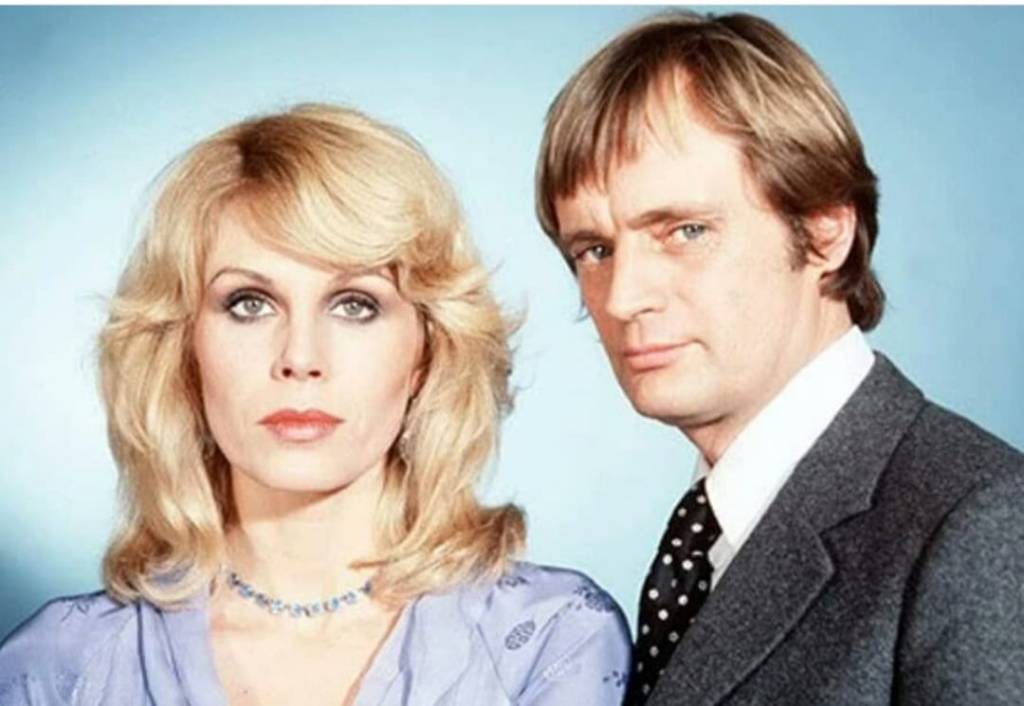
Photos copyright ATV Central
I was recently made aware of just how many movies and television shows the younger generation have never heard of, never mind seen. So to that end, we look back at some characters you really need to see before you kick the bucket.
Time- oh, time. As Picard says, it’s the companion that walks alongside us through life; to the Doctor and his friends, it’s the ocean in which they swim daily. To Sam Beckett it’s where he can put right where things once went wrong; to the Star trek crews it’s the one place they find themselves in that cannot be altered in case there’s a war with the Klingons except of course if your name’s JJ Abrams, then nothing is sacred, especially if you’re a Vulcan. Talk about kicking a culture when it’s down.
But what if time was your enemy? A living breathing entity that could enter our reality and literally do what it pleased with the innocent and unsuspecting? What if it were the ultimate silent killer; no maniacal laugh, no grand schemes, no boasting of its plans to the hero. What if it were the ultimate enemy where the war literally would never end? No matter how many times you stopped it, another dark scheme would pop up somewhere else.
And who could possibly stand against such an enemy?
Well, that’s where you call in Sapphire and Steel.
This show slipped onto our screens almost without a fanfare in 1979 and ran until 1982 on ITV. Produced by ATV and written almost entirely by P J Hammond. The only exception was story five which was co-written by Anthony Read and Don Houghton, names familiar to Doctor Who fans. Hammond himself incidentally has gone on to contribute two scripts to Torchwood- Small Worlds and From Out of the Rain.
Starring David McCallum and Joanna Lumley (Man from Uncle and The New Avengers respectively), Sapphire and Steel are elementals in human form who are assigned each time to stop whatever is happening. They have mental abilities far beyond anything we know but they can be killed or at least displaced.
At the start of each episode a fiery web would appear with a voice over that would tell you irregularities have been found and that Sapphire and Steel have been assigned (see below).
Uniquely each story has no title and is known only as story one to five and each was basically a stage play with the third story the only one having any location filming. The greatest tool any show has to scare its audiences is to make normal, everyday things turn against us and in story one it was the use of nursery rhymes.
In a house in the country, a mother and father are singing a nursery rhyme to their daughter when some force invades leaving the child alone. All the clocks stop and the parents have vanished. Calling the police only brings Sapphire and Steel.
The series boasted limited special effects and no background music – again making it a stage play of sorts. This only added to the atmosphere and in a lot of respects when the nursery rhymes like Ring around the Rosie and Goosey Goosey Gander are being used by the entity it is very Amityville Horror/ Poltergeist in nature. This utterly terrified the viewer, as winds would strike up out of nowhere as it tried to kill our heroes. it gives it a claustrophobic feel as the monster is literally hiding in the closet.

Steel was gruff, with poor people skills, while Sapphire was more caring. Joanna Lumley was stunning as Sapphire and their underplayed partnership conveyed a deep trust and caring between the two. Long before Steven Moffat made the phrase ‘Tick tock goes the clock’ frightening in Doctor Who, Sapphire and Steel were doing this in abundance. Hammond infused them with lines that could chill to the bone: ‘A-tishoo, a-tishoo, we all fall down’ took on a whole new meaning as the force tried to lure the children – and our heroes – into its trap and much more effectively than Who has ever done. The faceless people in the Doctor Who story the Idiot’s Lantern were done even more chillingly by Sapphire and Steel in a creepy story about old photographs.
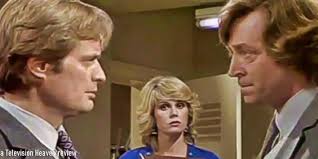

They were occasionally helped by other elementals like the effervescent Silver; a Doctor Who that never happened who Steel thought was too casual in his approach. We also met the joyous giant Lead played by Val Pringle. Add the claustrophobic constraints of a house and a simple abandoned train station platform and the show worked perfectly, and to this day remains a fan favourite. There is a real sense that they will not succeed in saving the day as time attacks again and again, manipulating the simple phrases of a nursery rhyme to open dimensions and trap Sapphire inside a painting. If she moves one muscle she will be trapped forever and this is where we see the magic of this show. Steel is helpless to save her and desperately races to free her. Here he is forced to rely on the children and using his emotion to save her but there are no hugs or smiles when he does. The look between the pair conveys a thousand words which highlights their alien qualities and deep respect at the same time. While Battlestar Galactica and Buck Rogers were special effect filled extravaganzas, Sapphire and Steel works best on minimalism.
Language is the key to this series and knowing what can scare people. Like Danny Glick scraping at the window whispering to be let in in Salem’s Lot scared the life out of people, so Sapphire and Steel achieve this effect in equal measure. As I have already said ‘We all Fall Down’ resonates to this day as it takes on a whole new meaning in this story when twisted by the evil. The world’s survival depends literally on a child not saying these words, something that is the norm for all children. Looping a policeman in time so he is eternally knocking a front door is another example of the beauty of this show. The house is a battleground where children are being used to subvert reality. There is no conscience, no morality, just a cold determination by evil to imprint itself on our world. The resolution lies in the past itself but unlike other shows there is no heart-felt goodbyes at the climax. The problem is solved and Sapphire and Steel simply vanish like ghosts.
The second story was set in a haunted train station and took the series into the horror realm as Sapphire sees a war torn ghost whose warped face is literally on screen for a split second but it is enough to make the audience recoil. It terrifies Sapphire showing that the agents have feelings of sorts. Here they team up with ghost hunter George Tully against an entity called the Darkness feeding on the resentment of soldiers killed in the war. Among them are a submarine crew killed by substandard machinery and a soldier killed 11 minutes after the armistice was signed. Again it this the stage like setting that gives this story its creepiness. You are never quite sure if Sapphire and Steel will actually survive given the forces that rise against them. Whether it is being trapped in a photo, ghost children ready to murder at the command of a faceless entity that lives in every photo ever taken, almost falling from a tall building when being attacked by birds in story three where a tiny baby is accelerated into adulthood by the combined forces of animals that were operated upon in an apartment from the future which no one can see. In an Agatha Christie type story, something in 1933 is killing guests at a mansion party and stealing their bodies in order to rewrite history. in the fifth and final story, our fears come true as our heroes investigate an abandoned service station and café where time has stopped. I’ll never forget the final scene when we learn the inhabitants are rival elemental agents and the station is a space time trap for Sapphire and Steel. We last see them trapped for eternity in a star field staring out the curtained window of the café. There never was a resolution to this and as a kid I was pissed. Every hero can escape from any trap laid for them but this time Sapphire and Steel were gone seemingly forever. They would return in the Big Finish audio plays but not with David McCallum and Joanna Lumley.
Modern horror trying to emulate a good ghost story should stop for a moment and look back at this story. It is a quintessential masterclass in not only how to write a scary story but how to execute it as well with the simplest of tools. And that’s why this show remains one of the most loved in sci-fi history.
 The Time Warriors and Beyond
Sapphire & Steel are a very special example of how sometimes the obscure sci-fi, supernatural and horror classics can have a certain appeal that most TV classics, even Star Trek, Dr. Who and X-Files may not. It was remarkably different from Dr. Who regarding time authorities and how they must deal with their share of cosmic adversity. And having debuted the same year as Alien, it was most fortunate to make its mark at a point when sci-fi horror could be greatly refreshed for fans. It can be an even more daunting task to revive or reboot Sapphire & Steel in this century than it was for Dr. Who and that says a lot. But thankfully more revisits to its classic episodes are possible thanks to YouTube and Dailymotion, encouraged by reviews like yours. Thank you so much.
LikeLiked by 1 person
R.I.P., David McCallum.
LikeLiked by 2 people