
By Owen Quinn Copyright Photos
The B movie monster era of the 1950s is a goldmine full of classic movies, many of which have been remade at a later date.
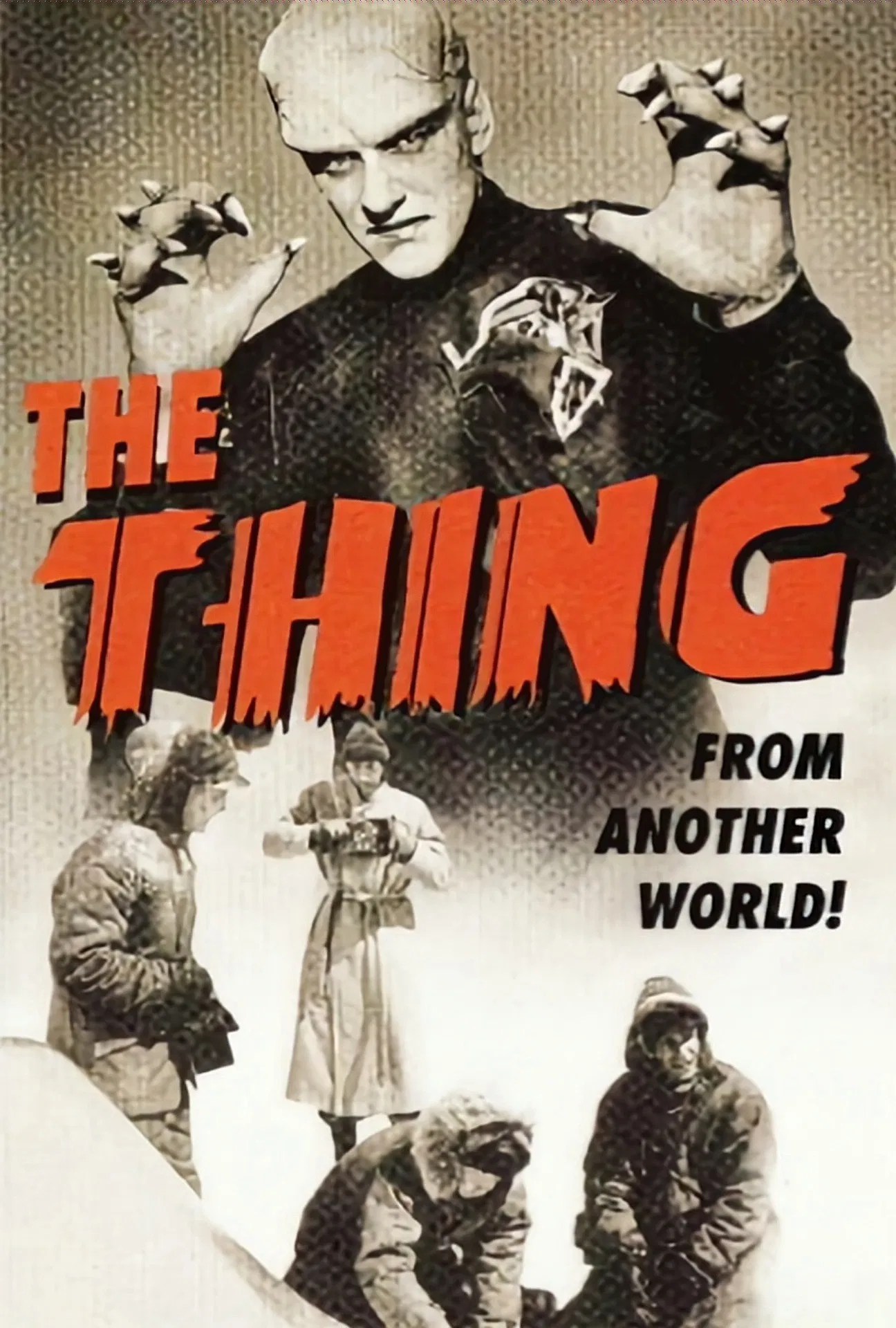
When we think of The Thing, we always go straight to John Carpenter’s classic version but this is, in fact, one of the most famous 1950s B movie remakes: The Thing from Another World, based on the book Who Goes There?
The premise sees a crashed UFO and its occupant found buried in ice in the Antartica. While the members of the base accidentally blow the ship up, they manage to bring the block of ice with the alien into the base. A storm breaks out making communication with the military bosses nearly impossible. It isn’t long before the creature gets up, alive and well, and the soldiers, scientists and sole reporter find themselves locked in a battle to save themselves and the planet.
Now, in the 50s, there was no gore so given how John Carpenter took the premise and explanded it into the cult classic has roots here. The military men, led by Kenneth Tobey as Captain Patrick Henry, were jovial in nature while the scientific team seem overzealous to the point of loss of commonsense where the alien is concerned. Howard Hawks was a highly respected director of that era and knew exactly what he wanted. James Arness was cast as the monster. It was humanoid but with strange looking head make-up (Arness would go on to become a very successful western actor). So the script had to convey any horror going on.
I remeber as a child watching black and white movies and being terrified. And that is a testament to writers, directors and all involed as with no concept of gore, you need langage or visual tricks to make the audience buy they’re facing a deadly alien. One of the jumpscares is the simple open a door and something scary is behind it. When you see that moment, you are not expecting the creature to be there and when it tries to slash out at Henry, you jump. It roars but doesn’t speak and you have an enemy that is immune to the cold because of its plant biology. But there within lies the answer to destroying it.
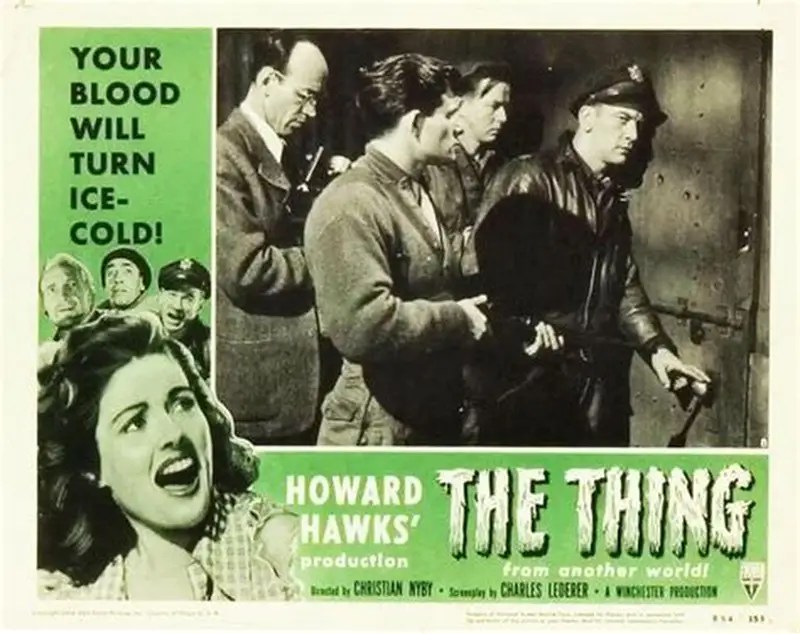
The alien here needs blood to survive. It visually reminded people of a Frankenstein’s monster type of beast compared to the mindblowing practical effects of the John Carpenter version. There are very few original movies that match their remake/sequel in quality but the Thing from Another World falls into this category. You have the same ‘base under seige’ mentality in both movies. It is a fight for survival with Earth being at stake.
With an icy tomb outside and alien threat in and out of the base, stakes are high. Not even the scientists can be fully trusted. Dr Carrington is more interested in the wisdom he will gain from the alien. All he’s interested in is the secrets he can learn from it and while his intentions are well intentioned, sort of, his execution leaves a lot to be desired. In the climax, he almost gets everyone killed by cutting off the power of their electrical trap before being attacked by the alien.
The most freaky scene in the movie is when they are figuring out what the alien is. They have seen it fight the huskies, smashing them to the ground like breadsticks. One dog tears its arm off and they are examining it. It seems to be a plant, a super carrot if you will. The carrot comparison is to make the audience less frightened by the fact it needs us to live. This automatically makes the audience think this alien is orange coloured. They further cement it in the minds of the audience by drawing to the fact that there are many plants on Earth that hunt mammals and very successfully. Imagine your pot plant growing a mouth and legs and coming after you. It’s not something you would think of as a possibility but upon watching the Thing, it becomes a reality you were never aware of, furthering making this movie a reality in people’s heads. The hand begins to move. It has gone from frozen to room tempersature, absorbing the dog blood it was covered in. So the script had to convey any horror going on.
It produces seeds which Carrington has planted and secretly fed blood too. When he reveals it to the scientists, he has a tray of human plants that feed on blood. As with the alien using human cells in John Carpenter’s to spread, seeds seem to be its way here. In none of the movies do we an answer about the alien’s origins but that only adds to the sudience making up their own images. Dr Carrington has been secretly feeding the samples blood which they are growing on.
These aliens are breathing, the young plants crying like newborns. The thirst of science overrules all including common sense given that one scientist reminds tham what one of these aliens can do, then imagine a thousand. The alien could be here to colonise the Earth which can only be done by killing anything with blood, starting with the base personnel. Henry burns Carrington’s experiments before they become a threat.
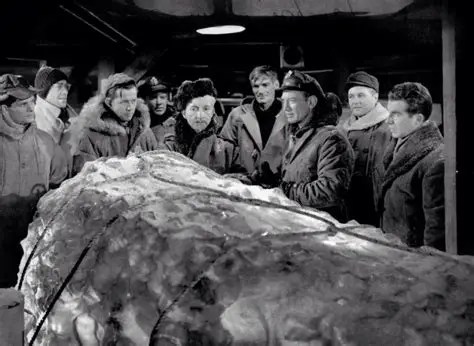
Those words made the audience conjure up their own nightmares. The alien looked like a man yet was able to take out, string up and drain two grown men of their blood. Henry compares it to a slaughterhouse. We only get a glimpse of something hairy fall out of a storage bin. It is what is left of one of the dogs, shrunken and drained.
But the true horror is off screen. Two huskies have been drained dry but the more horrifying part is the reveal of two scientists are found hanging upside dowm, also fed on their blood. It’s predator style 1950s but off screen. We have seen how that looked but for audiences in those days it would have been left to their imaginations. One of the doctors was there when they were attacked but fell, smashing his head. He tells them he felt an ice cold draught, Olsen and Arbuck screaming. When he awoke, they were hanging upside down with their throats cut. Add that to the state of the dog found in the storage bin, you get a horrible vision of a human after being drained. Hearing it from the mouth of one of the character makes it real because of their reaction. The audience is now invested in these characters so are there with them subconsciously.
It is established this alien has no nervous ystem, no heart, no nerve endings. It reproduces without sex or emotion which Carrington is envious of. Its arm was ripped off but it grew a new one very rapidly and we get to see a true demonstration of its strength when it smashes its way into a rec room. They set it on fire and it runs through a wall into the snow screaming. Its scream is inhuman further reminding the audience that this is an alien even though it’s an actor made up.
The build up to this was cleverly done. They can track the creature with a radiation counter. As they countdown, it means it is getting closer. Suddenly the lights go out. They are in darkness and the alien throws the door open, illuminated by the outside light, smothering it in shadow to make it scarier. They set it on fire with gasoline.
James Cameron would use a similar tracking trick in Aliens to even greater effect years later. Seeing the set in flames with this giant smashing through walls is still impressive when viewed and has been emulated in the Thing remake. It lashes out at them before jumping through a window into the snow. It is freezing them out, again showing it is an intelligent creature with a plan. It knows its enemy. Keeping the monster in shadow is a classic tool used to this day and, most notabley, by Ridley Scott in Alien. There is a Frankenstein’s monster element to the Thing as seen best in the final scenes where they are trying to lure it into their electrical trap so they can fry it. Frankenstein’s monster was already a familair figure of horro for the audience so that similarity would generate horror.
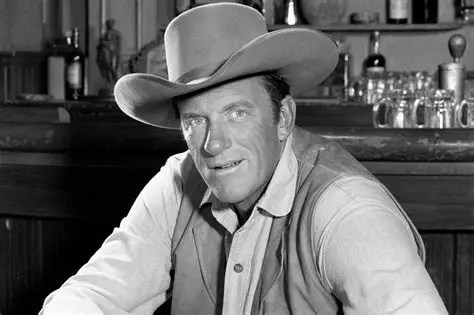
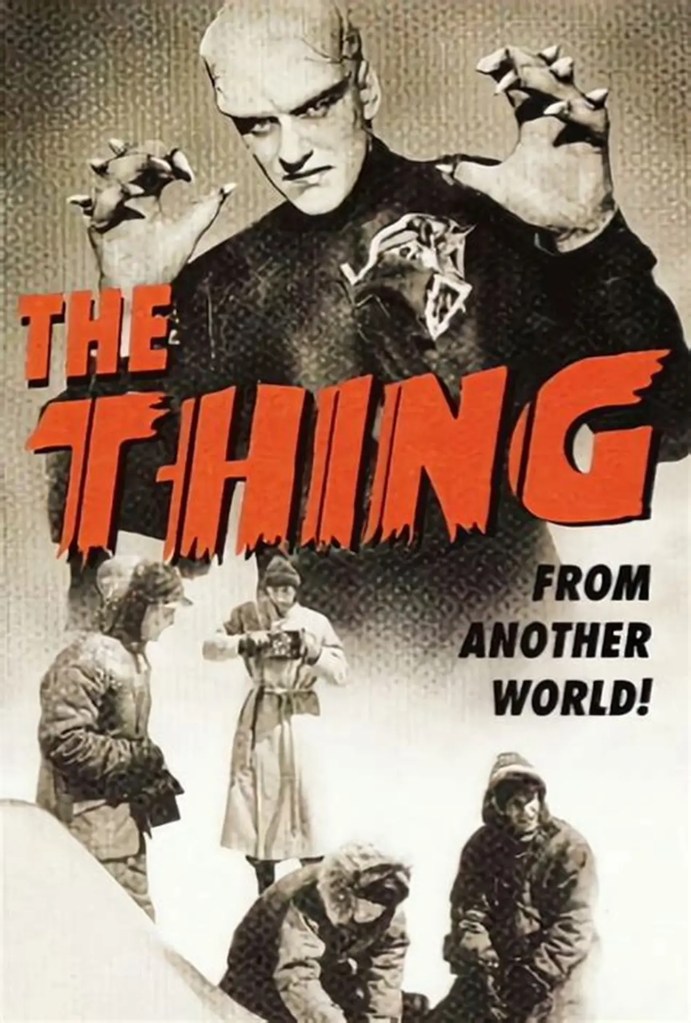
James Arness was a big guy so is perfect for the Thing. Standing at six foot seven and a half inches tall, he went on to find global fame in the twenty year long running Western series, Gunsmoke. He is as synonymous with Matt Dillon as William Shatner is with Captain Kirk. But for me, he will always be the iconic monster from The Thing from Another World. Hawks brought to life a story of isolation and terror with tricks never before seen by audiences. And I like the fact there is no on screen gore. It makes it scarier just as the first Halloween had no blood in it for the kills. And if you think about it, the Carpenter reboot wasn’t a gore fest either; just scares and paranoia built on jump scares and practical effects never before seen by an audience. Hitchcock had the same gift for tension and scares because he used the tools around him to the utmost effect; the actors, the script, special effects department and lighting. The rest is pure imagination.
Absolute classic.
 The Time Warriors and Beyond