
By Owen Quinn Photos copyright United Artists Television
Sometimes you realise that you know an episode of something but when asked what the plot was, you have no idea.
This was the case for me with The Outer Limits episode The Zanti Misfits. Everyone knows the creatures themselves, ant-like wasps with a humanoid face. They were bigger than a wasp, more like a small rat, but their image was burned into my young head years ago in repeats.
So I recently watched it just to remember what it was about and why it has stayed in my head for all these yearts. All these years…..Now there’s a phrase that makes me old even with repeats. Well, I couldn’t have watched it when it was first aired as it was 1963, December 30th to be precise. In 1997, it was ranked as number 97 in the 100 greatest television episodes of all time. But all I could recall was that face on the wasp body crawling up someone’s arm.
So sixty two years after it was first broadcast, I settled down to watch it. Outer Limits was a counterpart to The Twilight Zone. Both were anthology shows where different stories set against a sci-fi background commenting on the human condition. Many still hold relevance today. Each episode of both shows had an opening and closing monologue.
As the episode opens, we learn that the human race has been contacted by an alien race. It is summed up in the opening monologue.
Throughout history, compassionate minds have pondered this dark and disturbing question: what is society to do with those members who are a threat to society, those malcontents and misfits whose behavior undermines and destroys the foundations of civilization? Different ages have found different answers. Misfits have been burned, branded and banished. Today, on this planet Earth, the criminal is incarcerated in humane institutions…..or he is executed. Other planets use other methods. This is the story of how the perfectionist rulers of the planet Zanti attempted to solve the problem of the Zanti misfits.
We learn that the military have sealed off a ghost town called Morgue (of all things). The alien planet called Zanti have issued specific and potentially devastating orders to the humsna to expect a ship of their miscreants. Their orders are to seal off the area and maintain Zanti privacy. Otherwise, the Earth will face terrible consequences and with the Zanti seemingly more technologically advanced, it is a threat they take seriously. Earth will not be able to survive a war with the aliens if their demands are not met. Cooperate and the Earth will benenfit from great advances in technology.
Knowing human nature, it does not like to be held over a barrel or be dictated to but it all depends on who’s doing the threatening. The Zanti have determined that this is the perfect place to exile their criminals to as long as humans maintain the required conditions.
However, a bank robber, Ben Garth played by Bruce Dern, father of Jurassic Park actress, Laura Dern and his damaged girlfriend, Lisa, who witness the Zanti ship’s arrival. Garth goes to check it oput while the military deploy Steve Grave to be their emissary to repaoir any damage done.
The Zanti ship is smaller than we as an audience expects. The shape of the Zanti is teased through one of the open vents with the sight of an antennae and a strange noise.
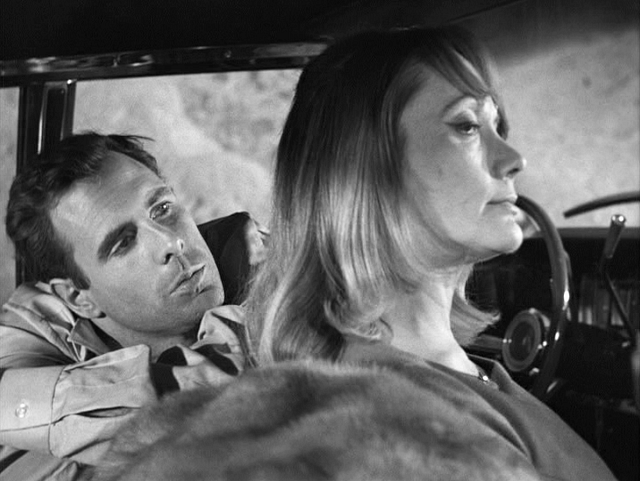
We get the full effect when seeing their privacy has been compromised, the Regent chases Garth who falls into a crevice. The sight of the Zanti creature racing up his body with that buzzing sound. It plays on the primal fear of insects crawling up your skin and boiting you. Something like a wasp’s sting hurts and can kill, similarly, a spider. It’s the human mind’s incapability to comprehend what they are seeing that contributes to the death. This thing has almost cartoon eyes, a nose and a mouth. Their shape is so familiar yet incomprehensible that it adds to the terror and paralysis. Garth’s screams are those of a man knowing he is going to die. And when Lisa goes to find him, the creature gives chase. Lisa’s wreck of a life plays into her half hearted flight and non resposnse top Grave. As she says , she has always ripped away at the seams of everything and it fell apart. Her self destructive behaviour makes a change from the usual damsel in distress.
Grave kills the Regent but the prisoners take advantage of this to flee in the ship. We get an all out fight between the Zanti swarms, who march off the ship to attack the humans. The final battle is impressive as the Zanti swarm down the windows, soldiers fall screaming, their bodies covered in Zanti. The use of stop motion for the Zanti is great and well realised. It’d a trick used for years of repeating shots. Doctor Who did it to make you think there were armies of Daleks and Cybermen flooding from their ships. I often talk about how imagination forces production teams to come up with clever ways to realise what the writer sees on screen for the audience. With clever direction and lower points of view shots, we get a real battle with guns and flame throwers.

Every last Zanti is dead but this is no victory. With all the Zanti rules broken, the Earth will now face their full retaliation and be destroyed.
But this is the good thing about the Outer Limits and Twilight Zone; everything is not always what you think or see. The Zanti announce there will be no retaliation; the Earth is safe. The Zanti plan was for the humans to kill the Zanti prisoners. Zanti do not and are incapable of killing their own but humans will kill anything including their own people. It is something when an alien race makes us look at each other and see what we really are. We pride ourselves that we kill mostly for honour, to protect what we beleive in and all in the name of good. But the simple truth is, kiling comes easy to us. Even those of us that think we would never do it, will in the right circumstance. We will kill anything that looks different from us to preseve our way of life. Shoot first, ask questions later as they say.
But when that part of us is highlighted through an alien lens, then this is why The Outer Limits and The Twilight Zone endure over sixty years later. Times change but we as a species, still have a long way to go.
 The Time Warriors and Beyond